Lunch is also an opportunity to include foods that contribute protein, fiber, and calcium across your day. This guide explains how to do that without a rigid menu. You will find six options, a packing comparison, ingredient swaps, and a shopping and preparation example that produces different meals from overlapping ingredients.
These are practical meal ideas, not treatments for menopause symptoms. The linked recipes have not been personally kitchen-tested by the site owner. Photographs illustrate the dishes, not documented testing. See our editorial and nutrition policy for our development limits and nutrition method.
What makes a useful lunch during menopause?
The British Dietetic Association’s menopause food fact sheet emphasizes a varied eating pattern, including whole grains, fruit, vegetables, and beans or pulses. It also discusses the importance of protein and calcium-containing foods for bone health. That is a reason to consider the pattern of your meals, not to buy a special menopause lunch product.
For lunch, translate those principles into a few food choices. Beans can contribute protein and fiber; whole-grain bread adds another source of fiber; plain yogurt can contribute protein and calcium. These foods do different jobs. A meal built around chicken does not automatically provide a calcium source, and a lettuce salad does not automatically make a substantial lunch.
If calcium-containing foods rarely appear elsewhere in your day, consider a yogurt alongside lunch, or check the label of a calcium-fortified alternative. Plant-based products differ: some have little protein, and not every product is fortified. Look at the particular product rather than assuming that every dairy-free substitute supplies the same nutrients as milk or yogurt.
This does not mean adding every food group to every container. Think across the day and choose amounts that fit your appetite and any individual advice you have received. If you have a prescribed diet, such as a protein restriction, that plan takes priority over this general framework.
What to eat for lunch during menopause: six practical ideas
Choose the option that fits your facilities before shopping. A meal that needs reheating is not the easiest choice if you have no microwave. A cold lunch containing chicken, yogurt, tofu, or cooked grains still needs safe temperature control.
Choose by your facilities and packing needs. On a narrow screen, scroll the table sideways to see all columns.
| Lunch | Useful format | Packing detail |
|---|---|---|
| Chicken and quinoa | Cold or reheated components | Separate vegetables and tzatziki |
| Chicken salad | Cold lunch | Keep filling chilled; bread separate |
| Turkey and sweet potato | Reheated lunch | Keep yogurt sauce separate |
| Bean and cucumber salad | Cold assembly | Keep salad chilled; bread separate |
| Tofu and edamame noodles | Prepared noodle bowl | Check sauce and noodle allergens |
| Salmon leftovers | Next-day lunch | Track original cooking date |
1. Greek chicken and quinoa bowl
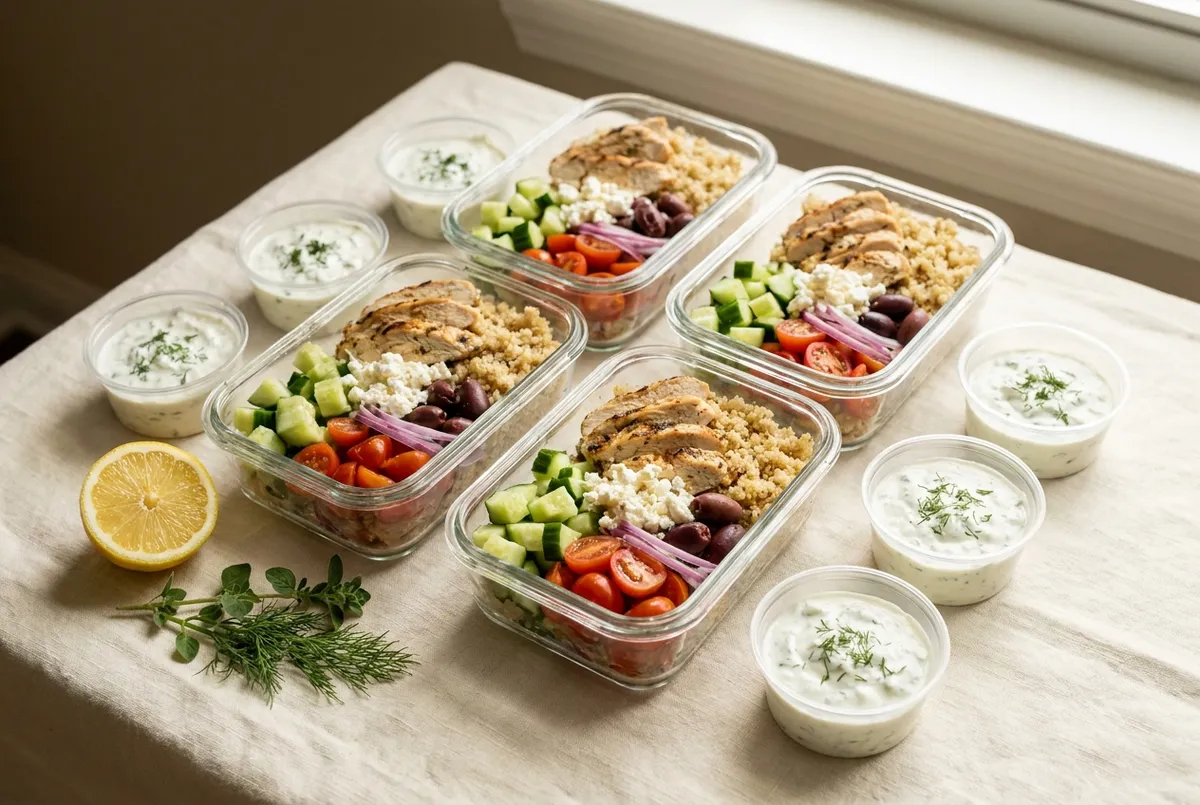
Our Greek chicken meal-prep bowls combine chicken, quinoa, cucumber, tomatoes, olives, feta, and tzatziki. This is a useful starting point when you want a recipe rather than a loose assembly idea. Keep crisp vegetables and cold sauce separate from components you intend to reheat.
For a simpler version, use safely stored cooked chicken from a previous meal and a grain already in your refrigerator. You do not need to cook another batch just because the original recipe uses quinoa. Brown rice, couscous, or bread on the side changes the dish, but can still make a practical lunch.
For a dairy-free adaptation, omit feta and replace tzatziki with a lemon and olive oil dressing. That changes the flavor and nutrient profile; it is not a calcium-equivalent swap. For a meat-free assembly, use drained chickpeas instead of chicken and adjust the amount to your appetite. Treat that as an adaptation, not as a separately tested recipe.
2. Chicken salad with bread or crackers
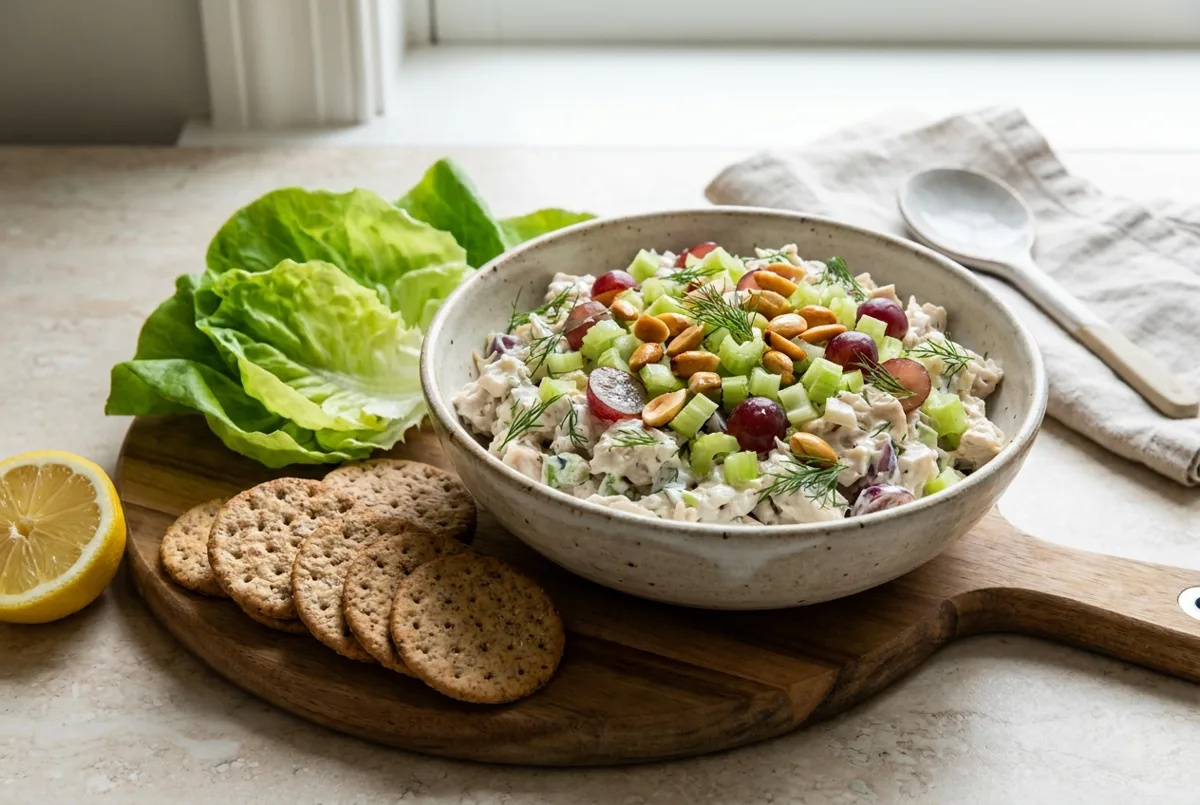
The Greek yogurt chicken salad uses cooked chicken, Greek yogurt, some mayonnaise, celery, grapes, almonds, and dill. Serve it with bread or crackers and vegetables you enjoy. Packing bread separately helps prevent it becoming wet before lunchtime.
This option makes sense when you want a cold lunch and already have cooked chicken. Cut the grapes and celery to a size that mixes easily with the chicken, and keep the filling chilled until you eat. If you prefer a sandwich, pack the filling in its own container and assemble it at lunch.
Leaving out almonds is one possible adaptation, but it does not make the whole meal safe for every allergy. Check the bread, dressing, and all ingredient labels, as well as shared preparation surfaces. If dairy is unsuitable, choose a dressing you can tolerate rather than assuming a dairy-free yogurt behaves or tastes the same in the recipe.
3. Turkey, sweet potato, and bean bowl
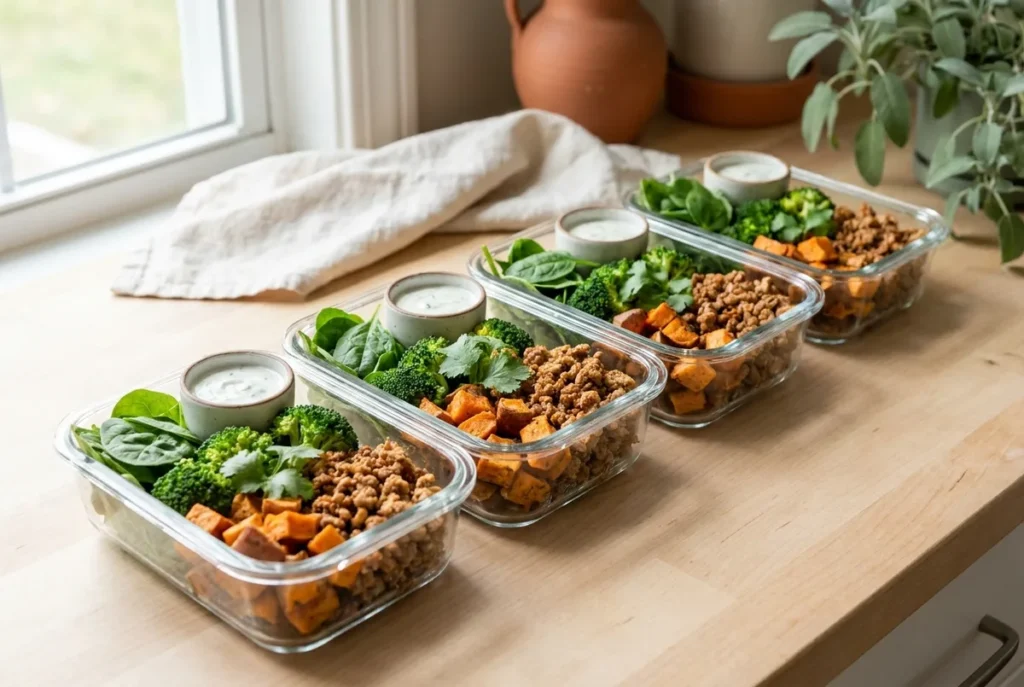
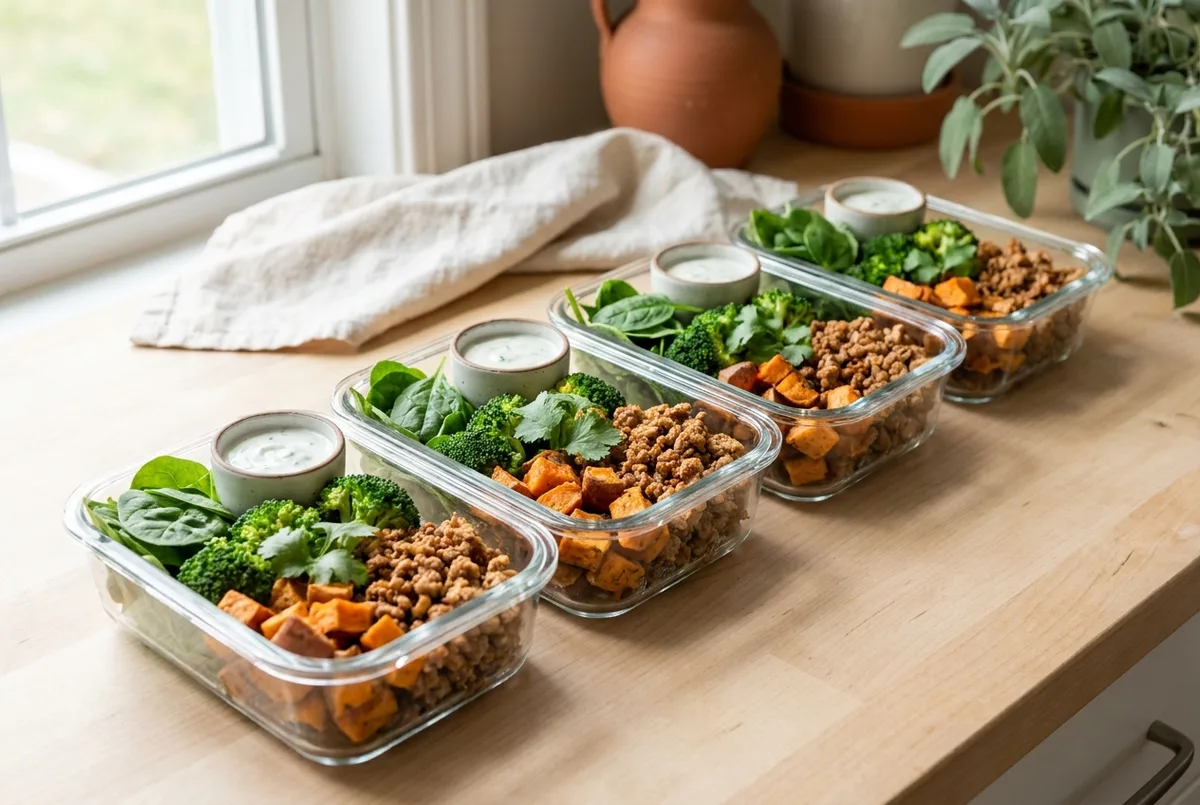
Our ground turkey sweet potato meal-prep bowls include turkey, black beans, sweet potato, broccoli, spinach, and a lime yogurt sauce. The combination suits someone who wants a warm lunch with several components rather than a sandwich.
Pack the yogurt sauce separately. Reheat the food first and add the cold sauce afterward. If you are using a microwave at work, choose a microwave-safe container and allow enough time to stir the food and check that the middle has reached a safe temperature, not just that the edges feel hot.
To reduce preparation work, choose this lunch when sweet potatoes or broccoli are already part of dinner. Set aside the lunch portion promptly and chill it safely. Do not plan to leave a warm bowl on a desk until noon; if neither refrigeration nor safe insulated packing is possible, choose a different lunch.
4. Bean and cucumber lunch box
Drain and rinse canned beans, then combine them with chopped cucumber, tomatoes, herbs, and a dressing you like. Add whole-grain bread or another grain on the side. This is a flexible assembly idea, not a kitchen-tested recipe with fixed quantities or a calculated nutrition total.
Start with ingredients you already use: chickpeas or white beans, cucumber, lemon, and olive oil are one combination. Add feta if you want it, or olives for a different finish. If raw onion is not enjoyable for you, leave it out. There is no need to keep an ingredient simply because another version of the salad includes it.
Beans offer a convenient way to include pulses without cooking a separate meat dish. If you are not used to eating many beans, start with an amount you find comfortable rather than forcing a large portion. Keep the dressed salad chilled, and pack bread separately so it retains its texture.
5. Tofu and edamame noodle bowl
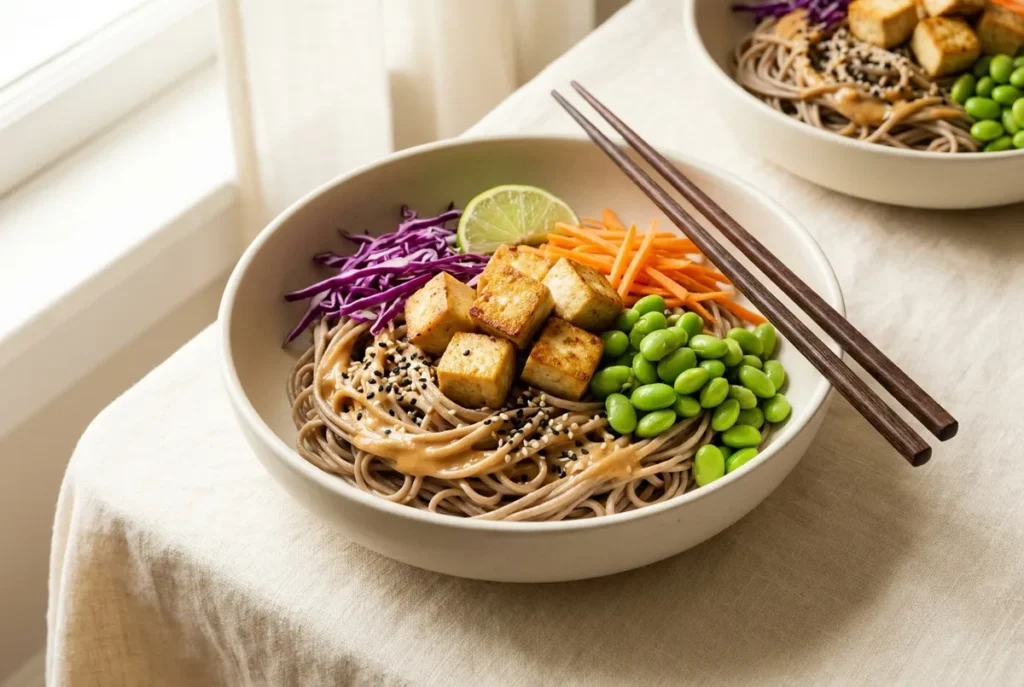
The peanut tofu and edamame soba bowls bring together tofu, edamame, noodles, vegetables, and peanut sauce. This is a plant-based alternative when you want something different from chicken or beans. Pack the sauce separately if you prefer firmer noodles at lunch.
Check noodle and sauce labels carefully. Soba does not automatically mean gluten-free; many products include wheat. Tofu and edamame contain soy, and the sauce contains peanut ingredients. Choose a different option if those ingredients do not fit your needs rather than trying to solve several allergies with one unverified substitution.
For a simpler assembly, combine safely stored cooked noodles with edamame and prepared vegetables, then use a dressing you already know. If using frozen edamame, follow the package cooking instructions before chilling it. A food being sold frozen does not mean it is ready to eat straight from the bag.
6. Dinner leftovers set aside for lunch
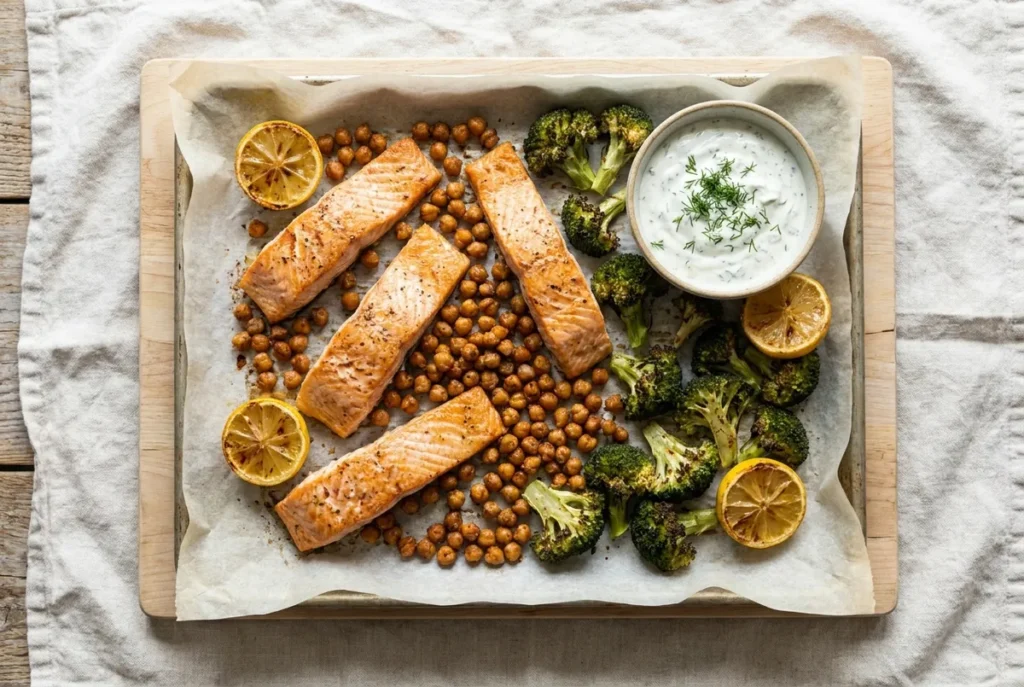
A portion of sheet-pan salmon with chickpeas and broccoli can become the next day’s lunch. Set the portion aside promptly rather than leaving the whole tray on the table while you decide what to save. Pack any cold sauce separately from food you intend to reheat.
You can change the serving format without cooking another full meal. Put safely stored salmon and vegetables alongside bread, or combine them with a grain you already prepared. Those changes affect the final nutrition, so do not assume the original recipe’s per-serving figures still describe your new combination.
Keep track of when the ingredients were originally cooked. Moving leftovers into a fresh container, mixing them with newly prepared food, or adding a new dressing does not restart their storage life. This is especially useful to remember when lunch combines several leftovers from different days.
Shop once for two different lunches
Here is a small planning example using overlapping ingredients rather than five identical boxes. It is a shopping framework, not a fixed-serving meal plan. Choose quantities based on how many people you are feeding and what you already have.
- Protein foods: cooked chicken for one lunch and canned chickpeas or white beans for another.
- Shared produce: cucumber, tomatoes, and lemon; add herbs if you will use the rest elsewhere.
- Starchy foods: one cooked grain or whole-grain bread, rather than buying several different grains.
- Finishing ingredients: olive oil and a dressing or plain yogurt that fits your preferences.
Make the first lunch a chicken and grain bowl with cucumber and tomatoes. Make the second a bean salad using the same produce, with bread packed separately. Change the dressing or herbs to give them different flavors. You have two meals without needing two unrelated shopping lists.
Prepare in a practical order: wash produce, chop the vegetables, drain the beans, and divide dressings into small containers. Use separate clean equipment for raw poultry and ready-to-eat ingredients. If cooking chicken or a grain, cool and refrigerate it promptly in shallow containers rather than leaving a large warm batch on the counter.
Label stored food with the preparation date and plan to eat the most perishable components within their safe storage period. Freeze suitable extra portions promptly if they will not be used in time. Do not make a full week of refrigerated lunches simply because five containers fit neatly in the refrigerator.
Keep a fallback lunch in mind before the week begins. An unopened shelf-stable bean pouch, crackers, and whole fruit can be useful when facilities are limited, provided each product’s storage and preparation directions allow it. Once opened or mixed, foods may need refrigeration. “Pantry ingredient” does not mean “safe on a desk all day.”
How to check protein and other nutrients without guessing
A lunch can contain a protein food without meeting every person’s daily needs. Rather than applying a single menopause lunch target, check what is actually in your chosen portion. Start with the recipe’s stated serving or the package label, and notice whether your portion is larger or smaller.
The FDA’s Nutrition Facts label guide explains that nutrient figures refer to the listed serving size. That serving size describes a typical amount consumed; it is not a recommendation of how much you should eat. Check servings per container before treating a whole package as one serving.
For a mixed lunch, identify the main protein ingredients first, such as chicken, tofu, beans, or yogurt. Use the actual product label or the linked recipe’s estimate as your starting information. Do not count a spoonful of yogurt dressing as if it were a full serving of yogurt, or assume a small sprinkle of seeds replaces the chicken in a bowl.
Look beyond the protein line when comparing similar products. Fiber, calcium, and sodium may also help you choose between options, depending on your overall diet and individual advice. Compare equivalent serving amounts. A product with a smaller listed serving can appear lower in a nutrient simply because the comparison is not like for like.
For these flexible combinations, we have not supplied invented protein totals or calorie counts. If you need a personal daily target or have a condition affecting your diet, ask a qualified clinician or registered dietitian. Bring your actual meals or product labels so the discussion can be specific rather than based on a generic internet menu.
Keep packed lunches and leftovers safe
Follow USDA leftover guidance and the product label. Refrigerate perishable food within two hours, or within one hour when the temperature is above 90°F. Keep the refrigerator at 40°F or below, and divide large batches into shallow containers for prompt chilling.
Use most cooked leftovers within three to four days in the refrigerator, or freeze them for longer storage. A shorter product-specific limit takes priority. If food has not been held safely, smell and appearance cannot establish that it is safe, and tasting it is not a safety test.
For transport, USDA recommends at least two cold sources with perishable food in an insulated lunch bag. Pack food cold, place cold sources around it, and refrigerate it when you arrive if a refrigerator is available. A container alone does not keep lunch safely chilled.
Reheat leftovers to 165°F, checking with a food thermometer. In a microwave, cover appropriately, stir or rotate, and check several places because cold spots can remain. If you cannot keep a particular meal cold during transport and storage, choose another lunch rather than relying on reheating to undo unsafe handling.
Common lunch questions
Do I need to avoid bread or rice during menopause?
There is no blanket exclusion in this guide. Whole-grain bread, rice, and other starchy foods can be part of a varied eating pattern. Choose an amount and type that fits your preferences and any individual dietary advice. Adding chicken, tofu, beans, or vegetables can make a plain starch-based lunch more varied without removing the starch entirely.
What can I pack without a microwave?
Choose a meal you enjoy cold, such as chicken salad with bread, a bean salad, or an appropriately prepared noodle bowl. Keep perishable ingredients chilled during transport and storage. No microwave does not mean no food-safety requirements, and a cold lunch does not have to mean only lettuce.
What if I am still hungry after a salad?
Consider whether it contains more than leaves and a small topping. Add a substantial protein ingredient and a grain, bread, or another starchy food you enjoy, then adjust the amount to your appetite. A yogurt or fruit alongside the meal is another option. Hunger is not evidence that you failed at making a “healthy” lunch.
Can these lunches help hot flashes or weight loss?
These meal ideas are not presented as treatments for hot flashes or as a weight-loss program. A single dish cannot promise either outcome. If symptoms or changes in weight are a concern, discuss them with a qualified health professional rather than treating a recipe title as evidence of a medical benefit.
Can I prepare all the lunches on Sunday?
You can prepare components, but do not assume every item will stay safe in the refrigerator until Friday. Plan around the three-to-four-day guidance for most cooked leftovers and any shorter label instructions. Freeze suitable portions promptly for later use, or prepare another small batch during the week.
Choose tomorrow’s lunch first
Start with one decision: where will you eat, and can you safely keep food cold or reheat it? Then choose one of the six options and check your kitchen before shopping. Use an existing ingredient, pack sauce separately when helpful, and make only as much as you can safely store and use.
A repeatable lunch routine does not require a perfect menopause menu. The goal is a meal that provides useful variety, fits your day, and is enjoyable enough that you actually want to eat it.
Sources
- British Dietetic Association: Menopause and diet, for the food-based nutrition context. This UK resource is not used here to prescribe supplement doses.
- FDA: How to understand and use the Nutrition Facts label, for serving sizes and nutrient comparisons.
- USDA FSIS: Leftovers and food safety, for cooling, storage, and reheating.
- USDA FSIS: Keeping bag lunches safe, for chilled transport and cold sources.
Leave a Reply