These peanut tofu soba noodles are a weeknight dinner with big takeout energy and plant-based protein to match. Golden pan-crisped tofu, chewy buckwheat noodles, edamame, and crunchy cabbage get tossed in a creamy ginger lime peanut sauce. Each vegan bowl delivers about 26 grams of protein in 30 minutes, and leftovers make a great cold lunch.
At a glance
- Protein: 26 g per bowl
- Calories: 437 per bowl
- Fiber: 6 g
- Iron: 5 mg
- Total time: 30 minutes
- Makes: 4 bowls
- Good for: 25g+ Protein, Vegan, Under 30 Minutes, Soy, Meal Prep
Why peanut tofu soba noodles are a smart plant-based dinner
Eating more plants is one of the most common goals in midlife. The worry is usually protein. Many vegan dinners lean on pasta or rice and end up with 10 to 15 grams per plate.
This bowl solves that with two soy foods. Extra-firm tofu and edamame are complete proteins, meaning they supply all nine essential amino acids. Soba made with buckwheat adds a few more grams, and peanut butter rounds out the total.
Research on aging muscle suggests about 25 to 30 grams of protein per meal works best (source). At 26 grams, this bowl gets there without any meat or powder.
A review of nutrition in menopausal women highlights plant proteins, legumes, and whole grains as part of an eating pattern that supports heart and metabolic health (source). Soy foods fit right into that.
Does soy help with hot flashes?
This question comes up often, and the honest answer is mixed. Soy contains isoflavones, plant compounds with a weak estrogen-like effect.
A meta-analysis found that soy isoflavone supplements modestly reduced the frequency and severity of hot flashes compared with placebo (source). The effect was small and came from concentrated extracts, not tofu dinners.
The Menopause Society reviewed the evidence in its 2023 position statement on nonhormone therapy. It did not recommend soy foods or isoflavones for hot flashes, because the results across studies were inconsistent (source).
The practical takeaway: eat soy because it is a nutritious, affordable protein. Do not count on it to treat symptoms. If hot flashes affect your sleep or daily life, talk with a clinician about treatments that have stronger evidence.
What is soba, and why use it here?
Soba is a Japanese noodle made with buckwheat flour. Despite the name, buckwheat is not a type of wheat. It is the seed of a plant related to rhubarb, and it contains no gluten on its own.
Buckwheat gives soba a nutty, earthy taste and a slightly firm chew. That flavor stands up to a bold peanut sauce better than plain white pasta.
Look for soba in the Asian foods aisle, usually in flat bundles tied with paper bands. The ingredient list tells you how much buckwheat is inside. Noodles labeled 100% buckwheat are more fragile, so stir them gently while they cook.
How to buy tofu for the best texture
Tofu comes in several textures, and the label matters for this recipe.
| Type | Best for | Works here? |
|---|---|---|
| Silken | Smoothies, sauces, desserts | No, it falls apart |
| Soft | Soups and scrambles | No |
| Firm | Stir-fries, baking | Yes, with gentle turning |
| Extra-firm | Pan-crisping, grilling | Yes, the best choice |
| Super-firm or high-protein | Crisping with no pressing | Yes, skip the press |
Look for tofu made with calcium sulfate, listed in the ingredients. It adds a meaningful amount of calcium. Unopened tofu keeps until the date on the package. Once opened, store leftovers covered in fresh water in the fridge and use them within 3 to 5 days.
Ingredients and smart swaps
Every ingredient is sold at a regular U.S. supermarket, usually in the Asian foods or produce aisle. Exact amounts are in the recipe card below.
- Extra-firm tofu: one 14-ounce block, pressed and cubed. Firm tofu works but breaks more easily.
- Soba noodles: six ounces dry. Most soba blends buckwheat with wheat flour. For gluten-free bowls, buy noodles labeled 100% buckwheat.
- Frozen shelled edamame: cooks right in the noodle water during the last 2 minutes.
- Red cabbage and carrot: raw crunch and color. A bag of coleslaw mix saves time.
- Natural peanut butter: smooth, with just peanuts and salt. Almond butter or sunflower seed butter work for peanut allergies.
- Reduced-sodium soy sauce or tamari: tamari is usually gluten-free. Check the label.
- Rice vinegar, maple syrup, sesame oil, ginger, and lime: the backbone of the sauce.
Other swaps that keep the bowls working:
- No soba? Use whole-wheat spaghetti, rice noodles, or brown rice.
- Want more vegetables? Add sliced bell pepper, cucumber, or snap peas.
- Not vegan? Swap the tofu for shredded chicken or shrimp.
How to make peanut tofu soba noodles
The steps overlap, so the whole dinner comes together in about 30 minutes.
- Press the tofu. Wrap the block in a towel and set a heavy pan on top for 10 minutes. Cut into 3/4-inch cubes.
- Whisk the sauce. Combine peanut butter, soy sauce, rice vinegar, maple syrup, sesame oil, ginger, and lime juice. Add warm water a tablespoon at a time until pourable.
- Crisp the tofu. Heat oil in a large nonstick skillet over medium-high. Cook the tofu in a single layer for 8 to 10 minutes, turning every few minutes.
- Cook the noodles. Boil the soba according to the package, usually 4 to 5 minutes. Add the edamame for the last 2 minutes.
- Rinse. Drain and rinse under cold water to wash off the extra starch.
- Toss and top. Toss noodles and edamame with most of the sauce. Top with tofu, cabbage, and carrot, and drizzle the rest of the sauce.
How to get crispy tofu without deep frying
Soft, pale tofu is the reason many people think they dislike it. Crisp, golden tofu is a different food. Three steps get you there in a skillet.
Press out the water. Tofu is packed in water, and that water turns to steam in the pan. Ten minutes under a heavy pan pushes much of it out. A tofu press works even faster.
Use a hot pan and leave it alone. Let the cubes sit for 2 to 3 minutes before turning them. Moving them too early tears the surface before a crust can form.
Give them room. Crowded cubes steam instead of browning. If your skillet is small, cook the tofu in two batches.
For an even crisper coating, toss the pressed cubes in a tablespoon of cornstarch before cooking. The thin layer turns crackly in the oil.
Why you should rinse soba noodles
Soba noodles release a lot of starch as they cook. If you skip the rinse, that starch turns the noodles gummy and makes them clump together as they cool.
Rinsing under cold water stops the cooking, firms up the noodles, and washes away the extra starch. It is standard practice in Japanese kitchens, where soba is often served chilled.
Toss the rinsed noodles with sauce right away. The thin coating of sauce keeps them from sticking together, even after a few days in the fridge.
Can you meal prep peanut noodle bowls?
Yes. These bowls hold up well for 4 days in the fridge, and many people like them better cold.
Store the sauce separately in a small jar. Noodles absorb sauce as they sit, so pre-dressed bowls can turn dry by day 3. Toss them with fresh sauce just before eating.
Keep the cabbage and carrots in the same container as the noodles. Unlike lettuce, red cabbage stays crunchy for days. The tofu loses its crisp edge in the fridge, but it stays flavorful and pleasantly chewy.
If the sauce thickens in the fridge, stir in a teaspoon of warm water before using it. Peanut butter firms up as it chills.
Common mistakes with peanut noodles
Sauce too thick. Natural peanut butter varies. Keep adding warm water until the sauce runs off a spoon in a ribbon.
Overcooked soba. Soba turns soft fast. Start tasting a minute before the package time.
Too much sauce at once. Toss the noodles with most of the sauce, then taste. Saving a little for the top keeps the bowl bright instead of heavy.
Skipping the acid. Lime and rice vinegar balance the rich peanut butter. If the bowl tastes flat, add more lime before more salt.
Is this peanut sauce healthy?
The sauce is rich, but it is made from whole ingredients. Natural peanut butter brings healthy fats, some protein, and fiber.
Each bowl gets about 3/4 tablespoon of peanut butter and a small amount of maple syrup. That keeps added sugar low, around 3 grams per bowl. The American Heart Association suggests women keep added sugar to about 25 grams a day (source). Bottled peanut sauces often carry much more.
Sodium lands near 657 mg per bowl, mostly from the soy sauce. The Dietary Guidelines advise keeping sodium under 2,300 mg a day for most adults (source). Reduced-sodium soy sauce keeps this dinner well within that range.
Serving ideas and toppings
The bowl is complete as written, but a few toppings make it feel special.
- Crushed roasted peanuts for crunch and a few extra grams of protein.
- Toasted sesame seeds or a sprinkle of furikake.
- Sliced scallions and cilantro for freshness.
- Lime wedges to squeeze over just before eating.
- A soft-boiled egg if you eat eggs. It adds about 6 grams of protein.
For a bigger meal, serve the noodles with a side of steamed bok choy or a simple cucumber salad dressed with rice vinegar.
Variations to try
The base of tofu, noodles, and peanut sauce takes well to new flavors.
- Spicy: add a teaspoon of sriracha or chili crisp to the sauce.
- Sesame ginger: swap the peanut butter for tahini and add an extra teaspoon of ginger.
- Rainbow bowl: add sliced red bell pepper, cucumber ribbons, and mango.
- Warm noodle stir-fry: skip the rinse and toss everything in the hot skillet for 2 minutes.
- Herby: finish with handfuls of fresh cilantro, mint, and Thai basil.
How this dinner fits into your day
A woman who weighs about 150 pounds and aims for 1.0 to 1.2 grams per kilogram needs roughly 68 to 82 grams of protein a day (source). One bowl gives about 26 grams, over a third of the lower target.
For an all-plant day, start with the High-Protein Overnight Oats made with soy yogurt, or the Berry Protein Smoothie with soy milk. For a mixed day, add the Greek Chicken Meal-Prep Bowls at lunch.
The guide on how much protein women need in menopause has a full chart and a section on plant protein.
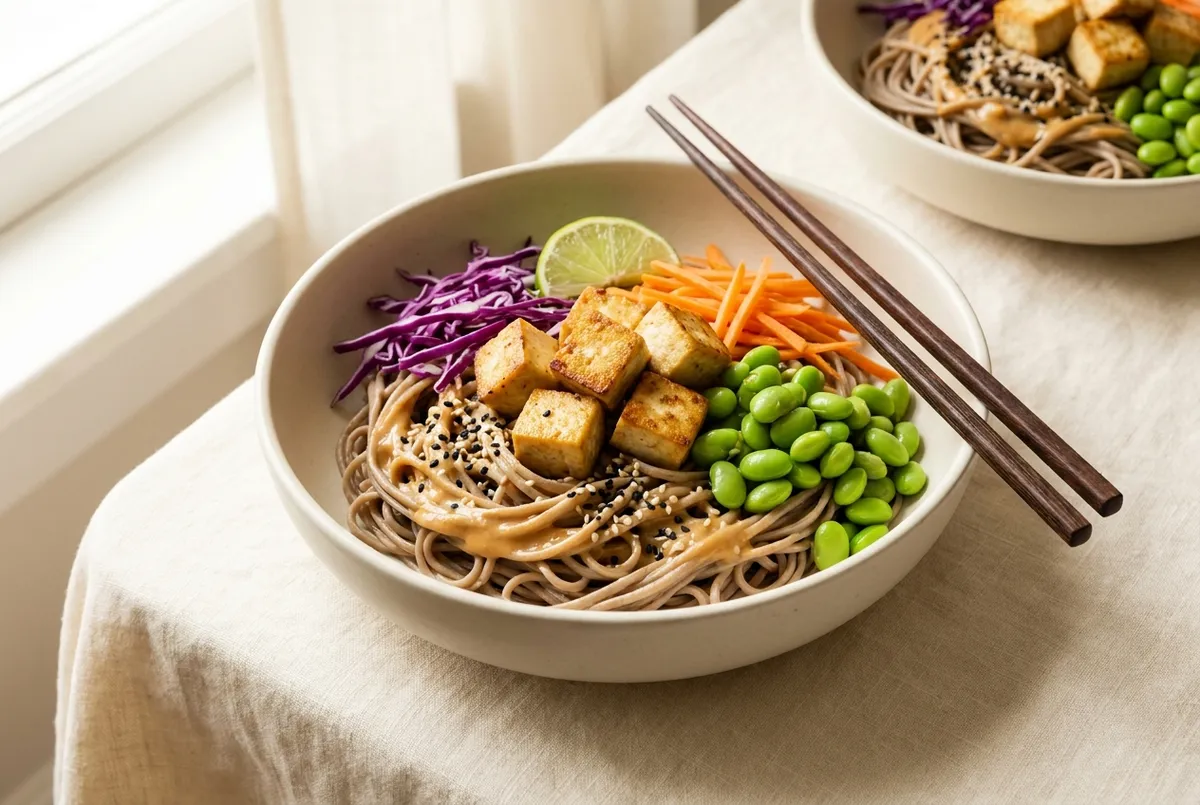
Peanut Tofu & Edamame Soba Noodle Bowls
Ingredients
Method
- Press the tofu for 10 minutes (wrap in a towel and set a heavy pan on top), then cut into 3/4-inch cubes.
- Whisk the peanut butter, soy sauce, rice vinegar, maple syrup, sesame oil, ginger, and lime juice. Add warm water a tablespoon at a time until pourable.
- Heat the oil in a large nonstick skillet over medium-high. Add the tofu in a single layer and cook 8–10 minutes, turning every couple of minutes, until golden on most sides.
- Meanwhile, cook the soba according to the package (usually 4–5 minutes), adding the frozen edamame for the last 2 minutes. Drain and rinse under cold water to remove excess starch.
- Toss the noodles and edamame with most of the sauce. Divide into bowls and top with tofu, cabbage, and carrot. Drizzle with the remaining sauce and serve with lime wedges.
Notes
| Nutrition per serving | Amount |
|---|---|
| Calories | 437 |
| Protein | 26 g |
| Carbohydrates | 48 g |
| Fiber | 5.6 g |
| Sugars (total) | 8.7 g |
| Fat | 19 g |
| Saturated fat | 2.6 g |
| Sodium | 657 mg |
| Calcium | 365 mg |
| Potassium | 766 mg |
| Iron | 5 mg |
How the nutrition was calculated
Nutrition is calculated per bowl from the gram weight of every ingredient, using USDA FoodData Central data. Tofu brands vary in protein and calcium, so treat the numbers as estimates. See the editorial and nutrition policy for the full method.
Each bowl supplies about 365 mg of calcium. Much of it comes from tofu made with calcium sulfate, so check the label for that ingredient.
Frequently asked questions
Are soba noodles gluten-free?
Not always. Many soba noodles blend buckwheat flour with wheat flour for a smoother texture. Buckwheat itself is not related to wheat and contains no gluten. For a gluten-free bowl, buy soba labeled 100% buckwheat, and use tamari in place of regular soy sauce, which contains wheat.
Can I use firm tofu instead of extra-firm?
Yes, but handle it gently. Firm tofu holds more water, so press it a little longer, about 15 to 20 minutes. It crisps less and breaks more easily when turned. Extra-firm and super-firm tofu give the best crust and the highest protein per serving.
Can I use tempeh instead of tofu?
Yes. Tempeh is made from fermented whole soybeans and has a firmer, nuttier bite than tofu. It also carries more protein per ounce. Slice it into thin strips, steam for 5 minutes to soften any bitterness, then pan-crisp it in the same way. The sauce and noodles stay the same.
How do I keep the peanut sauce from getting too thick?
Peanut butter firms up as it cools, so the sauce thickens in the fridge. Whisk in warm water a teaspoon at a time until it pours again. A squeeze of lime juice also loosens it and brightens the flavor. Store the sauce in a jar for easy shaking.
Can I serve these noodles warm?
Yes. Skip the cold rinse and toss the drained noodles straight into the skillet with the tofu and sauce for a minute or two. Add the cabbage and carrots at the end so they stay crunchy. Warm or cold, the protein and nutrition stay the same.
Sources
- Paddon-Jones D, Rasmussen BB. Dietary protein recommendations and the prevention of sarcopenia. Curr Opin Clin Nutr Metab Care. 2009.
- Silva TR, et al. Nutrition in Menopausal Women: A Narrative Review. Nutrients. 2021.
- Taku K, et al. Extracted or synthesized soybean isoflavones reduce menopausal hot flash frequency and severity. Menopause. 2012.
- The 2023 Nonhormone Therapy Position Statement of The North American Menopause Society. Menopause. 2023.
- American Heart Association. Added Sugars.
- U.S. Food and Drug Administration. Sodium in Your Diet.
- Bauer J, et al. Evidence-Based Recommendations for Optimal Dietary Protein Intake in Older People (PROT-AGE). J Am Med Dir Assoc. 2013.
- USDA Agricultural Research Service. FoodData Central (SR Legacy).
This article is for general education and is not medical advice. If you have a medical condition, such as kidney disease, or take medication, ask your clinician or a registered dietitian about your protein, sodium, and calorie needs. Read the full medical disclaimer.
Leave a Reply