This sheet pan salmon and broccoli dinner is made for busy nights that still deserve something special. Salmon roasts next to smoky, crisp chickpeas and garlicky broccoli, and a lemon dill yogurt sauce ties it together. Each plate brings about 39 grams of protein and 6 grams of fiber, in 30 minutes, on one pan.
At a glance
- Protein: 39 g per serving
- Calories: 493 per serving
- Fiber: 6 g
- Potassium: 943 mg
- Total time: 30 minutes
- Makes: 4 servings
- Good for: 25g+ Protein, Under 30 Minutes, One-Pan, Gluten-Free, Omega-3
Why sheet pan salmon and broccoli is a smart menopause dinner
Fatty fish is one of the simplest heart-health habits there is. The American Heart Association recommends eating fish, especially fatty fish like salmon, at least twice a week (source). That advice matters more in midlife, because heart disease risk for women climbs after menopause.
Salmon delivers EPA and DHA, the omega-3 fats the body uses most readily. A 3-ounce portion of cooked Atlantic salmon carries over 1 gram of DHA alone (source). The portion in this recipe starts at about 5 ounces raw, so it gives more than that.
The FDA also lists salmon among its best choices for fish, because it is low in mercury (source). That makes it easy to eat twice a week without second-guessing.
Chickpeas and broccoli round out the plate. A review of nutrition in menopause points to Mediterranean-style eating, built on fish, legumes, vegetables, and olive oil, as a strong pattern for heart and metabolic health (source). This dinner hits all four on one pan.
What makes this one-pan dinner work
Most sheet pan dinners fail because everything cooks at the same time, even though nothing on the pan needs the same time. Salmon goes dry, or the vegetables stay pale. The fix here is a simple head start.
Chickpeas go in first. Canned chickpeas need about 20 minutes total to turn crisp. They roast alone for 10 minutes, then share the pan with everything else.
Salmon goes in the center. The middle of the pan runs slightly cooler than the edges. That gentler spot keeps the fish moist while the broccoli and chickpeas brown on the outside.
A hot oven. At 425°F, the broccoli chars at the tips and the chickpeas crisp, but the salmon still cooks in about 10 to 12 minutes. A cooler oven would steam everything.
Ingredients and smart swaps
Everything here is at a regular supermarket. The full amounts are in the recipe card below.
- Salmon fillets: four fillets of about 5 ounces each. Skin on or off both work. Skin-on fillets hold together better.
- Canned chickpeas: one 15-ounce can, drained, rinsed, and patted very dry.
- Broccoli florets: four cups, fresh or frozen.
- Olive oil, smoked paprika, garlic: the seasoning base. Smoked paprika gives the chickpeas a grilled flavor.
- Lemon: zest for the salmon and sauce, juice for finishing.
- Plain nonfat Greek yogurt and dill: a fast, tangy sauce that adds protein instead of mayonnaise.
Swaps that keep the recipe working:
- Salmon: arctic char or steelhead trout cook the same way. Frozen salmon fillets are affordable and convenient. Thaw them overnight in the fridge.
- Chickpeas: white beans work, though they will not crisp as much.
- Broccoli: green beans, asparagus, or cauliflower florets. Asparagus cooks faster, so add it with the salmon.
- Fresh dill: use a teaspoon of dried dill or chopped parsley.
How to make sheet pan salmon step by step
The recipe card has the full method, but here is how the timing plays out.
- Heat the oven to 425°F and line a large sheet pan with parchment for easy cleanup.
- Dry the chickpeas well. Roll them in a clean towel. Loose skins that fall off can be thrown away.
- Roast the chickpeas alone with olive oil, smoked paprika, and salt for 10 minutes.
- Season the broccoli with olive oil, garlic, salt, and pepper while the chickpeas roast.
- Build the pan. Push the chickpeas to one side, add the broccoli, and set the salmon in the center. Season the fish with salt and lemon zest.
- Roast 10 to 12 minutes, until the salmon flakes easily.
- Stir the sauce of yogurt, dill, lemon zest, and lemon juice while the pan is in the oven.
Finish with a squeeze of lemon over everything. Serve the sauce on the side so everyone can add as much as they like.
How to choose salmon at the store
The salmon counter can be confusing. Here is what the main labels mean for this recipe.
Farmed Atlantic salmon is the most common and the most affordable. It is rich and forgiving, because its higher fat content keeps it moist in a hot oven.
Wild salmon, such as sockeye or coho, is leaner and deeper red. It has a stronger flavor and cooks a minute or two faster, so check it early.
Frozen fillets are often frozen within hours of the catch. They can be fresher than the “fresh” fish that has spent days in transit. Look for vacuum-sealed packs with no ice crystals inside.
Fresh salmon should smell clean and briny, never fishy. The flesh should look moist and spring back when pressed. Ask for center-cut fillets of even thickness, since they cook more evenly than tail pieces.
Plan on about 5 ounces of raw salmon per person. That portion cooks down to roughly 4 ounces and gives each plate its protein.
What temperature should salmon be cooked to?
The USDA safe minimum internal temperature for fish is 145°F (source). At that point, salmon is opaque and flakes easily with a fork.
Many cooks pull salmon earlier, around 125 to 130°F, for a moist, slightly translucent center. That is a personal choice. If you are pregnant, immunocompromised, or simply unsure, cook to 145°F.
An instant-read thermometer takes the guesswork out. Insert it into the thickest part of the fillet from the side. If you do not have one, check that the flesh separates into flakes when pressed with a fork.
Thin fillets cook faster than thick center cuts. Check them at 8 minutes. Thick fillets may need the full 12 minutes, or a minute or two longer.
How to get crispy chickpeas every time
Crispy chickpeas are the part of this dinner people remember. They are also the part most likely to go wrong. Three habits make the difference.
Dry them completely. Water is the enemy of crunch. After rinsing, spread the chickpeas on a towel and rub gently. Let them air-dry a few minutes if you have time.
Give them space. Crowded chickpeas steam. Spread them in a single layer with a little room between them.
Eat them hot. Roasted chickpeas soften as they cool and absorb moisture from the pan. They are crisp straight from the oven and chewy the next day. Both are good, just different.
Is frozen broccoli fine for sheet pan dinners?
Yes. Frozen broccoli works well and saves the chopping. The trick is to skip thawing.
Add frozen florets straight to the pan with the chickpeas for the first 10 minutes. The extra time drives off the ice. Then add the salmon and continue. The broccoli will be softer than fresh, with less char, but still flavorful.
Frozen vegetables are picked and frozen at peak ripeness, so they hold their nutrients well. They also last for months, which makes this dinner possible on nights when the fridge looks empty.
Can you meal prep sheet pan salmon?
You can, with a small change in plan. Cook the full pan on Sunday, cool it quickly, and pack it into four containers within 2 hours. Keep the yogurt sauce in small separate cups so the vegetables stay firm.
This dinner keeps for up to 3 days in the fridge. Store the salmon, vegetables, and sauce in separate containers if you can.
Reheated salmon can turn dry and strong-smelling. A better option is to eat it cold. Flake the leftover fish over a bed of greens with the chickpeas, broccoli, and a spoonful of the yogurt sauce. It makes an excellent lunch.
If you do reheat, warm it gently in a 275°F oven for about 10 minutes, covered with foil. Reheat leftovers to 165°F for safety (source).
What to serve with sheet pan salmon
The pan already holds protein, a vegetable, and a legume, so it works as a full meal. Still, a side can stretch it for bigger appetites or add more fiber.
- Quinoa or farro: a scoop under each plate adds whole grains and soaks up the lemon and yogurt.
- A simple green salad: arugula with olive oil and lemon matches the flavors and adds crunch.
- Warm pita or crusty bread: for swiping through the sauce.
- Roasted sweet potatoes: cube them small and start them with the chickpeas for a sweeter, heartier dinner.
- Cucumber and tomato salad: cool and fresh, with a little red onion and dill.
For drinks, sparkling water with lemon keeps the meal light. Unsweetened iced tea with mint is another easy match.
Flavor variations to try
Once you know the timing, the seasoning is easy to change.
- Harissa: rub the salmon with a tablespoon of harissa paste instead of paprika. Serve with the same yogurt sauce.
- Miso ginger: brush the salmon with white miso mixed with a little honey and grated ginger. Swap the dill for scallions.
- Everything bagel: sprinkle everything bagel seasoning over the salmon. Skip the extra salt, since the seasoning is salty.
- Grain bowl: serve over quinoa or farro for a heartier meal with more fiber.
- Spicy: add a pinch of red pepper flakes to the broccoli and a dash of hot sauce to the yogurt.
How this salmon dinner fits into your day
A woman who weighs about 150 pounds and aims for 1.0 to 1.2 grams per kilogram needs roughly 68 to 82 grams of protein a day (source). One serving of this dinner covers about 39 grams, more than half the lower target.
Older muscle responds best to about 25 to 30 grams of protein per meal (source). This plate clears that easily. Pair it with the High-Protein Overnight Oats at breakfast and a snack like the Chocolate Cottage Cheese Mousse, and the day is covered.
For the full chart by body weight, read the guide on how much protein women need in menopause.
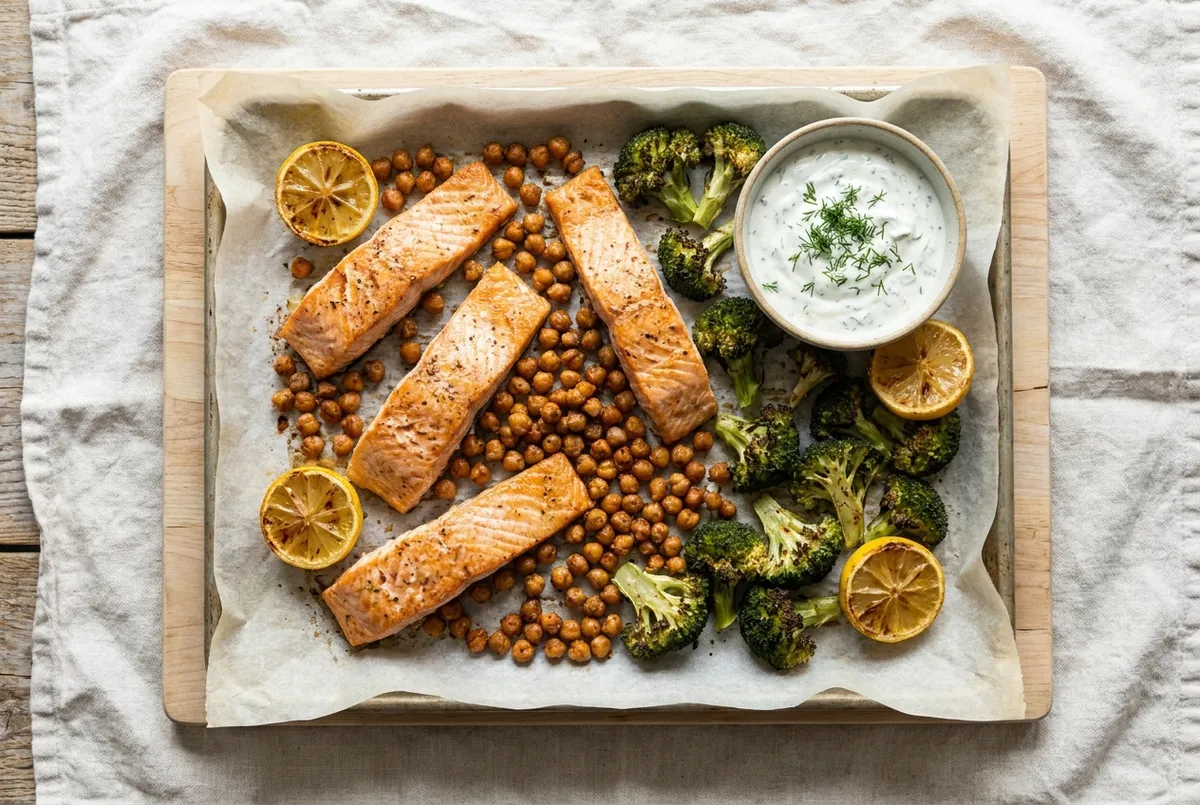
Sheet-Pan Lemon Salmon with Crispy Chickpeas & Broccoli
Ingredients
Method
- Heat the oven to 425°F (220°C) and line a large sheet pan with parchment.
- Toss the chickpeas with 1 Tbsp olive oil, the smoked paprika, and 1/4 tsp salt. Spread on one side of the pan and roast for 10 minutes.
- Meanwhile, toss the broccoli with the remaining olive oil, garlic, 1/4 tsp salt, and the pepper.
- Remove the pan, push the chickpeas together, add the broccoli, and nestle the salmon in the center. Season the salmon with the remaining salt and half the lemon zest.
- Roast 10–12 minutes, until the salmon flakes easily and reaches 125–145°F (52–63°C) in the thickest part, depending on how done you like it.
- While it roasts, stir the Greek yogurt with the dill, the remaining lemon zest, 1 Tbsp lemon juice, and a pinch of salt. Squeeze the rest of the lemon over the pan and serve with the sauce.
Notes
| Nutrition per serving | Amount |
|---|---|
| Calories | 493 |
| Protein | 39 g |
| Carbohydrates | 23 g |
| Fiber | 6.4 g |
| Sugars (total) | 5.2 g |
| Fat | 28 g |
| Saturated fat | 5.5 g |
| Sodium | 688 mg |
| Calcium | 121 mg |
| Potassium | 943 mg |
| Iron | 2 mg |
How the nutrition was calculated
Nutrition is calculated per serving from the gram weight of every ingredient, using USDA FoodData Central data. Salmon varies by type and cut, so treat the numbers as estimates. See the editorial and nutrition policy for the full method.
Each serving carries about 688 mg of sodium. The Dietary Guidelines advise keeping sodium under 2,300 mg a day for most adults (source). To lower it, use no-salt-added chickpeas and reduce the added salt by half.
Frequently asked questions
Can I use frozen salmon?
Yes. Thaw frozen salmon overnight in the fridge for the best texture. For a faster thaw, seal the fillets in a zip-top bag and submerge them in cold water for about an hour. Pat the fish completely dry before seasoning, or it will steam on the pan instead of roasting.
Should I cook salmon skin side up or down?
Place salmon skin side down on the parchment. The skin protects the flesh from direct heat and keeps it moist. It also makes serving easier, since the fillet slides off the skin with a spatula. Roasted skin will not turn crisp on a sheet pan, so it is fine to leave it behind.
What other fish works on a sheet pan?
Arctic char and steelhead trout are the closest swaps, with similar fat and cooking times. Cod and halibut work too, but they are leaner and cook faster, so check them at 8 minutes. Lean white fish also carries fewer omega-3 fats than salmon, so the nutrition will change.
Is salmon good for menopause?
Salmon is rich in protein and omega-3 fats and supports heart health, which becomes more important after menopause. It does not treat symptoms like hot flashes directly. It is still one of the most nutrient-dense proteins available, and eating fatty fish twice a week is a well-supported habit.
How do I keep salmon from drying out?
Pull salmon from the oven as soon as it flakes, and let carryover heat finish the job. Placing the fillets in the center of the pan, away from the hot edges, also helps. Thick, center-cut fillets stay moister than thin tail pieces. Serving with the yogurt sauce covers small mistakes.
Sources
- American Heart Association. Fish and Omega-3 Fatty Acids.
- NIH Office of Dietary Supplements. Omega-3 Fatty Acids: Fact Sheet for Health Professionals.
- U.S. Food and Drug Administration. Advice about Eating Fish.
- Silva TR, et al. Nutrition in Menopausal Women: A Narrative Review. Nutrients. 2021.
- USDA Food Safety and Inspection Service. Safe Minimum Internal Temperature Chart.
- Bauer J, et al. Evidence-Based Recommendations for Optimal Dietary Protein Intake in Older People (PROT-AGE). J Am Med Dir Assoc. 2013.
- Paddon-Jones D, Rasmussen BB. Dietary protein recommendations and the prevention of sarcopenia. Curr Opin Clin Nutr Metab Care. 2009.
- U.S. Food and Drug Administration. Sodium in Your Diet.
- USDA Agricultural Research Service. FoodData Central (SR Legacy).
This article is for general education and is not medical advice. If you have a medical condition, such as kidney disease, or take medication, ask your clinician or a registered dietitian about your protein, sodium, and calorie needs. Read the full medical disclaimer.
Leave a Reply