These high protein muffins taste like a bakery blueberry muffin, but each one carries about 10 grams of protein and only 194 calories. Greek yogurt, cottage cheese, and eggs do the heavy lifting, so there is no protein powder and no chalky aftertaste. One bowl, one muffin tin, and about 35 minutes.
At a glance
- Protein: 10 g per muffin
- Calories: 194 per muffin
- Added sugar: about 5 g per muffin
- Fiber: 2.5 g
- Total time: 35 minutes
- Makes: 12 muffins
- Good for: Meal Prep, Vegetarian, Freezer-Friendly, Lunchbox Snack
Why high protein muffins are worth making
A muffin from a coffee shop is basically cake. Based on USDA data, a 4-ounce commercial blueberry muffin has about 424 calories, 36 grams of sugar, and only about 5 grams of protein (source). Many coffee-shop muffins are even bigger.
That combination tends to leave you hungry an hour later. It also does very little for the protein target that matters more after 40.
Research on aging muscle suggests about 25 to 30 grams of protein per meal works best for muscle repair (source). Experts also recommend 1.0 to 1.2 grams of protein per kilogram of body weight each day for healthy older adults (source). A 2024 review of nutrition in menopause supports the same range to help protect muscle as estrogen falls (source).
One of these muffins will not get you there alone. Two muffins, or one muffin with a latte or a cup of Greek yogurt, puts you right in that range. As a snack, a single muffin gives you a real protein boost instead of a sugar spike.
How these muffins compare to a bakery muffin
The difference is easiest to see side by side. The table compares one of these muffins with a 4-ounce (113 g) coffee-shop blueberry muffin.
| Per muffin | Bakery blueberry muffin (113 g) | One of these muffins |
|---|---|---|
| Calories | 424 | 194 |
| Protein | 5 g | 10 g |
| Total sugars | 36 g | 9 g |
| Fiber | 1 g | 2.5 g |
| Fat | 18 g | 8 g |
That is twice the protein, about a quarter of the sugar, and less than half the calories. Most of the sugar in our version comes from the blueberries and dairy. Added sugar is only about 5 grams per muffin, well under the American Heart Association’s suggested limit of about 25 grams a day for women (source).
What makes this recipe different
Most Greek yogurt muffin recipes online land between 5 and 10 grams of protein. Readers often complain that the high-protein versions turn out dense, rubbery, or gummy. This recipe was designed around those problems.
Three protein sources instead of one. Greek yogurt, cottage cheese, and eggs each add protein. Spreading the load means none of them has to be used in an amount that ruins the texture.
Cottage cheese, blended smooth. Blending the cottage cheese with the yogurt and eggs gives a creamy, rich batter. No one will spot curds, and the crumb stays moist for days.
Almond flour for tenderness. A half cup of almond flour softens the whole-wheat flour, adds healthy fats, and keeps the muffins from tasting like health food.
A hot start. The muffins start at 400°F for five minutes, then finish at 350°F. That quick burst of heat gives them a domed, bakery-style top.
Ingredients you need and smart swaps
Every ingredient is easy to find at a U.S. supermarket. Exact amounts are in the recipe card below.
- White whole-wheat flour: it has the fiber of whole wheat with a milder taste and lighter color. Regular whole-wheat flour works but tastes nuttier.
- Almond flour: use blanched almond flour, not almond meal, for the softest crumb.
- Plain nonfat Greek yogurt: the backbone of the batter. 2% or full-fat yogurt makes slightly richer muffins.
- 2% cottage cheese: small curd blends most easily.
- Eggs and liquid egg whites: they add protein, structure, and lift.
- Maple syrup: a modest amount of sweetness. Honey works the same way.
- Oil: canola or avocado oil keeps the muffins moist. Melted butter adds flavor.
- Baking powder and baking soda: both are needed. The soda reacts with the tangy yogurt for extra rise.
- Blueberries and lemon zest: fresh or frozen berries both work. The zest makes the whole muffin taste brighter.
A few useful swaps:
- Nut-free? Replace the almond flour with 1/3 cup more whole-wheat flour. The muffins will be a little firmer.
- No cottage cheese? Use another cup of Greek yogurt. Protein stays almost the same.
- Lower sodium? Choose a no-salt-added cottage cheese and skip the added salt.
- Other fruit? Raspberries, chopped strawberries, or diced peaches work. Pat juicy fruit dry first.
How to make high protein muffins without protein powder
Here is the short version of the method. The full steps are in the recipe card below.
- Heat the oven to 400°F and line a 12-cup muffin tin with paper liners. Spray the liners lightly so the muffins release cleanly.
- Whisk the dry ingredients in a large bowl: flour, almond flour, baking powder, baking soda, and salt.
- Blend the wet ingredients until smooth: Greek yogurt, cottage cheese, eggs, egg whites, maple syrup, oil, vanilla, and lemon zest.
- Fold wet into dry with a spatula, just until no dry flour remains. A few lumps are fine.
- Toss the blueberries with a spoonful of flour and fold them in gently.
- Fill the cups almost to the top. This batter does not spread much, so full cups give tall muffins.
- Bake 5 minutes at 400°F, then lower the oven to 350°F and bake 15 to 18 minutes more.
- Cool 10 minutes in the pan, then move the muffins to a wire rack.
The muffins are done when the tops spring back when pressed and a toothpick in the center comes out with a few moist crumbs but no wet batter.
Common problems with Greek yogurt muffins and how to fix them
High-protein batters behave a little differently from classic muffin batter. These are the most common issues.
| Problem | Likely cause | Fix |
|---|---|---|
| Dense, heavy muffins | Flour packed into the cup | Spoon flour into the cup and level it off |
| Rubbery texture | Batter overmixed | Fold only until the flour disappears |
| Gummy center | Underbaked, or cut while hot | Bake until the top springs back and cool fully |
| Sticking to liners | High moisture and low fat in liners | Spray the liners or use parchment liners |
| Berries sink to the bottom | Batter too thin or berries wet | Toss berries in flour and do not thaw frozen ones |
| Purple-streaked batter | Thawed frozen berries | Fold in berries frozen, right before baking |
The most important tip is patience. Protein-rich muffins keep setting as they cool. If you break one open straight from the oven, the center can look damp even when it is fully baked.
Tips for tall, bakery-style muffin tops
Flat muffins are the most common complaint with lighter recipes. A few small habits make a big difference.
- Fill the cups to the top. Thick batter rises up, not out, so generous cups give a proper dome.
- Use the two-temperature bake. The first five minutes at 400°F set the outside quickly and push the center upward.
- Rest the batter for 10 minutes. While the oven heats, the flour hydrates and the batter thickens, which helps the tops rise higher.
- Check your leaveners. Baking powder and baking soda lose strength after about six months once opened.
- Fill alternate cups for extra height. If you have time, bake six muffins at once in every other cup. More hot air reaches each one.
Each of these habits works on its own, but together they give you muffins that look like they came from a café case.
How to store and freeze muffins
These muffins were built for make-ahead breakfasts and snacks.
At room temperature. Store cooled muffins in an airtight container lined with a paper towel for up to 2 days. The towel absorbs moisture so the tops do not turn sticky.
In the fridge. Because they contain yogurt and cottage cheese, the fridge is the better choice after the first day or two. They keep up to 5 days. Warm them for 15 seconds in the microwave to bring back the soft crumb.
In the freezer. Freeze cooled muffins in a freezer bag for up to 3 months. Thaw on the counter for an hour, overnight in the fridge, or microwave for 30 to 40 seconds.
A good habit is to freeze half the batch on baking day. That way you always have a grab-and-go snack, and the muffins never get a chance to go stale.
How to turn a muffin into a 25-gram breakfast
A single muffin gives about 10 grams of protein. That is great for a snack but light for a full breakfast. Here are easy ways to reach 25 grams or more.
| Breakfast | Protein |
|---|---|
| 2 muffins | 20 g |
| 1 muffin plus a 12-ounce latte made with 2% milk | about 20 g |
| 1 muffin plus 3/4 cup plain Greek yogurt | about 27 g |
| 1 muffin plus 2 hard-boiled eggs | about 23 g |
| 1 muffin plus 1 cup 2% cottage cheese | about 34 g |
Each muffin also adds about 125 mg of calcium. Pairing it with yogurt or milk helps you move toward the 1,200 mg a day most women over 50 need for bone health (source).
Are protein muffins healthy for women in menopause?
No single food fixes menopause symptoms or weight changes. What a better muffin can do is replace a sugary breakfast or afternoon snack with one that keeps you fuller and supports your muscles.
Muscle mass and strength decline with age, and the change speeds up around menopause (source). Eating enough protein across the day, together with regular strength training, is one of the most practical ways to slow that loss. A protein-rich snack is an easy way to fill gaps between meals.
These muffins also contain whole grains and fruit, and they keep added sugar low. That makes them a reasonable everyday option rather than an occasional treat. If you are not sure how much protein you need, our 1-minute protein quiz gives you a personal range.
Flavor variations
The base batter works with many flavors. Keep the fruit or mix-ins to about 1 1/2 cups total.
- Lemon poppy seed: skip the berries, double the lemon zest, and add 1 tablespoon of poppy seeds.
- Banana walnut: replace the blueberries with 1 cup diced banana and 1/2 cup chopped walnuts.
- Raspberry almond: use raspberries and swap half the vanilla for almond extract.
- Apple cinnamon: fold in 1 1/2 cups diced apple and add 1 teaspoon cinnamon.
- Chocolate chip: use 1/2 cup dark chocolate chips in place of the berries. Added sugar rises slightly.
For a crunchy top, sprinkle each muffin with a few rolled oats and a pinch of turbinado sugar before baking.
More high-protein recipes to try
If you like having healthy options ready to grab, these recipes fit the same routine:
- Cottage Cheese Protein Pancakes for a weekend-style breakfast with 31 grams of protein.
- Spinach Feta Cottage Cheese Egg Bites for a savory make-ahead breakfast.
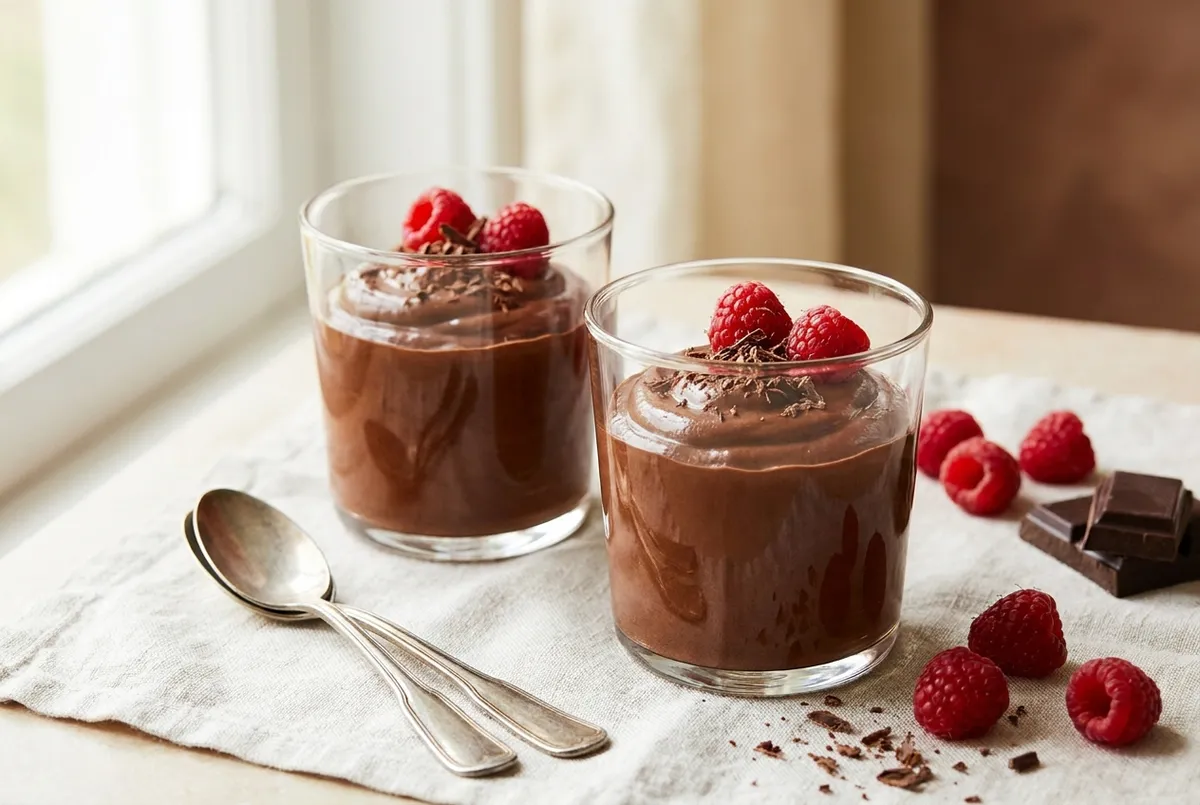
- Chocolate Cottage Cheese Mousse for a high-protein dessert.
Want a whole week planned for you? Get our free 7-day high-protein meal plan, with a grocery list and a Sunday prep timeline.
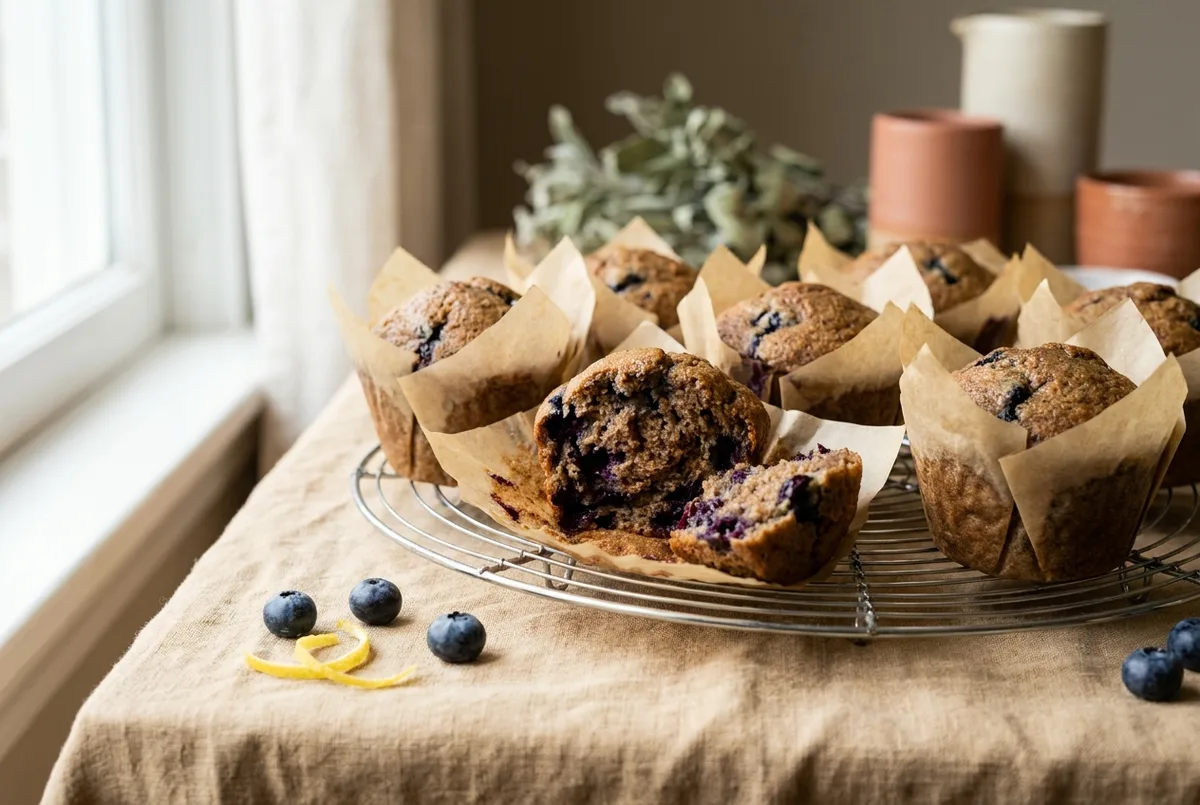
High-Protein Greek Yogurt Blueberry Muffins
Ingredients
Method
- Heat the oven to 400°F (205°C). Line a 12-cup muffin tin with paper or parchment liners and spray the liners lightly.
- In a large bowl, whisk the whole-wheat flour, almond flour, baking powder, baking soda, and salt.
- In a blender, blend the Greek yogurt, cottage cheese, eggs, egg whites, maple syrup, oil, vanilla, and lemon zest for 20 to 30 seconds, until smooth.
- Pour the wet mixture into the dry ingredients and fold with a spatula just until no dry flour remains. Do not overmix.
- Toss the blueberries with 1 tablespoon of the flour mixture (or extra flour) and gently fold them in. Let the batter rest 10 minutes while the oven finishes heating (optional, for taller tops).
- Divide the batter among the cups, filling them almost to the top.
- Bake for 5 minutes at 400°F, then lower the oven to 350°F (175°C) and bake 15 to 18 minutes more, until the tops spring back and a toothpick in the center shows only moist crumbs.
- Cool in the pan for 10 minutes, then move to a wire rack and cool completely before storing.
Notes
| Nutrition per serving | Amount |
|---|---|
| Calories | 194 |
| Protein | 10 g |
| Carbohydrates | 22 g |
| Fiber | 2.5 g |
| Sugars (total) | 9.2 g |
| Fat | 7.8 g |
| Saturated fat | 1.1 g |
| Sodium | 286 mg |
| Calcium | 125 mg |
| Potassium | 206 mg |
| Iron | 1.1 mg |
Frequently asked questions
Can I make these muffins with all-purpose flour?
Yes. Swap it cup for cup. The muffins will be a little lighter and fluffier, with less fiber.
Can I use protein powder too?
You can replace 1/4 cup of the whole-wheat flour with unflavored or vanilla whey protein for an extra few grams per muffin. Do not add more than that, or the muffins can turn dry and rubbery.
Why do my muffins stick to the paper liners?
Low-fat, high-moisture batters tend to cling to paper. Spray the liners lightly, use parchment liners, or let the muffins cool completely before peeling.
Can I make mini muffins?
Yes. Fill a greased mini muffin tin and bake at 350°F for 10 to 13 minutes. The batch makes about 36 mini muffins, each with roughly 3 grams of protein.
Are these muffins gluten-free?
No, because they use wheat flour. For a gluten-free version, use a measure-for-measure gluten-free flour blend in place of the whole-wheat flour.
This article is for general education and is not medical advice. If you have a medical condition, such as kidney disease, or take medication, ask your clinician or a registered dietitian about your protein, sodium, and calorie needs. Read the full medical disclaimer.
Sources
- USDA Agricultural Research Service. FoodData Central (SR Legacy).
- Paddon-Jones D, Rasmussen BB. Dietary protein recommendations and the prevention of sarcopenia. Curr Opin Clin Nutr Metab Care. 2009.
- Bauer J, et al. Evidence-Based Recommendations for Optimal Dietary Protein Intake in Older People (PROT-AGE). J Am Med Dir Assoc. 2013.
- Erdélyi A, et al. The Importance of Nutrition in Menopause and Perimenopause: A Review. Nutrients. 2024;16(1):27.
- American Heart Association. Added Sugars.
- NIH Office of Dietary Supplements. Calcium: Fact Sheet for Health Professionals.

Leave a Reply