These high protein pancakes taste like a weekend stack but work like a weekday breakfast. Four fluffy pancakes give you about 31 grams of protein for 392 calories, with no protein powder at all. Cottage cheese, eggs, and rolled oats go into a blender, and the batter is ready in two minutes.
At a glance
- Protein: 31 g per serving (4 pancakes)
- Calories: 392 per serving
- Fiber: 4 g
- Calcium: 332 mg
- Total time: 25 minutes
- Makes: about 12 pancakes, 3 servings
- Good for: 25g+ Protein, Vegetarian, Meal Prep, Gluten-Free option
Why high protein pancakes make sense after 40
Most pancake breakfasts are almost pure starch. A typical stack made from a boxed mix lands around 8 to 10 grams of protein before syrup. That is fine for a treat, but it leaves you hungry by mid-morning and does little for your muscles.
Research on aging muscle points to about 25 to 30 grams of high-quality protein per meal as the amount that best switches on muscle repair. Older muscle responds less to small doses, so a bigger hit at breakfast matters more than it did at 25 (source).
Your daily target also rises with age. Experts suggest 1.0 to 1.2 grams of protein per kilogram of body weight for healthy older adults. A 2024 review of menopause nutrition supports the same range to help preserve muscle (source, source). For a 150-pound woman, that works out to roughly 68 to 82 grams a day.
One serving of these pancakes covers close to half of that. If you are not sure what your own number is, our 1-minute protein quiz works it out from your weight and goals.
What makes these cottage cheese pancakes different
Search for cottage cheese pancakes and you will find dozens of versions. Most land between 15 and 25 grams of protein per serving. Many rely on white flour, and a lot of readers complain about the same thing in the comments: gummy centers that never quite cook through.
This recipe was built to fix both problems.
More protein from three sources. Cottage cheese, whole eggs, and liquid egg whites each add protein, so no single ingredient has to do all the work. The result is 31 grams per serving without the chalky taste of powder.
Oats instead of flour. Rolled oats blend into a fine flour right in the blender. They add fiber, a gentle nutty flavor, and enough structure to hold the pancakes together. Use certified gluten-free oats and the recipe is gluten-free.
A rest before cooking. Letting the batter sit for five minutes gives the oats time to soak up extra moisture. That one step is the main reason these pancakes cook through instead of staying wet in the middle.
Ingredients you need and smart swaps
Everything here is sold at a regular U.S. supermarket. Exact amounts are in the recipe card below. Here is what each ingredient does.
- 2% cottage cheese: the protein base and the secret to a tender crumb. Small curd blends fastest. Full-fat is richer, and nonfat works but makes a slightly firmer pancake.
- Large eggs: they bind the batter and help it puff.
- Liquid egg whites: a carton is easiest. They raise protein without adding much fat or many calories.
- Old-fashioned rolled oats: quick oats also work. Avoid steel-cut oats, which stay gritty.
- Baking powder: gives the lift. Make sure yours is fresh, since old baking powder is a common cause of flat pancakes.
- Maple syrup, vanilla, and cinnamon: a little sweetness and warmth so the batter tastes like a real pancake.
- Butter or oil: just a thin film for the pan.
A few swaps keep the recipe flexible:
- Watching sodium? Cottage cheese is the main source of salt here. Choose a lower-sodium or no-salt-added brand to cut the sodium noticeably.
- No egg whites? Use two more whole eggs. Protein stays about the same, while fat and calories rise a little.
- Want them sweeter? Add a mashed ripe banana. It also makes the pancakes a bit softer, so cook them a touch longer.
- No oats? Use 3/4 cup whole-wheat flour. Skip the resting time and expect a slightly lighter texture.
How to make protein pancakes without protein powder
The method takes about 25 minutes from start to finish. Here is the short version of what happens in the recipe card.
- Blend the oats first until they look like coarse flour. This takes about 15 seconds.
- Add the wet ingredients. Cottage cheese, eggs, egg whites, maple syrup, and vanilla go in next. Blend for 30 to 45 seconds until completely smooth.
- Add the baking powder and cinnamon last and pulse two or three times, just to mix.
- Rest the batter for 5 minutes. It will thicken to the texture of thick buttermilk.
- Heat a nonstick skillet over medium-low heat and brush it lightly with butter.
- Pour 1/4 cup of batter per pancake. Cook 2 to 3 minutes, until the edges look set and a few bubbles pop on top.
- Flip once and cook another 1 to 2 minutes, until golden and springy in the center.
Lower heat is the key. Cottage cheese has milk sugars that brown quickly, so high heat burns the outside before the middle sets. If the first pancake browns in under two minutes, turn the heat down a notch.
Common cottage cheese pancake problems and fixes
Most failures come from one of a few causes. Each one has a simple fix.
| Problem | Likely cause | Fix |
|---|---|---|
| Gummy or wet center | Heat too high, or batter not rested | Rest batter 5 minutes, cook over medium-low heat |
| Pancakes fall apart when flipped | Flipped too soon | Wait until the edges look dry and matte |
| Dark outside, pale inside | Pan too hot | Lower the heat and cook a little longer |
| Flat, dense pancakes | Old baking powder or overmixing | Use fresh baking powder and only pulse it in |
| Lumpy texture | Curds not fully blended | Blend 30 to 45 seconds, scraping the sides once |
Smaller pancakes are also easier to manage. A 4-inch pancake cooks through far more reliably than a plate-sized one, and it is much easier to flip.
How much protein is in each pancake?
One serving is four pancakes, which gives about 31 grams of protein. That lands right in the 25 to 30 gram range that research suggests for a meal (source). If you need less, or you are pairing the pancakes with a protein-rich topping, three pancakes may be plenty.
| Pancakes | Protein | Calories |
|---|---|---|
| 2 pancakes | 16 g | 196 |
| 3 pancakes | 23 g | 294 |
| 4 pancakes (1 serving) | 31 g | 392 |
| 4 pancakes plus 1/3 cup Greek yogurt | 39 g | 437 |
Each serving also brings about 332 mg of calcium, more than a quarter of the 1,200 mg a day most women over 50 need (source). Bone health becomes a bigger priority after menopause, and protein paired with calcium and vitamin D supports it (source).
Best toppings for more protein and fiber
The pancakes themselves are fairly low in fiber, at about 4 grams per serving. Toppings are the easiest place to fix that and add a little more protein.
- Greek yogurt and berries: a spoonful of plain Greek yogurt adds protein and creaminess, while a half cup of blueberries or raspberries adds fiber and color.
- Nut butter and banana: a tablespoon of peanut or almond butter brings healthy fats and about 4 grams of protein.
- Warm berry compote: simmer frozen berries for five minutes with a squeeze of lemon. It tastes like jam with no added sugar.
- Chia or hemp seeds: a sprinkle adds fiber, omega-3 fats, and crunch.
- A little real maple syrup: one or two teaspoons is plenty, since the batter is already lightly sweet.
If you want a savory version, skip the maple syrup and cinnamon. Top the pancakes with a fried egg, smoked salmon, or sliced avocado instead.
How to store, freeze, and reheat
These pancakes are very good for meal prep. Make a batch on Sunday and breakfast is handled for several mornings.
In the fridge. Cool the pancakes completely on a wire rack. Stack them with parchment between layers in an airtight container. They keep 3 to 4 days, in line with USDA guidance for cooked leftovers (source).
In the freezer. Freeze them in a single layer on a sheet pan for about an hour, then move them to a freezer bag. Press out the air to prevent freezer burn. For the best texture, eat them within about 2 months.
Reheating. Toast frozen pancakes in a toaster on a low setting, or microwave four pancakes for 45 to 60 seconds. A toaster oven at 350°F for 5 to 8 minutes gives the crispiest edges. USDA advises reheating leftovers to 165°F (source).
Are protein pancakes good for weight loss in menopause?
No single food causes weight loss, and these pancakes are not a magic fix. What they can do is turn a breakfast that usually leaves you hungry into one that keeps you full until lunch.
Protein tends to be more filling than carbohydrates or fat. It also helps protect muscle when you eat a little less, which matters because muscle mass and strength decline faster around menopause (source). Pairing enough protein at each meal with regular strength training is one of the most practical ways to slow that loss.
At 392 calories, a serving fits easily into most breakfast budgets. Add a cup of berries for fiber and volume, and you have a complete meal. For a full week of meals built the same way, grab our free 7-day high-protein meal plan.
Flavor variations to try
Once the base batter feels easy, it is simple to change the flavor. Each variation uses the same recipe with a few additions.
- Blueberry lemon: add the zest of one lemon to the batter and drop fresh blueberries onto each pancake right after pouring.
- Chocolate: blend in 2 tablespoons of unsweetened cocoa powder and an extra teaspoon of maple syrup.
- Pumpkin spice: add 1/3 cup pumpkin puree and 1 teaspoon pumpkin pie spice. Cook a little longer, since the batter is wetter.
- Apple cinnamon: fold in half a finely diced apple and double the cinnamon.
- Savory herb: skip the sweeteners and add chopped chives, black pepper, and a little grated parmesan.
Add mix-ins on top of each pancake in the pan rather than stirring them into the blender. They stay whole and spread more evenly.
More high-protein breakfasts to try
If you like having a few go-to breakfasts in rotation, these pair well with the pancakes:
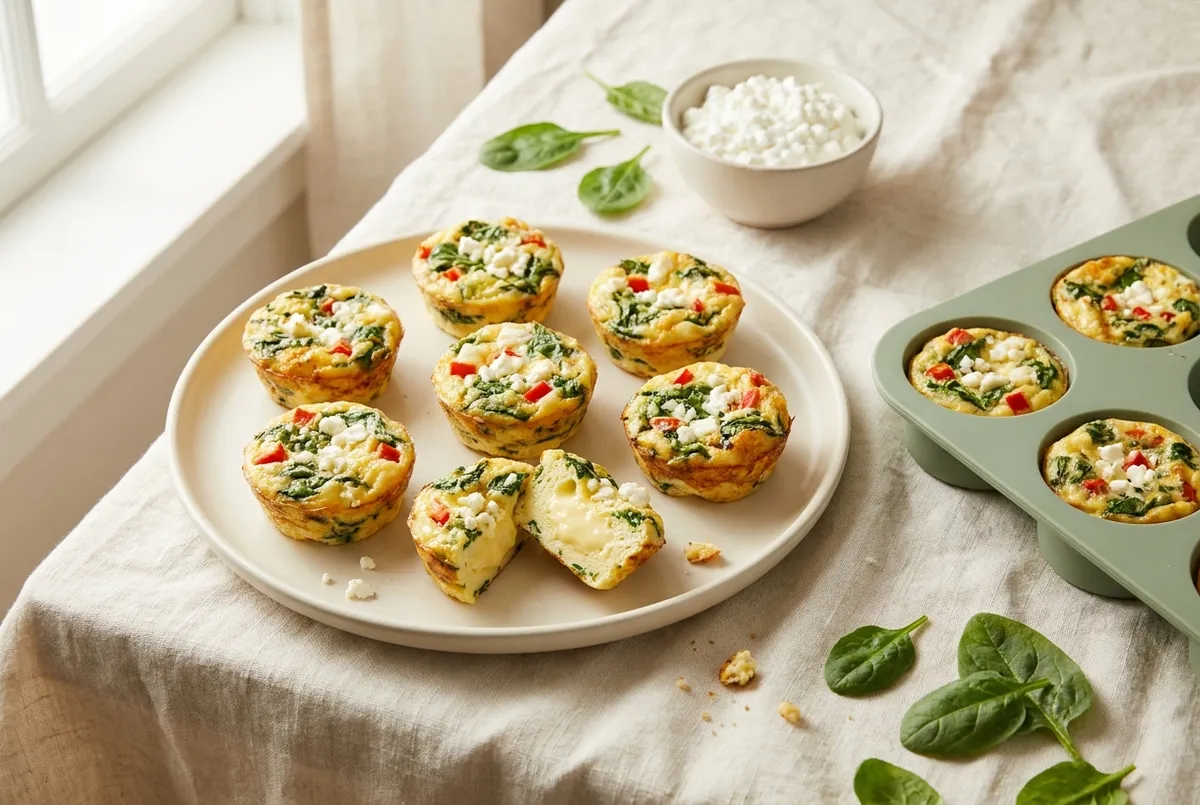
- Spinach Feta Cottage Cheese Egg Bites for a savory meal-prep option with 27 grams of protein.
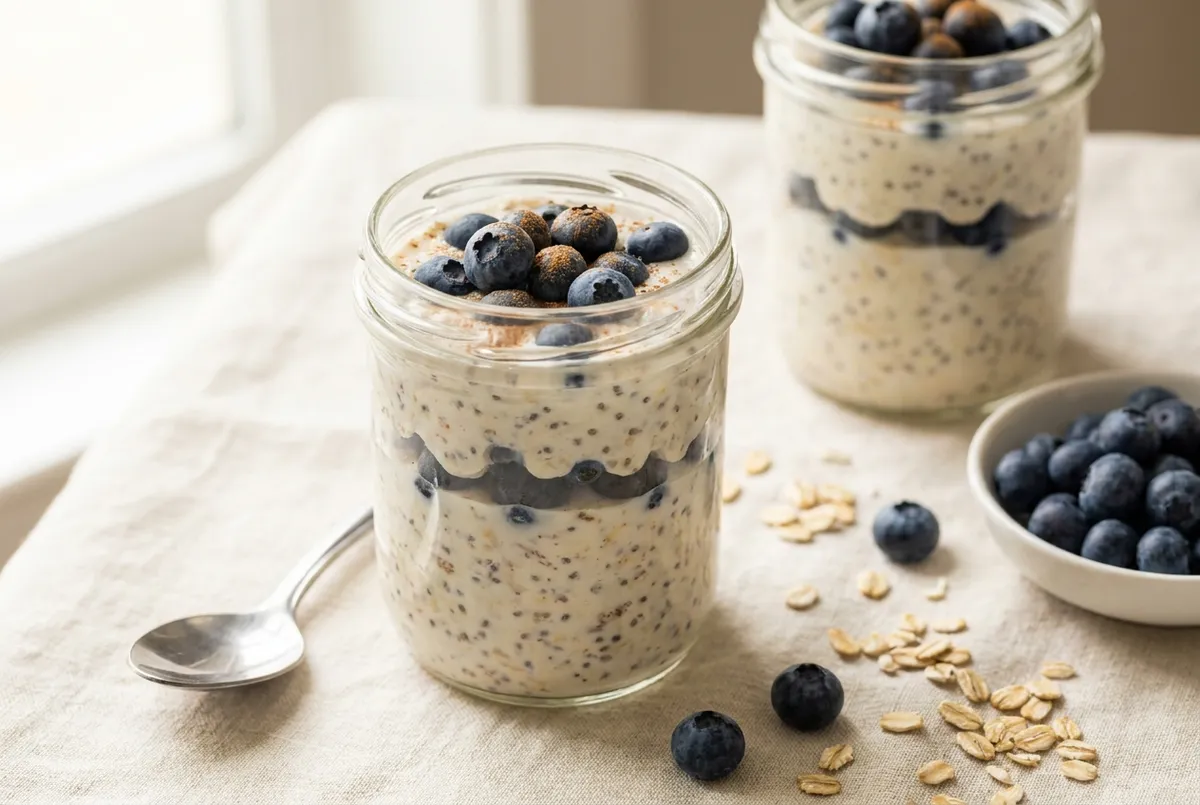
- High-Protein Overnight Oats for a no-cook breakfast with 30 grams of protein.
- Berry Protein Smoothie for mornings when you need to eat on the way out the door.
For the full background on how much protein you need and why it matters in midlife, read our guide on how much protein women need in menopause.
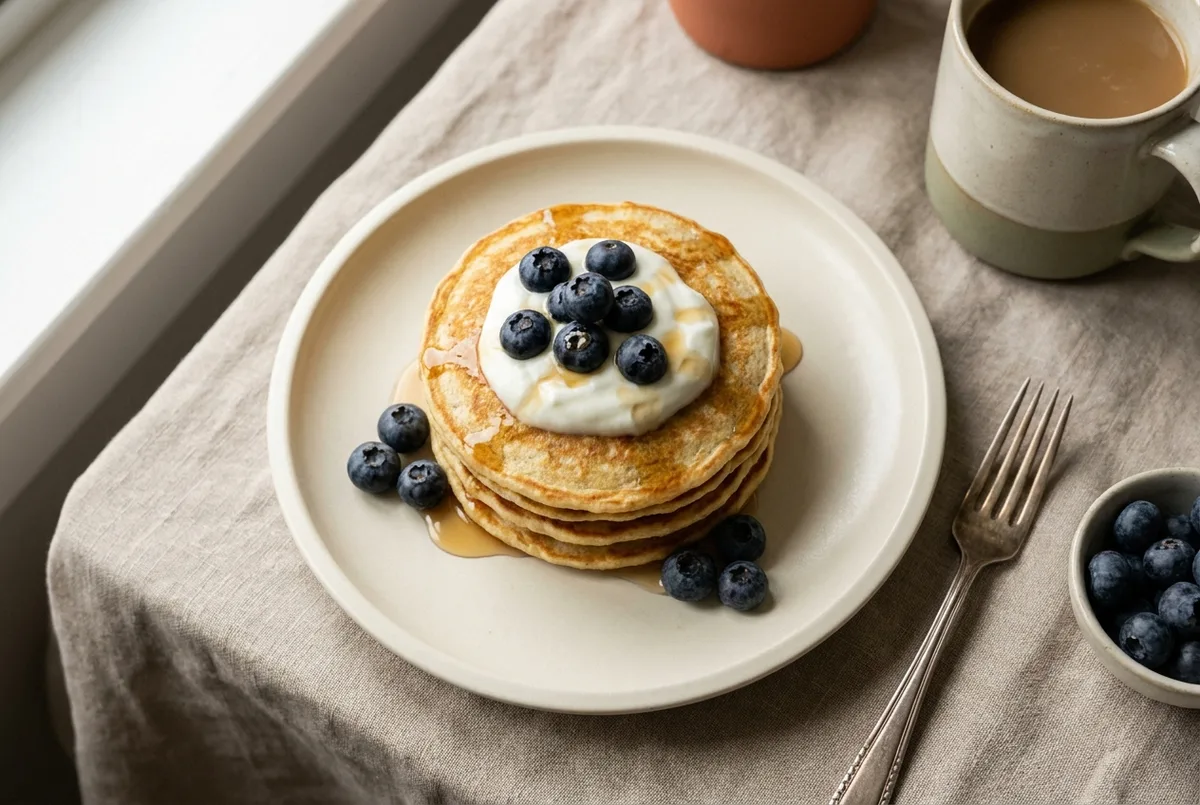
Cottage Cheese Protein Pancakes
Ingredients
Method
- Add the oats to a blender and blend for about 15 seconds, until they look like coarse flour.
- Add the cottage cheese, eggs, egg whites, maple syrup, and vanilla. Blend for 30 to 45 seconds, scraping the sides once, until completely smooth.
- Add the baking powder and cinnamon and pulse 2 or 3 times, just until mixed.
- Let the batter rest for 5 minutes. It will thicken to the texture of thick buttermilk.
- Heat a large nonstick skillet or griddle over medium-low heat and brush it lightly with butter.
- Pour 1/4 cup of batter per pancake. Cook for 2 to 3 minutes, until the edges look dry and a few bubbles pop on top.
- Flip and cook 1 to 2 minutes more, until golden and springy in the center. Repeat with the remaining batter, adding a little butter as needed. Serve with Greek yogurt and berries.
Notes
| Nutrition per serving | Amount |
|---|---|
| Calories | 392 |
| Protein | 31 g |
| Carbohydrates | 35 g |
| Fiber | 3.6 g |
| Sugars (total) | 9.7 g |
| Fat | 14 g |
| Saturated fat | 5.5 g |
| Sodium | 810 mg |
| Calcium | 332 mg |
| Potassium | 473 mg |
| Iron | 3.1 mg |
Frequently asked questions
Do cottage cheese pancakes taste like cottage cheese?
Not when the batter is fully blended. The curds disappear and the cottage cheese adds a mild tang, similar to buttermilk pancakes. Most people cannot tell it is there.
Can I make the batter ahead of time?
You can refrigerate the batter for up to 24 hours in a covered container. It will thicken overnight, so stir in a tablespoon or two of milk before cooking. Cooked and frozen pancakes are usually the easier make-ahead option.
Can I make these pancakes without a blender?
Yes. Use quick oats, mash the cottage cheese well with a fork, and whisk everything hard. The pancakes will have small curds and a slightly denser texture, but they still cook well.
Are these pancakes gluten-free?
Oats are naturally gluten-free, but they are often processed alongside wheat. Use oats labeled certified gluten-free if you need the recipe to be fully gluten-free.
Can I use Greek yogurt instead of cottage cheese?
Yes, swap it cup for cup. Plain Greek yogurt gives a similar amount of protein and a tangier flavor. The batter will be slightly thinner, so you may need a few extra minutes of rest.
This article is for general education and is not medical advice. If you have a medical condition, such as kidney disease, or take medication, ask your clinician or a registered dietitian about your protein, sodium, and calorie needs. Read the full medical disclaimer.
Sources
- Paddon-Jones D, Rasmussen BB. Dietary protein recommendations and the prevention of sarcopenia. Curr Opin Clin Nutr Metab Care. 2009.
- Bauer J, et al. Evidence-Based Recommendations for Optimal Dietary Protein Intake in Older People (PROT-AGE). J Am Med Dir Assoc. 2013.
- Erdélyi A, et al. The Importance of Nutrition in Menopause and Perimenopause: A Review. Nutrients. 2024;16(1):27.
- NIH Office of Dietary Supplements. Calcium: Fact Sheet for Health Professionals.
- Rizzoli R, et al. Benefits and safety of dietary protein for bone health (ESCEO/IOF expert consensus). Osteoporos Int. 2018.
- USDA Food Safety and Inspection Service. Leftovers and Food Safety.
- USDA Agricultural Research Service. FoodData Central (SR Legacy).
Leave a Reply