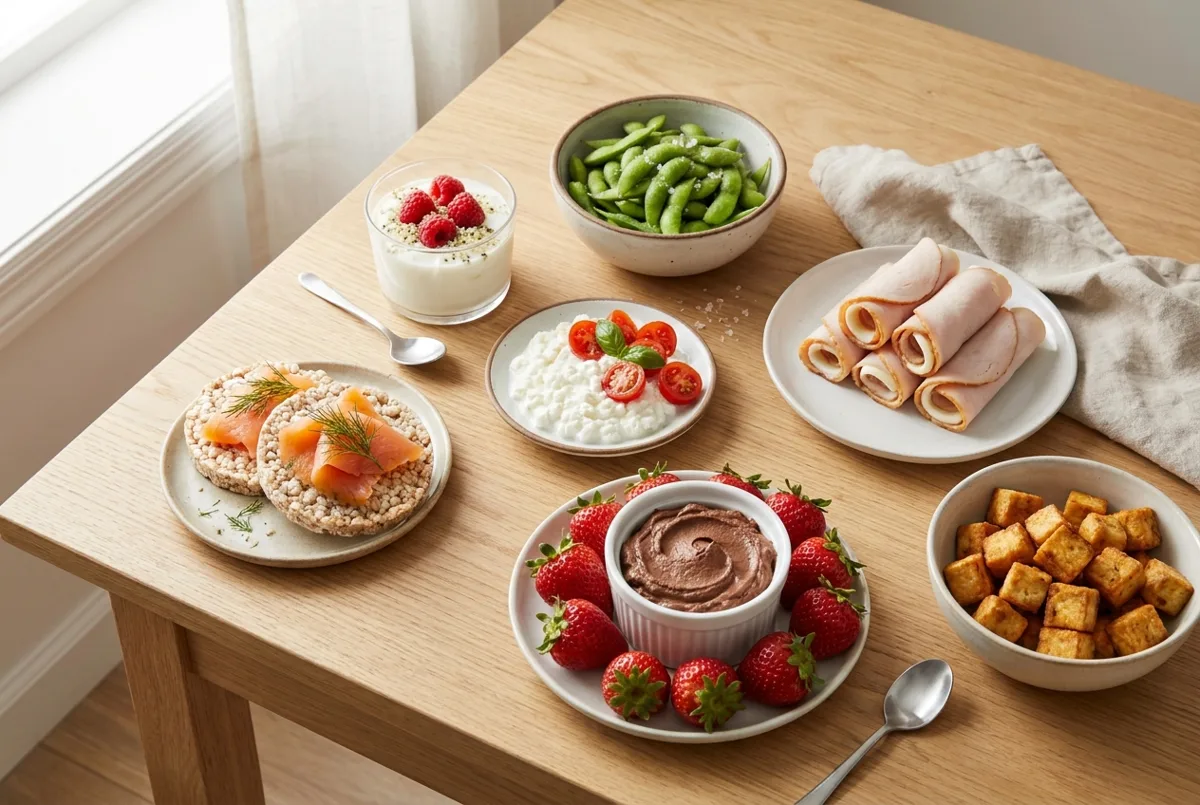
These 18 protein snack ideas are built for women in menopause who get hungry between meals and want to protect their muscle. Each snack has at least 10 grams of protein, and the best ones reach 18 to 23 grams.
We ranked every snack by protein per 100 calories, using USDA nutrition data, so you can see which ones work hardest for you.
Key takeaways
- Target: 10 to 20 grams of protein per snack fills the gaps between meals
- Best protein per calorie: Greek yogurt, cottage cheese, tuna, salmon, turkey, and tofu
- Best for calcium: pistachio latte pairing, chocolate ricotta dip, and kefir with pumpkin seeds
- Watch the sodium: jerky and deli turkey can pass 600 mg per snack
- No protein bars needed: every snack uses whole, everyday foods
Last updated October 12, 2026. Nutrition calculated from USDA FoodData Central by the Midlife Plate Editorial Team. See our editorial and nutrition policy.
How much protein should a snack have in menopause?
A good protein snack in menopause has about 10 to 20 grams of protein. That amount helps you reach a daily target of 1.0 to 1.2 grams per kilogram of body weight, which the PROT-AGE expert group suggests for healthy older adults (source).
Evidence scope: The PROT-AGE 1.0 to 1.2 g/kg recommendation concerns adults older than 65. It is not a universal target for women aged 40 to 60 or a prescription for menopause. Meal and snack numbers here are examples, not individual advice. See the PROT-AGE position paper and our protein guidance and evidence limits.
Meals should still carry most of your protein. Research on aging muscle points to about 25 to 30 grams per meal (source). Snacks fill the gap when a meal falls short or when lunch and dinner are far apart.
For a woman who weighs 150 pounds, the daily target is about 68 to 82 grams. Three meals with 22 grams each plus one 15-gram snack gets her there. Want your own number? Our protein quiz works it out in about a minute.
Which foods give the most protein per calorie?
Lean dairy, fish, poultry, and soy give the most protein per calorie. Nuts and seeds have protein too, but they carry far more calories for each gram. This matters in menopause, when many women notice their calorie needs drop.
We calculated protein per 100 calories for common snack foods using USDA FoodData Central (source). This is our own analysis, and the numbers below are rounded.
| Food | Protein per 100 calories |
|---|---|
| Canned light tuna in water | 22.6 g |
| Nonfat plain Greek yogurt | 17.3 g |
| Sliced turkey breast | 14.0 g |
| Low-fat cottage cheese (2%) | 12.9 g |
| Firm tofu, calcium-set | 11.6 g |
| Edamame | 9.8 g |
| Part-skim mozzarella | 9.6 g |
| Kefir, low-fat | 8.8 g |
| Hard-boiled egg | 8.1 g |
| Beef jerky | 8.1 g |
| Hemp hearts | 5.7 g |
| Pumpkin seed kernels | 5.2 g |
| Peanut butter | 3.7 g |
| Almonds | 3.5 g |
The lesson is simple. Use a lean protein as the base of your snack, then add a small amount of nuts, seeds, or fruit for crunch, fiber, and flavor.
All 18 protein snack ideas ranked
This table ranks every snack by grams of protein. It also shows calories, calcium, and sodium, since bone health and blood pressure both deserve attention after menopause (source).
| Snack | Protein | Calories | Protein per 100 kcal | Calcium | Sodium |
|---|---|---|---|---|---|
| Salmon rice cakes | 23 g | 220 | 10.5 g | 216 mg | 357 mg |
| Greek yogurt berry hemp cup | 21 g | 188 | 11.3 g | 210 mg | 62 mg |
| Chocolate cottage cheese mousse | 19 g | see recipe | see recipe | see recipe | see recipe |
| Steamed edamame | 19 g | 188 | 9.8 g | 98 mg | 9 mg |
| Tuna crackers | 18 g | 156 | 11.7 g | 37 mg | 337 mg |
| Chocolate ricotta dip with strawberries | 16 g | 253 | 6.4 g | 366 mg | 125 mg |
| Pistachio latte pairing | 16 g | 310 | 5.1 g | 390 mg | 143 mg |
| Turkey mozzarella roll-ups | 15 g | 138 | 11.2 g | 235 mg | 677 mg |
| Jerky and cheddar pack | 15 g | 181 | 8.3 g | 165 mg | 632 mg |
| Two eggs with hummus | 15 g | 226 | 6.6 g | 64 mg | 252 mg |
| Pear with cottage cheese and pumpkin seeds | 15 g | 226 | 6.5 g | 142 mg | 351 mg |
| Kefir pumpkin seed cup | 14 g | 191 | 7.2 g | 324 mg | 100 mg |
| Crispy baked tofu bites | 14 g | 117 | 11.6 g | 302 mg | 18 mg |
| Chickpea and edamame snack mix | 13 g | 245 | 5.2 g | see recipe | see recipe |
| Cottage cheese tomato cup | 13 g | 105 | 11.9 g | 133 mg | 352 mg |
| Apple, peanut butter, and hemp plate | 11 g | 325 | 3.3 g | 32 mg | 7 mg |
| Warm soy milk with a peanut butter rice cake | 11 g | 235 | 4.5 g | 309 mg | 120 mg |
| Cheese stick, almonds, and apple | 10 g | 233 | 4.3 g | 265 mg | 175 mg |
Grab-and-go protein snack ideas
These protein snack ideas travel well and need little or no prep. Pack them in a small cooler bag with an ice pack if you will be out for more than two hours.
1. Turkey mozzarella roll-ups (15 g)
Roll 2 ounces of sliced turkey breast around one part-skim mozzarella stick and a few cucumber spears. Make four at once and keep them in a container in the fridge. They are high in protein for very few calories.
Deli turkey is salty, with about 677 mg of sodium in this snack. Look for lower sodium turkey, or pair it with low-sodium foods later in the day (source).
2. Jerky and cheddar pack (15 g)
Pair 1 ounce of beef jerky with a 3/4 ounce piece of reduced-fat cheddar. It is shelf-stable enough for a purse or desk drawer for a few hours. Choose jerky with less added sugar and check the sodium line on the label.
3. Cheese stick, almonds, and apple (10 g)
Eat one mozzarella stick, about 12 almonds, and a small apple. This snack has protein, fat, and fiber, so it is filling even though it is lower in protein than others. It also gives you about 265 mg of calcium.
4. Steamed edamame (19 g)
A cup of shelled edamame has about 19 grams of protein and 8 grams of fiber. Buy it frozen, microwave it for two minutes, and add flaky salt. It is one of the best plant-based protein snack ideas on this list.
Sweet protein snacks for cravings
Sweet cravings are common, and a protein-rich sweet snack can be more satisfying than a cookie. These options use fruit and a little sweetener instead of a lot of added sugar (source).
5. Greek yogurt berry hemp cup (21 g)
Spoon a single-serve cup of nonfat plain Greek yogurt into a bowl. Top it with 1/2 cup of raspberries and 1 tablespoon of hemp hearts. This is our second highest protein snack and it takes one minute.
6. Chocolate ricotta dip with strawberries (16 g)
Stir 1 tablespoon of cocoa powder and 1 teaspoon of maple syrup into 1/2 cup of part-skim ricotta. Dip a cup of strawberries into it. It tastes like dessert and gives you about 366 mg of calcium.
7. Chocolate cottage cheese mousse (19 g)
Blend cottage cheese with cocoa and a little sweetener until it turns silky. Our chocolate cottage cheese mousse has about 19 grams of protein per serving. It keeps in the fridge for three days.
8. Pear with cottage cheese and pumpkin seeds (15 g)
Slice a ripe pear and serve it with 1/2 cup of cottage cheese. Sprinkle a tablespoon of pumpkin seeds on top. The pear adds sweetness and almost 5 grams of fiber.
9. Apple, peanut butter, and hemp plate (11 g)
Slice an apple and dip it in 2 tablespoons of peanut butter mixed with 1 tablespoon of hemp hearts. This one is higher in calories, so it works best on active days or as a small meal.
Savory and crunchy protein snack ideas
If you love salty, crunchy snacks, these give you the crunch with far more protein than chips or crackers alone.
10. Salmon rice cakes (23 g)
Mash 3 ounces of canned salmon with a spoonful of Greek yogurt and some dill. Spread it over two brown rice cakes. Canned salmon with soft bones adds calcium, and salmon is a low-mercury fish (source).
11. Tuna crackers (18 g)
Mix a small pouch of light tuna with a tablespoon of Greek yogurt, lemon, and pepper. Scoop it onto a few whole wheat crackers. Tuna has the highest protein per calorie of any food in our table.
12. Crispy baked tofu bites (14 g)
Press 5 ounces of firm tofu, cut it into cubes, and toss it with soy sauce and cornstarch. Bake at 400°F for 25 minutes until crisp. Calcium-set tofu gives you about 300 mg of calcium per serving.
13. Chickpea and edamame snack mix (13 g)
Roasted chickpeas, edamame, almonds, and pepitas make a crunchy mix you can batch on Sunday. Our roasted chickpea and edamame snack mix has about 13 grams of plant protein per heaping half cup.
14. Cottage cheese tomato cup (13 g)
Top 1/2 cup of cottage cheese with cherry tomatoes, black pepper, and a drizzle of olive oil. It has only about 105 calories. Add everything bagel seasoning for extra flavor.
15. Two eggs with hummus (15 g)
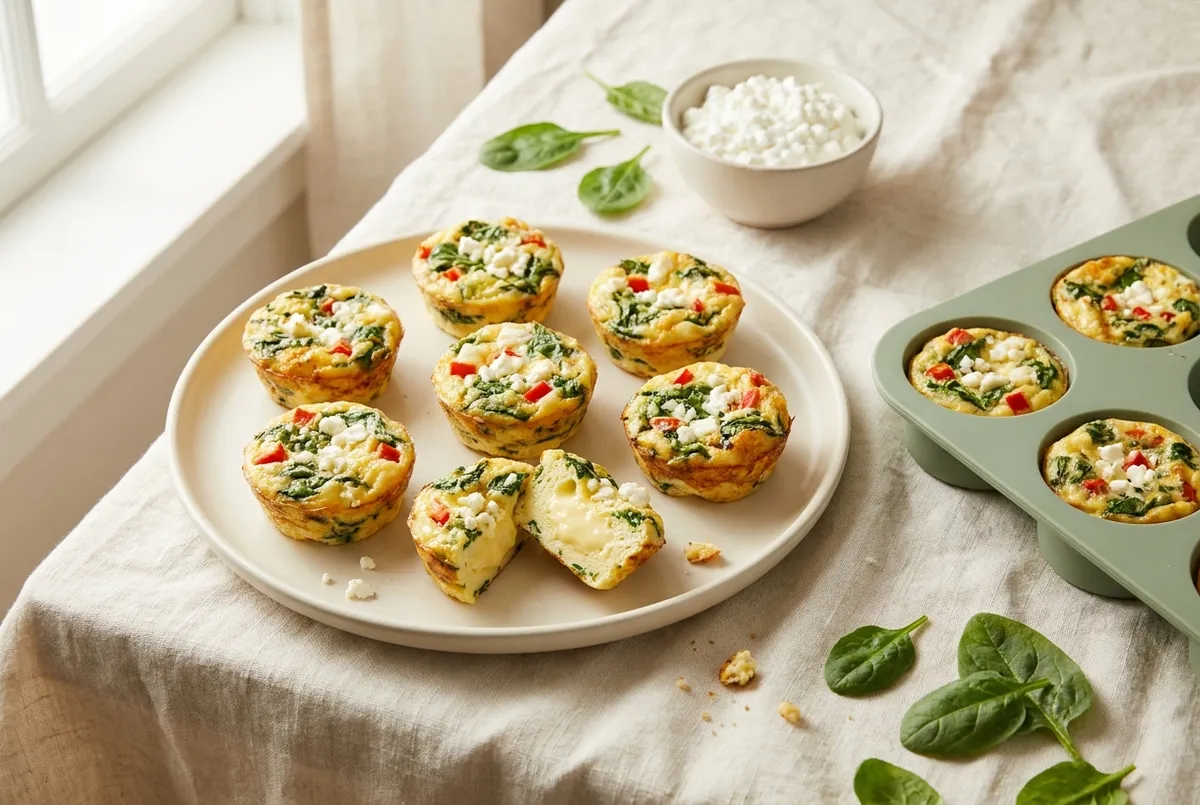
Keep a batch of hard-boiled eggs in the fridge. Slice two and dip them in 2 tablespoons of hummus. For a make-ahead option, try our spinach feta egg bites.
Calm evening and bedtime protein snacks
If you often feel hungry in the evening, a small protein snack can keep you from raiding the pantry late at night. Keep evening snacks light and simple, and choose ones that are low in added sugar.
16. Kefir pumpkin seed cup (14 g)
Pour a cup of plain low-fat kefir into a glass and stir in 2 tablespoons of pumpkin seeds. Kefir adds tang and about 324 mg of calcium with the seeds included.
17. Warm soy milk with a peanut butter rice cake (11 g)
Warm a cup of calcium-fortified soy milk with cinnamon. Serve it with a rice cake spread with 1 tablespoon of peanut butter. It is cozy, plant-based, and gentle on a full stomach.
18. Pistachio latte pairing (16 g)
A 12-ounce latte made with 2% milk paired with a small handful of pistachios gives you about 16 grams of protein. Make it decaf in the evening. It also gives you about 390 mg of calcium, the most of any snack here.
Protein snacks that also help you meet calcium needs
Women over 50 need about 1,200 mg of calcium a day, according to the NIH Office of Dietary Supplements (source). Many protein snacks can help you get there, which is useful because protein and calcium both support bone health (source).
The top calcium snacks in our ranking are the pistachio latte pairing (390 mg), chocolate ricotta dip (366 mg), and kefir with pumpkin seeds (324 mg). Calcium-set tofu bites (302 mg) and fortified soy milk (309 mg) are the best plant-based choices.
Protein bars vs whole food snacks
Protein bars are handy, but whole food snacks usually win on calcium, fiber, and added sugar. Many bars use sugar alcohols or added sugars to taste sweet. The table below compares the two in general terms.
| What matters | Typical protein bar | Whole food snack from this list |
|---|---|---|
| Protein | 10 to 20 g | 10 to 23 g |
| Added sugar | Often 5 to 15 g | Usually 0 to 5 g |
| Calcium | Low unless fortified | Up to 390 mg |
| Fiber | Often from added fibers | From fruit, beans, and seeds |
| Ingredient list | Long | Two or three foods |
| Cost per serving | Often higher | Usually lower |
A bar is fine when you are traveling or truly out of options. For most days, a cup of Greek yogurt or a few roll-ups gives you more nutrition for less money.
How to build your own protein snack
The simplest formula is one lean protein plus one fiber food. Start with at least 10 grams of protein, then add fruit, vegetables, or whole grains so the snack keeps you full.
- Pick a protein base: Greek yogurt, cottage cheese, tuna, salmon, turkey, tofu, edamame, or eggs.
- Add fiber: berries, a pear, an apple, cherry tomatoes, cucumber, or whole grain crackers.
- Add a small topper: a tablespoon of nuts, seeds, or hemp hearts.
- Check the label: keep added sugar low and watch sodium on deli meat and jerky.
The Dietary Guidelines encourage a mix of protein foods across the week, including seafood, dairy, soy, beans, nuts, and seeds (source). Rotating your snacks is an easy way to follow that advice.
How we test our recipes
Every Midlife Plate recipe is cooked at least twice in a home kitchen with ordinary supermarket ingredients, timed from first chop to plate, and weighed gram by gram before we publish its nutrition. Nutrition is calculated from USDA FoodData Central.
Frequently asked questions
What are good protein snack ideas for menopause?
Good protein snack ideas for menopause include Greek yogurt with berries, cottage cheese with fruit or tomatoes, edamame, turkey roll-ups, tuna or salmon on crackers, and baked tofu bites. Each gives you 10 to 23 grams of protein. Many also add calcium, which matters for bone health after menopause. Pick one you enjoy and keep its ingredients stocked.
How many grams of protein should a snack have?
Most women do well with 10 to 20 grams of protein per snack. That fills the gap between meals without replacing them. Meals should still carry about 25 to 30 grams each. If you snack twice a day, aim for the lower end of that range so your total stays balanced with your calorie needs.
What is the highest protein snack without protein powder?
In our ranking, salmon rice cakes have the most protein at about 23 grams. A Greek yogurt cup with berries and hemp hearts is close behind at 21 grams. For protein per calorie, canned tuna wins, with about 22.6 grams of protein for every 100 calories. None of these need protein powder or bars.
Are protein bars healthy for women over 50?
Protein bars can be a handy backup, but they are not always the healthiest choice. Many contain added sugar or sugar alcohols and very little calcium. Whole food snacks like yogurt, cottage cheese, and edamame usually offer more nutrition per serving. If you buy bars, compare labels for protein, added sugar, and fiber.
What is a good high protein snack at night?
A good evening protein snack is small, simple, and low in added sugar. Kefir with pumpkin seeds, warm soy milk with a peanut butter rice cake, or a decaf latte with pistachios all work well. Each has 11 to 16 grams of protein. They also add calcium, which many women in menopause need more of.
Which protein snacks are best for weight management?
Snacks with the most protein per calorie are the best fit if you are watching calories. Cottage cheese with tomatoes, tuna crackers, tofu bites, Greek yogurt cups, and turkey roll-ups all give 11 or more grams of protein per 100 calories. Pair them with fruit or vegetables for fiber, and talk with your clinician about your personal goals.
Want snacks that fit a full day of eating? Get our free 7-day high-protein meal plan, read how much protein women need in menopause, or try our high protein breakfasts without eggs.
This article is for general education and is not medical advice. If you have a medical condition, such as kidney disease, or take medication, ask your clinician or a registered dietitian about your protein, sodium, and calorie needs. Read the full medical disclaimer.
Sources
- Bauer J, et al. Evidence-Based Recommendations for Optimal Dietary Protein Intake in Older People (PROT-AGE). J Am Med Dir Assoc. 2013.
- Paddon-Jones D, Rasmussen BB. Dietary protein recommendations and the prevention of sarcopenia. Curr Opin Clin Nutr Metab Care. 2009.
- USDA Agricultural Research Service. FoodData Central (SR Legacy).
- Silva TR, et al. Nutrition in Menopausal Women: A Narrative Review. Nutrients. 2021.
- U.S. Food and Drug Administration. Sodium in Your Diet.
- American Heart Association. Added Sugars.
- U.S. Food and Drug Administration. Advice about Eating Fish.
- NIH Office of Dietary Supplements. Calcium: Fact Sheet for Health Professionals.
- Rizzoli R, et al. Benefits and safety of dietary protein for bone health (ESCEO/IOF expert consensus). Osteoporos Int. 2018.
- U.S. Departments of Agriculture and Health and Human Services. Dietary Guidelines for Americans, 2020 to 2025.
Leave a Reply