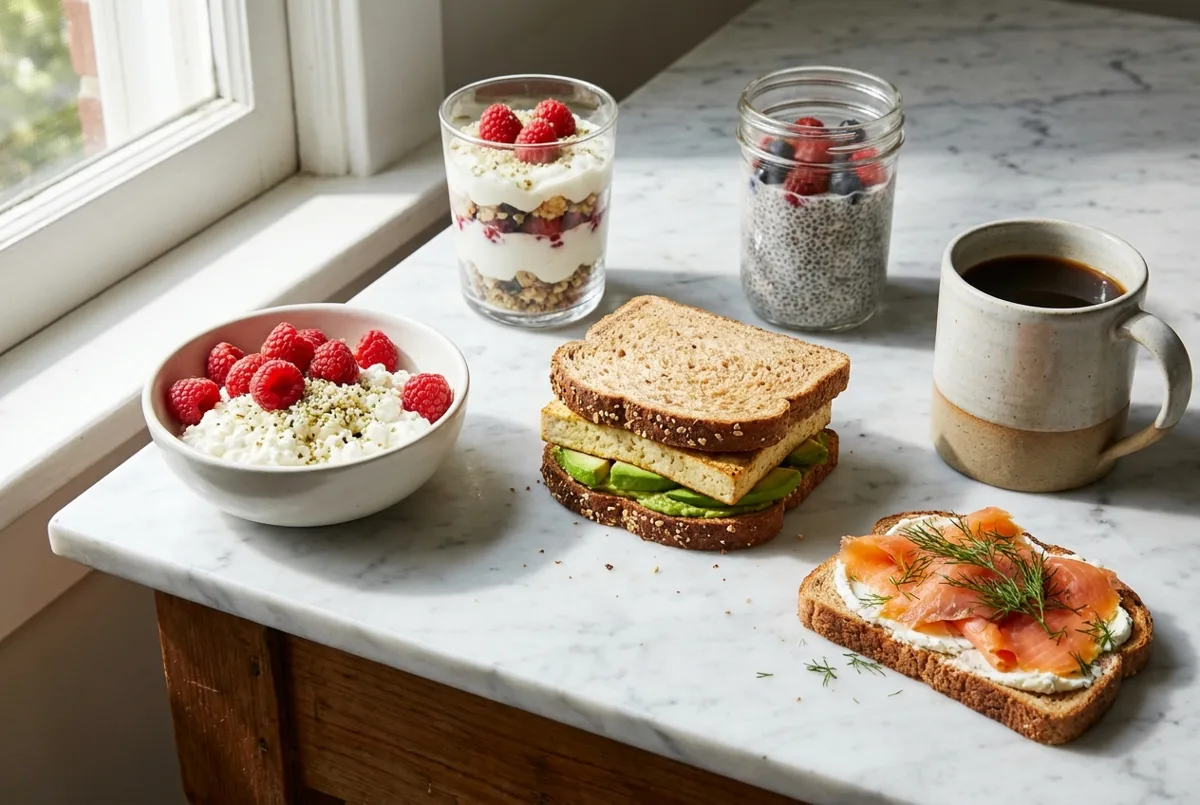
A high protein breakfast without eggs is easier than most people think. Eggs are handy, but one large egg has only about 6 grams of protein. Greek yogurt, cottage cheese, tofu, smoked salmon, and even leftover soup can give you far more.
This guide has 15 egg-free breakfasts with at least 20 grams of protein each. None of them need protein powder.
At a glance
- Ideas: 15 egg-free breakfasts
- Protein: 22 to 38 g per breakfast
- Protein powder: never needed
- Vegan options: 6 clearly marked
- Bonus: a 7-day egg-free breakfast rotation
- Numbers: calculated with USDA FoodData Central
Last updated October 12, 2026. Nutrition calculated from USDA FoodData Central by the Midlife Plate Editorial Team. See our editorial and nutrition policy.
Why choose a high protein breakfast without eggs?
There are plenty of good reasons to skip eggs in the morning. Some people have an egg allergy or an intolerance. Others follow a vegan diet. Many people are simply tired of eggs after years of scrambles and omelets.
Some readers have also been told by their own doctor to limit eggs or dietary cholesterol. That advice is personal, so follow it. The good news is that you do not lose much by skipping eggs. You just need to swap in foods that carry more protein per bite.
Two eggs give you about 12 grams of protein. That is a good start, but it falls short of the 25 to 30 grams per meal that research on aging muscle suggests (source). Most of the egg-free foods below beat eggs gram for gram.
How much protein do you need at breakfast?
The PROT-AGE expert group suggests 1.0 to 1.2 grams of protein per kilogram of body weight each day for healthy older adults (source). For a woman who weighs 150 pounds, that is about 68 to 82 grams a day.
Evidence scope: The PROT-AGE 1.0 to 1.2 g/kg recommendation concerns adults older than 65. It is not a universal target for women aged 40 to 60 or a prescription for menopause. Meal and snack numbers here are examples, not individual advice. See the PROT-AGE position paper and our protein guidance and evidence limits.
Spreading that protein evenly seems to help more than loading it all at dinner (source). A good target for breakfast is 25 to 30 grams. Every idea on this list gives you at least 22.
Not sure what your own number is? Our protein quiz gives you a daily target in about a minute. You can also read our full guide on how much protein women need in menopause.
Egg-free protein foods compared to eggs
This table shows how common egg-free breakfast foods stack up against two large eggs. Values are approximate and based on USDA data (source).
| Food | Portion | Protein |
|---|---|---|
| Large eggs (for comparison) | 2 eggs | about 12 g |
| Nonfat plain Greek yogurt | 1 cup | about 23 g |
| Low-fat cottage cheese (2%) | 1 cup | about 24 g |
| Firm tofu | 7 oz | about 18 g |
| Smoked salmon (lox) | 3 oz | about 15 g |
| Part-skim ricotta | 1/2 cup | about 14 g |
| Tempeh | 3 oz | about 17 g |
| Cooked lentils | 1 cup | about 18 g |
| Kefir (low-fat) | 1 cup | about 9 g |
| Soy milk | 1 cup | about 7 g |
| Hemp hearts | 3 tbsp | about 10 g |
| Peanut butter | 2 tbsp | about 7 g |
A cup of Greek yogurt or cottage cheese gives you nearly twice the protein of two eggs. Tofu and tempeh are close to two eggs, and they work well for savory breakfasts.
How this list compares to other egg-free breakfast lists
We read the top egg-free breakfast lists before writing this one. Many are helpful, but they often rely on protein powder or set a lower bar for protein.
| What we looked for | Typical egg-free lists | This list |
|---|---|---|
| Minimum protein per idea | Often 10 to 15 g | 22 g |
| Protein powder | Common | Never |
| Protein numbers shown | Sometimes | Every idea |
| Savory options | Few | 7 savory ideas |
| Vegan options marked | Sometimes | Always |
| Weekly plan included | Rarely | Yes, 7 days |
Sweet high protein breakfasts without eggs
These are the fastest ideas on the list. Most take five minutes or less, and several can be made the night before.
1. Greek yogurt parfait with nuts and berries (28 g)
Layer 1 cup of nonfat plain Greek yogurt with 1/2 cup of berries, 2 tablespoons of chopped walnuts, and 1 tablespoon of hemp hearts. Add a drizzle of honey if you like. This is the quickest way to reach almost 30 grams before work.
Plain yogurt keeps added sugar low. The American Heart Association suggests women keep added sugar to about 25 grams a day (source). Flavored yogurt can use up much of that in one cup.
2. Cottage cheese berry bowl with hemp hearts (31 g)
Spoon 1 cup of 2% cottage cheese into a bowl. Top it with 3/4 cup of mixed berries, 2 tablespoons of hemp hearts, and a pinch of cinnamon. It tastes like cheesecake and keeps you full for hours.
If you do not like the texture of cottage cheese, blend it for 30 seconds first. It turns smooth and creamy, much like thick yogurt.
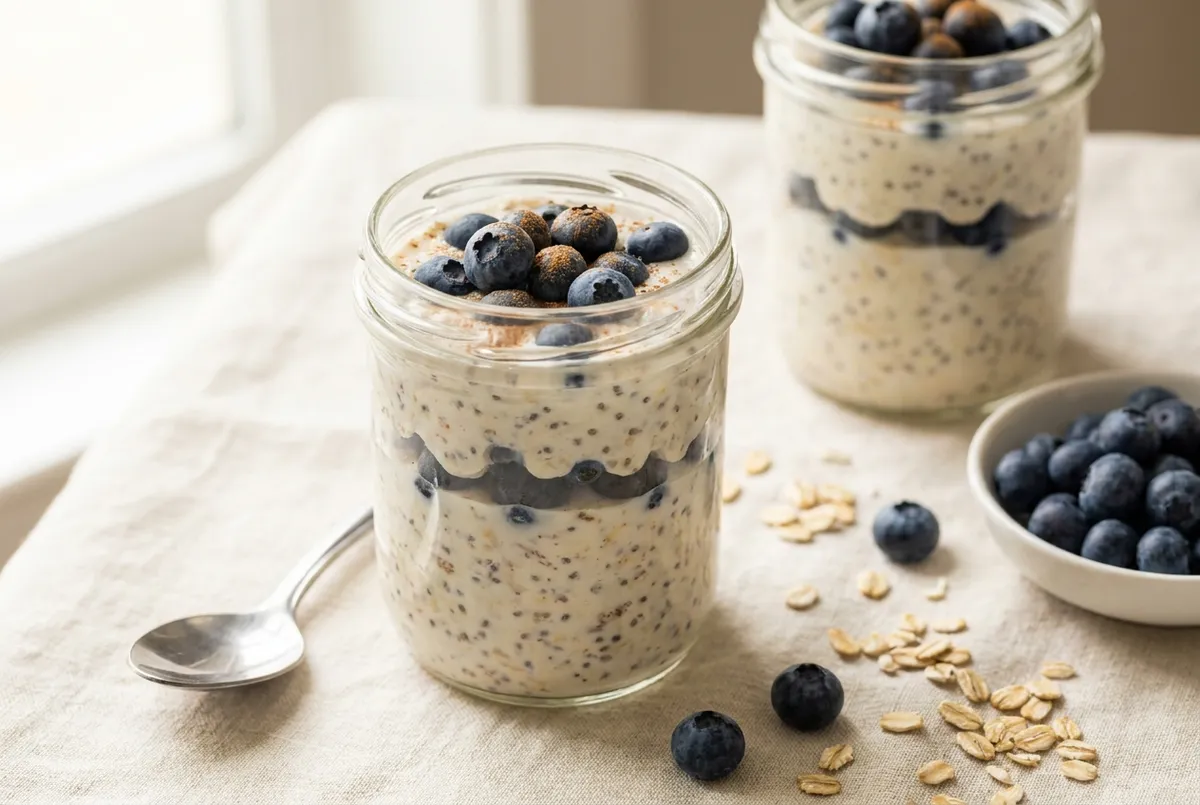
3. Greek yogurt overnight oats (30 g)
Mix rolled oats, Greek yogurt, milk, and chia seeds in a jar the night before. In the morning you have a cold, creamy breakfast with about 30 grams of protein. Our Greek yogurt overnight oats recipe has the exact amounts.
Make four jars on Sunday and breakfast is done until Thursday.
4. Pumpkin Greek yogurt bowl (26 g)
Stir 1/3 cup of canned pumpkin, cinnamon, and a little maple syrup into 1 cup of Greek yogurt. Top it with toasted pumpkin seeds. It tastes like pumpkin pie and adds fiber and vitamin A.
This bowl is a nice change in the fall, when berries are less fresh and more costly.
5. Berry protein smoothie with no powder (25 g)
Blend Greek yogurt, milk, frozen berries, and a spoonful of nut butter. You get a thick, cold smoothie with about 25 grams of protein and no powder at all. See our berry protein smoothie for the full recipe.
Smoothies are a good choice if you are not hungry early in the morning. You can sip them slowly on the way to work.
6. Kefir peanut butter banana smoothie (25 g)
Blend 1 cup of low-fat kefir with 1/2 cup of Greek yogurt, 1 tablespoon of peanut butter, half a frozen banana, and ice. Kefir adds a gentle tang and live cultures.
This one tastes like a milkshake. It is a good pick for people who find plain yogurt too sour.
7. Chia pudding with soy milk and Greek yogurt (24 g)
Stir 3 tablespoons of chia seeds into 1 cup of soy milk and let it set overnight. In the morning, fold in 1/2 cup of Greek yogurt and top with fruit. Chia adds fiber, and soy milk adds more protein than almond or oat milk.
For a vegan version, swap the yogurt for a thick soy yogurt and add 2 tablespoons of hemp hearts.
8. Peanut butter oatmeal with soy milk and hemp (22 g, vegan)
Cook 1/2 cup of rolled oats in 1 cup of soy milk. Stir in 1 tablespoon of peanut butter and top with 2 tablespoons of hemp hearts and sliced banana. It is warm, filling, and fully plant-based.
Cooking oats in soy milk instead of water adds about 7 grams of protein for almost no extra effort.
Savory high protein breakfasts without eggs
If you prefer salty breakfasts, these savory ideas are for you. They are also a good way to add vegetables early in the day.
9. Tofu scramble with spinach (31 g, vegan)
Crumble firm tofu into a hot pan with onion, spinach, turmeric, and a pinch of black salt. It looks and tastes a lot like scrambled eggs. Our tofu scramble with spinach gives you about 31 grams of plant protein.
Calcium-set tofu also adds calcium, which matters for bone health after menopause (source). Check the label for calcium sulfate.
10. Smoked salmon toast with ricotta (31 g)
Spread 1/4 cup of part-skim ricotta on two slices of whole grain toast. Top with 3 ounces of smoked salmon, cucumber, capers, and dill. It feels like a weekend brunch, but it takes five minutes.
Salmon adds omega-3 fats. It is also one of the lower mercury fish choices (source). Smoked salmon is salty, so balance it with lower sodium foods the rest of the day (source).
11. Savory cottage cheese toast (26 g)
Spread 3/4 cup of cottage cheese across two slices of whole grain toast. Top with sliced tomato, cracked pepper, a drizzle of olive oil, and everything bagel seasoning. It is crunchy, creamy, and ready in three minutes.
You can also try cucumber and dill, or avocado and chili flakes.
12. Tofu breakfast sandwich (25 g, vegan option)
Press a 1/2 inch slab of firm tofu and pan-fry it with soy sauce and garlic powder. Put it on a whole grain English muffin with tomato, spinach, and a slice of cheese. Use vegan cheese or hummus to make it fully plant-based.
Cook four tofu slabs at once. They keep in the fridge for four days and reheat in under a minute.
13. Tempeh and sweet potato hash (25 g, vegan)
Dice 3 ounces of tempeh and a small sweet potato. Cook them in olive oil with peppers, onion, and smoked paprika until crisp. Tempeh is fermented soy with a nutty flavor, and it has more protein than tofu per ounce.
This hash also works well as a make-ahead breakfast. Reheat it in a skillet so the edges stay crisp.
14. Ricotta toast with fruit or greens (23 g)
Spread 1/2 cup of part-skim ricotta over two slices of whole grain toast. For a sweet version, add sliced peaches and a little honey. For a savory version, add arugula, lemon zest, and black pepper.
Ricotta is softer and milder than cottage cheese, so it is a good gateway for people who are new to high protein dairy.
15. Leftover lentil soup (38 g)
Breakfast does not have to look like breakfast. A bowl of last night’s soup is warm, filling, and full of fiber. Our lentil soup with chicken sausage has about 38 grams of protein per bowl.
Many cultures eat soup, beans, or rice in the morning. If it works for you, it counts.
Quick comparison of all 15 egg-free breakfasts
This table lists all 15 egg-free breakfasts with protein, flavor type, and whether each one is vegan. Every option has at least 22 grams of protein without eggs or protein powder.
| # | Breakfast | Protein | Type | Vegan |
|---|---|---|---|---|
| 1 | Greek yogurt parfait | 28 g | Sweet | No |
| 2 | Cottage cheese berry bowl | 31 g | Sweet | No |
| 3 | Greek yogurt overnight oats | 30 g | Sweet | No |
| 4 | Pumpkin Greek yogurt bowl | 26 g | Sweet | No |
| 5 | Berry smoothie, no powder | 25 g | Sweet | No |
| 6 | Kefir peanut butter smoothie | 25 g | Sweet | No |
| 7 | Chia pudding with soy milk | 24 g | Sweet | Option |
| 8 | Peanut butter oatmeal with hemp | 22 g | Sweet | Yes |
| 9 | Tofu scramble with spinach | 31 g | Savory | Yes |
| 10 | Smoked salmon ricotta toast | 31 g | Savory | No |
| 11 | Savory cottage cheese toast | 26 g | Savory | No |
| 12 | Tofu breakfast sandwich | 25 g | Savory | Option |
| 13 | Tempeh sweet potato hash | 25 g | Savory | Yes |
| 14 | Ricotta toast | 23 g | Either | No |
| 15 | Leftover lentil soup | 38 g | Savory | No |
A 7-day high protein breakfast plan without eggs
Here is a simple week that mixes sweet and savory ideas. It uses a few staple foods, so your shopping list stays short.
| Day | Breakfast | Protein |
|---|---|---|
| Monday | Greek yogurt overnight oats | 30 g |
| Tuesday | Savory cottage cheese toast | 26 g |
| Wednesday | Berry smoothie, no powder | 25 g |
| Thursday | Tofu breakfast sandwich | 25 g |
| Friday | Greek yogurt parfait | 28 g |
| Saturday | Smoked salmon ricotta toast | 31 g |
| Sunday | Tofu scramble with spinach | 31 g |
That week averages about 28 grams of protein each morning. For lunches and dinners that match, grab our free 7-day high-protein meal plan.
Shopping list for the week: Greek yogurt, cottage cheese, part-skim ricotta, firm tofu, smoked salmon, rolled oats, chia seeds, hemp hearts, frozen berries, whole grain bread, English muffins, spinach, and tomatoes.
Tips for building your own egg-free high protein breakfast
Building your own egg-free high protein breakfast is simple. Start with one protein-rich anchor food, add fiber, and use soy or dairy milk instead of low-protein plant milks.
- Start with an anchor. Pick one food with 15 grams or more, such as Greek yogurt, cottage cheese, tofu, tempeh, or salmon.
- Add a booster. Hemp hearts, chia seeds, nuts, or seeds add 3 to 10 grams more.
- Use soy milk. It has about 7 grams of protein per cup, while almond milk often has 1 gram.
- Add fiber. Fruit, oats, whole grain bread, and vegetables help keep you full.
- Watch the label. Flavored yogurt and granola can hide a lot of added sugar.
- Cook once, eat twice. Tofu slabs, hash, and overnight oats all keep for several days.
The Dietary Guidelines encourage a variety of protein foods, including dairy, seafood, soy, beans, nuts, and seeds (source). An egg-free breakfast is a natural way to add that variety.
Common mistakes with egg-free breakfasts
The most common mistake is choosing foods that look healthy but carry little protein. A bowl of granola with almond milk may have only 6 grams. A plain bagel with cream cheese has about 10. Avocado toast on its own has even less.
Another mistake is relying on plant milk that is mostly water. Almond, oat, and rice milk are fine for taste, but they rarely add much protein. Soy milk and dairy milk are better choices if protein is your goal.
A third mistake is skipping protein because you are in a hurry. Keep single-serve yogurt cups, cottage cheese cups, and a bag of hemp hearts on hand. A five-minute breakfast still counts.
How we test our recipes
Every Midlife Plate recipe is cooked at least twice in a home kitchen with ordinary supermarket ingredients, timed from first chop to plate, and weighed gram by gram before we publish its nutrition. Nutrition is calculated from USDA FoodData Central.
Frequently asked questions
What is a high protein breakfast without eggs?
It is any breakfast with at least 20 grams of protein that does not use eggs. Greek yogurt bowls, cottage cheese toast, tofu scrambles, smoked salmon toast, and leftover soup are all good examples. Pick the one that fits your taste and schedule.
Can I get 30 grams of protein at breakfast without eggs?
Yes. A cottage cheese berry bowl with hemp hearts has about 31 grams. Smoked salmon ricotta toast and a tofu scramble also reach about 31 grams. All three use everyday foods and take 15 minutes or less. That is above the 25 to 30 grams per meal that research suggests for older adults (source).
What can I eat instead of eggs for protein?
Greek yogurt, cottage cheese, ricotta, tofu, tempeh, smoked salmon, lentils, and soy milk are all good swaps. Most of them have more protein per serving than two eggs. Two eggs have about 12 grams, while a cup of Greek yogurt has about 23.
Is there a vegan high protein breakfast without eggs?
Yes. Tofu scramble, a tofu breakfast sandwich with vegan cheese, tempeh hash, and peanut butter oatmeal with soy milk and hemp are all vegan. Each one has at least 22 grams of protein. Calcium-set tofu also adds calcium, and soy milk adds more protein.
Do I need protein powder to reach 20 grams?
No. Every breakfast on this list reaches at least 22 grams with whole foods. Protein powder can be useful, but it is not required. Whole foods also bring fiber, calcium, and other nutrients that powders often lack. A cottage cheese bowl or a tofu scramble can match a protein shake with no scoop needed.
Are egg-free breakfasts good for women over 50?
They can be a great fit. Dairy and calcium-set tofu add calcium, which supports bone health (source). Talk with your doctor or a dietitian if you have a health condition or a special diet. Many of these breakfasts also add fiber from fruit, oats, and seeds.
Want more ideas? See our 30 high protein breakfast ideas for women over 50, or take the protein quiz to find your daily protein target.
This article is for general education and is not medical advice. If you have a medical condition, such as kidney disease, or take medication, ask your clinician or a registered dietitian about your protein, sodium, and calorie needs. Read the full medical disclaimer.
Sources
- Paddon-Jones D, Rasmussen BB. Dietary protein recommendations and the prevention of sarcopenia. Curr Opin Clin Nutr Metab Care. 2009.
- Bauer J, et al. Evidence-Based Recommendations for Optimal Dietary Protein Intake in Older People (PROT-AGE). J Am Med Dir Assoc. 2013.
- USDA Agricultural Research Service. FoodData Central (SR Legacy).
- American Heart Association. Added Sugars.
- NIH Office of Dietary Supplements. Calcium: Fact Sheet for Health Professionals.
- U.S. Food and Drug Administration. Advice about Eating Fish.
- U.S. Food and Drug Administration. Sodium in Your Diet.
- U.S. Departments of Agriculture and Health and Human Services. Dietary Guidelines for Americans, 2020 to 2025.
Leave a Reply