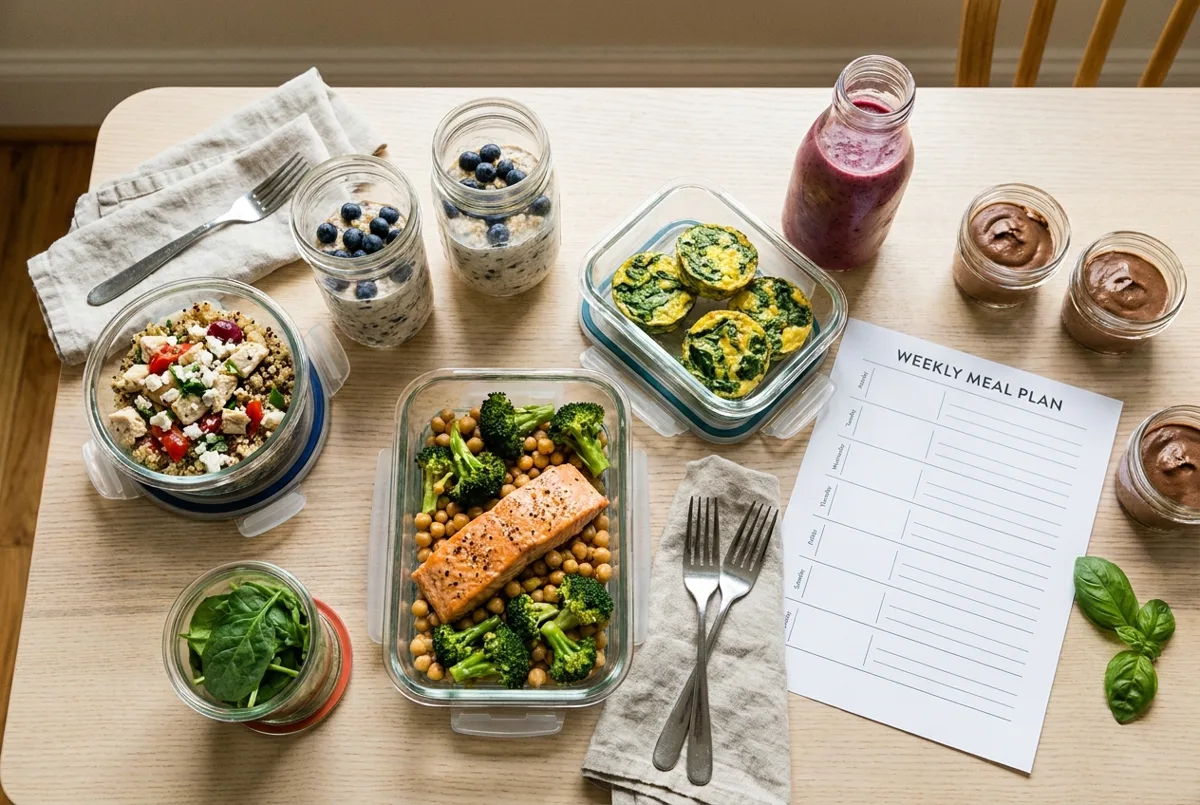
This free high protein meal plan gives you seven days of breakfasts, lunches, dinners, and snacks built for women in perimenopause and menopause. Every day lands between about 100 and 135 grams of protein at roughly 1,500 to 1,650 calories. Every main meal has at least 25 grams.
One 90-minute Sunday prep covers most of the week, and you can download the full plan as a free printable PDF.
At a glance
- Protein: 104 to 135 g per day
- Calories: about 1,485 to 1,660 per day
- Fiber: 21 to 34 g per day
- Sodium: under 2,300 mg every day
- Prep: one 90-minute Sunday session plus three short top-ups
- Protein powder: not needed
- Get it: download the free PDF with a grocery list
Last updated October 12, 2026. Nutrition calculated from USDA FoodData Central by the Midlife Plate Editorial Team. See our editorial and nutrition policy.
Why a high protein meal plan helps in menopause
Midlife changes how your body handles muscle. Muscle mass slowly declines with age, and falling estrogen seems to speed that up. Eating enough protein, along with strength training, is one of the most practical ways to push back.
The PROT-AGE expert group recommends 1.0 to 1.2 grams of protein per kilogram of body weight daily for healthy older adults (source). A 2024 review of nutrition in perimenopause and menopause supports a similar range for protecting muscle and bone (source).
Evidence scope: The PROT-AGE 1.0 to 1.2 g/kg recommendation concerns adults older than 65. It is not a universal target for women aged 40 to 60 or a prescription for menopause. Meal and snack numbers here are examples, not individual advice. See the PROT-AGE position paper and our protein guidance and evidence limits.
How you spread it matters too. Research on aging muscle suggests about 25 to 30 grams per meal works better than a small breakfast and a huge dinner (source). That is why every main meal in this plan has at least 25 grams.
Protein also helps with fullness. Many women find that a protein-forward breakfast curbs afternoon snacking and evening cravings.
How this plan compares with other menopause meal plans
We reviewed the most popular high protein and menopause meal plans online before building ours. Most are thoughtful, but they differ a lot in protein, prep, and detail.
| Feature | Typical menopause meal plan | Typical high protein plan | This plan |
|---|---|---|---|
| Protein per day | 80 to 90 g | 100 g or more | 104 to 135 g |
| Protein per meal | Often uneven | 25 to 35 g | 25 g or more at every main meal |
| Calories | 1,500 to 1,800 | Varies widely | About 1,485 to 1,660 |
| Sodium limit | Rarely stated | Rarely stated | Under 2,300 mg daily |
| Prep plan | Sometimes | Sometimes | 90-minute Sunday prep plus top-ups |
| Protein powder | Sometimes | Often | Never needed |
Our plan aims a little higher on protein than most menopause plans. It also keeps sodium in check, which many high protein plans ignore. Every number comes from USDA FoodData Central ingredient data, not estimates.
How much protein do you need?
The example menu totals roughly 100 to 135 grams a day, but that does not establish what you personally need. The table below illustrates arithmetic at 1.0 to 1.2 grams per kilogram; it is not a menopause prescription. Portions and overall intake need individual context.
| Body weight | Protein per day | Per meal (3 meals) |
|---|---|---|
| 120 lb (54 kg) | 54 to 65 g | 18 to 22 g |
| 140 lb (64 kg) | 64 to 76 g | 21 to 25 g |
| 160 lb (73 kg) | 73 to 87 g | 24 to 29 g |
| 180 lb (82 kg) | 82 to 98 g | 27 to 33 g |
| 200 lb (91 kg) | 91 to 109 g | 30 to 36 g |
If your target is under 100 grams, skip the snack on any day or use a smaller yogurt portion. For a personal number, take our quick protein quiz. Our guide on how much protein women need in menopause explains the research in more detail.
Your 7-day high protein meal plan at a glance
This table shows every meal in the 7-day high protein meal plan, with daily protein totals. Each day lands between 104 and 135 grams, with breakfast, lunch, and dinner all carrying at least 25 grams.
| Day | Breakfast | Lunch | Dinner | Snack | Protein |
|---|---|---|---|---|---|
| Sunday | Berry smoothie (25 g) | Blueberry walnut cottage cheese bowl (30 g) | Greek chicken bowl (48 g) | Greek yogurt seed parfait (26 g) | 129 g |
| Monday | Overnight oats (30 g) | Greek chicken bowl (48 g) | Sheet-pan salmon (39 g) | Sea-salt edamame (18 g) | 135 g |
| Tuesday | Berry smoothie (25 g) | Greek chicken bowl (48 g) | Sheet-pan salmon (39 g) | Chocolate mousse (19 g) | 131 g |
| Wednesday | Egg bites plus blueberries (28 g) | Sheet-pan salmon (39 g) | Peanut tofu soba (26 g) | String cheese, apple, almonds (10 g) | 104 g |
| Thursday | Overnight oats (30 g) | Greek chicken bowl (48 g) | Peanut tofu soba (26 g) | Eggs, hummus, carrots (16 g) | 120 g |
| Friday | Overnight oats (30 g) | Peanut tofu soba (26 g) | Shrimp, white bean, spinach pasta (46 g) | Chocolate mousse (19 g) | 121 g |
| Saturday | Egg bites plus blueberries (28 g) | Lemon lentil salad with eggs and feta (30 g) | Turkey black bean burrito bowl (44 g) | Greek yogurt seed parfait (26 g) | 128 g |
The recipes behind the plan
Most meals come from full recipes on Midlife Plate. The rest are quick assembly meals with instructions in the PDF.
Breakfasts
- Berry protein smoothie without protein powder: 25 g protein, 5 minutes
- High-protein overnight oats with Greek yogurt: 30 g protein, 13 g fiber
- Spinach feta cottage cheese egg bites: 28 g protein with berries
Lunches and dinners
- Greek chicken meal-prep bowls with quinoa and tzatziki: 48 g protein
- Sheet-pan lemon salmon with crispy chickpeas and broccoli: 39 g protein and omega-3 fats
- Peanut tofu and edamame soba bowls: 26 g plant protein
Snacks and dessert
- Chocolate cottage cheese mousse: 19 g protein in 5 minutes
- Greek yogurt seed parfait, sea-salt edamame, and simple snack plates, all in the PDF
Day-by-day calories, fiber, and sodium
Protein is only part of the picture in menopause. This table shows calories, fiber, sodium, and calcium for each day, calculated from USDA FoodData Central.
| Day | Calories | Protein | Fiber | Sodium | Calcium |
|---|---|---|---|---|---|
| Sunday | 1,504 | 129 g | 24 g | 2,049 mg | 1,355 mg |
| Monday | 1,650 | 135 g | 32 g | 1,782 mg | 917 mg |
| Tuesday | 1,562 | 131 g | 23 g | 2,230 mg | 1,072 mg |
| Wednesday | 1,485 | 104 g | 21 g | 2,238 mg | 964 mg |
| Thursday | 1,661 | 120 g | 28 g | 2,060 mg | 1,154 mg |
| Friday | 1,647 | 121 g | 34 g | 2,290 mg | 1,368 mg |
| Saturday | 1,614 | 128 g | 33 g | 1,876 mg | 914 mg |
Sodium stays under the 2,300 milligram daily limit in the Dietary Guidelines for Americans every day (source). Calcium averages over 1,000 milligrams. The NIH suggests 1,200 milligrams for women over 50, so a glass of milk or fortified soy milk closes the gap on lower days (source).
The Sunday prep: about 90 minutes
Prep once, and most of the week is handled. Here is the order that saves the most time. Start with the slowest items, like grains and roasted vegetables, and finish with quick sauces.
- Start the quinoa and heat the oven. Rinse the quinoa and start it on the stove. Heat the oven to 350°F.
- Bake the egg bites. Blend the batter, fill a muffin tin, and bake about 22 minutes.
- Boil four eggs. These cover two snacks and a lunch later in the week.
- Roast the chicken. Marinate it with lemon, oregano, garlic, and oil. Roast at 425°F until it reaches 165°F inside, per USDA guidance (source).
- Make the tzatziki and chop vegetables. Cucumber, tomatoes, onion, and olives go into the chicken bowls.
- Pack four chicken bowls. Keep the sauce separate so it stays fresh.
- Cool and store the egg bites. Refrigerate one serving and freeze the rest.
- Make one jar of overnight oats. Optional: bag two smoothie packs and freeze them.
Mid-week top-ups
Three short cooking sessions keep everything fresh and inside the safe leftover window. Each one takes 20 to 30 minutes, and cooked food stays within the 3 to 4 day fridge limit.
- Monday night, 30 minutes. Roast the sheet-pan salmon. It covers three meals.
- Tuesday, 5 minutes. Blend the chocolate mousse. Have one tonight and one on Friday.
- Wednesday night, 25 minutes. Make the peanut tofu soba and stir up two jars of oats for Thursday and Friday.
USDA food safety guidance recommends eating refrigerated leftovers within 3 to 4 days (source). The plan is built around that rule, and spare portions go into the freezer.
How to make the plan fit you
If your target is lower. Skip the snack on any day, or halve the yogurt in the parfaits. Every main meal still gives 25 grams or more.
If you are hungry or very active. Add a tablespoon of peanut butter to toast, a banana, or an ounce of almonds. Each adds about 100 to 165 calories.
If you are cooking for one. The recipes make four servings. The plan uses leftovers inside the safe window, and extra portions can go to a partner or the freezer.
If you are vegetarian. Swap the chicken bowls for our high-protein lentil soup tofu version. Swap the salmon for the high-protein tofu scramble with spinach or the peanut tofu soba.
If you want new recipes. Any meal can be replaced with a recipe of similar protein. Try the high-protein turkey white bean chili, high-protein freezer breakfast burritos, or Greek yogurt chicken salad.
Easy swaps by category
You can change almost any meal in this plan and keep protein high. Use this table to swap by taste, diet, or what is in your fridge.
| If you want | Swap this | For this | Protein change |
|---|---|---|---|
| Dairy-free breakfast | Overnight oats | Tofu scramble | About the same |
| Faster lunch | Greek chicken bowl | Greek yogurt chicken salad | About 9 g less |
| Fish-free dinner | Sheet-pan salmon | Turkey white bean chili | About 8 g more |
| Lower calories | Chocolate mousse | Sea-salt edamame | About the same |
| A sweet breakfast | Egg bites | High-protein baked oats | About 2 g more |
What about strength training?
Food is only half of the muscle story. Protein works best alongside regular resistance exercise. A 2024 review of menopause nutrition points out that protein and strength training together support muscle and bone better than either one alone (source).
You do not need a gym. Two or three short sessions a week with body weight, bands, or dumbbells is a strong start. Pair a high protein meal or snack with your workout on those days.
Who should check with a doctor first
This plan is a general eating guide, not medical advice. A higher protein intake is safe for most healthy adults. Some people need a personalized plan, though.
Talk with your clinician or a registered dietitian before you start if you have kidney disease, diabetes treated with medication, or a history of eating disorders. The same goes if you have been told to follow a special diet.
Get the free printable PDF
The full 12-page PDF includes the daily pages with calories, protein, fiber, sodium, and calcium for every meal. It also has the quick recipes for the parfait, cottage cheese bowl, lentil salad, and burrito bowl. You also get a grocery list sorted by store section and a food storage chart.
Download the free 7-day high protein meal plan PDF. Enter your email and the PDF opens right away.
How we test our recipes
Every Midlife Plate recipe is cooked at least twice in a home kitchen with ordinary supermarket ingredients, timed from first chop to plate, and weighed gram by gram before we publish its nutrition. Nutrition is calculated from USDA FoodData Central.
Frequently asked questions
What is a good high protein meal plan for menopause?
A good plan spreads protein across the day, with about 25 to 30 grams per meal. It should include fiber, calcium, and plenty of plants, and keep sodium in check. This plan does all of that with real-food recipes. It also needs to be realistic for your week.
How much protein should a woman in menopause eat per day?
Many experts suggest 1.0 to 1.2 grams per kilogram of body weight for healthy older adults. For a 150 pound woman, that is about 68 to 82 grams a day. Active women may need more. Our protein quiz offers planning estimates, not a personal medical prescription; discuss an appropriate target with a clinician or registered dietitian.
Is 100 grams of protein a day too much?
For most healthy women, no. It is on the higher end and works well with strength training. If you have kidney disease, ask your doctor before increasing protein. Spread it across meals rather than eating most of it at dinner. Drink enough water, and keep fiber high with beans, vegetables, and whole grains.
Can I lose weight on this meal plan?
The plan sits around 1,500 to 1,650 calories, which creates a modest deficit for many women. High protein meals also help with fullness. Weight change depends on your body, activity, and overall intake. Talk with your clinician or a dietitian about the right calorie level for you.
Do I need protein powder?
No. Every meal in this plan gets its protein from foods like eggs, Greek yogurt, cottage cheese, chicken, fish, tofu, beans, and lentils. Protein powder can be a handy backup on busy days, but you do not need it. Whole foods also bring fiber, calcium, and other nutrients that powders often lack.
Can I repeat the plan for another week?
Yes. Many women repeat it as is. You can also swap in new recipes with similar protein to keep things interesting. Keep the same structure of 25 to 30 grams per meal and one protein snack. Rotating proteins like fish, beans, tofu, and poultry adds variety across the month.
Is this meal plan vegetarian?
The base plan includes chicken, fish, and turkey. The swap section shows easy vegetarian options for each meal. Tofu, tempeh, lentils, eggs, and Greek yogurt can replace the meat and fish in most meals. Daily protein may dip a little, so add an extra serving of Greek yogurt or edamame if needed.
This article is for general education and is not medical advice. If you have a medical condition, such as kidney disease, or take medication, ask your clinician or a registered dietitian about your protein, sodium, and calorie needs. Read the full medical disclaimer.
Sources
- Bauer J, et al. Evidence-Based Recommendations for Optimal Dietary Protein Intake in Older People (PROT-AGE). J Am Med Dir Assoc. 2013.
- Erdélyi A, et al. The Importance of Nutrition in Menopause and Perimenopause: A Review. Nutrients. 2024;16(1):27.
- Paddon-Jones D, Rasmussen BB. Dietary protein recommendations and the prevention of sarcopenia. Curr Opin Clin Nutr Metab Care. 2009.
- U.S. Departments of Agriculture and Health and Human Services. Dietary Guidelines for Americans, 2020 to 2025.
- NIH Office of Dietary Supplements. Calcium: Fact Sheet for Health Professionals.
- USDA Food Safety and Inspection Service. Safe Minimum Internal Temperature Chart.
- USDA Food Safety and Inspection Service. Leftovers and Food Safety.
- USDA Agricultural Research Service. FoodData Central (SR Legacy).
Leave a Reply