These cottage cheese egg bites make a weekday breakfast that does real work. Three bites give you about 27 grams of protein for 266 calories, they reheat in under a minute, and a batch of twelve covers four mornings. Spinach, feta, and red pepper keep them tasting like a café order.
At a glance
- Protein: 27 g per serving (3 bites)
- Calories: 266 per serving
- Fiber: 1 g
- Calcium: 207 mg
- Total time: 32 minutes
- Makes: 12 bites, 4 servings
- Good for: 25g+ Protein, Meal Prep, Vegetarian, Gluten-Free
Why are cottage cheese egg bites a smart midlife breakfast?
Breakfast is the meal most women undershoot on protein. A bowl of cereal or a slice of toast with jam might land at 5 to 8 grams. Dinner, meanwhile, often carries 40 grams or more. That lopsided pattern is common, and it is the one worth fixing first after 40.
Research on aging muscle suggests that each meal works best when it delivers roughly 25 to 30 grams of high-quality protein. Older muscle seems to need a bigger dose at one sitting to switch on repair and growth. Spreading protein across the day beats saving most of it for the evening (source).
The daily target also rises with age. An international expert group recommends 1.0 to 1.2 grams per kilogram of body weight for healthy older adults, above the basic RDA of 0.8 (source). For a 150-pound woman, that is about 68 to 82 grams a day. A breakfast of 27 grams covers a third of that before 9 a.m.
Bones benefit too. A consensus of bone health experts found that adequate protein, together with calcium and vitamin D, supports bone density, and that higher protein intakes do not harm bones in healthy people (source). Each serving of these bites also adds about 207 mg of calcium from the cottage cheese and feta.
What makes these egg bites different
Plenty of egg bite recipes are just scrambled eggs baked in a muffin tin. They turn spongy, weep water on day two, and taste like a hotel buffet. Three small choices fix that here.
Cottage cheese, blended smooth. Cottage cheese does two jobs. It adds protein without adding much fat, and once it is blended with the eggs, it gives the bites a dense, custardy texture. The curds disappear completely, so even people who dislike cottage cheese rarely notice it.
A mix of whole eggs and whites. Whole eggs bring richness and the yolk’s vitamins. Liquid egg whites raise the protein while keeping calories and saturated fat in check. The ratio in this recipe is eight whole eggs to one cup of whites, which keeps the flavor rich.
A water bath. Setting the muffin tin inside a larger pan of hot water is optional, but it is what turns good bites into great ones. The water keeps the oven heat gentle around the cups. The eggs set slowly and evenly instead of puffing up and then collapsing.
Ingredients you need and smart swaps
Everything here is sold at a regular U.S. supermarket. The full amounts are in the recipe card below, but here is what each ingredient does.
- Large eggs: the base. Eight eggs make twelve bites.
- Liquid egg whites: one cup from a carton, or the whites of about seven eggs. Save the yolks for another use or skip the whites and use four more whole eggs.
- 2% cottage cheese: small curd blends fastest. Full-fat works and tastes richer. Nonfat works but sets a little firmer.
- Baby spinach: two packed cups, chopped fine. Chopping matters, because big leaves turn stringy.
- Feta: a third of a cup brings salt and tang. Goat cheese or shredded sharp cheddar also work.
- Red bell pepper and green onion: color, crunch, and a little sweetness.
- Salt and pepper: go light on salt because feta is already salty.
A few swaps keep the recipe flexible:
- No spinach? Use finely chopped kale with the stems removed, or a cup of thawed frozen spinach squeezed very dry.
- Dairy-light? Swap the feta for chopped olives and sun-dried tomatoes. Keep the cottage cheese, since it carries much of the protein.
- Want meat? Add half a cup of diced cooked turkey sausage or ham. Each serving gains a few grams of protein, plus some sodium.
How to make egg bites in a muffin tin
The method is simple, but the order matters. Here is the short version of what happens in the recipe card.
- Heat the oven to 350°F and grease a 12-cup muffin tin well. Silicone pans release more easily.
- Blend the eggs, whites, cottage cheese, salt, and pepper for 20 to 30 seconds, until completely smooth and slightly foamy.
- Divide the vegetables and feta among the cups first. This keeps the fillings evenly spread instead of sinking in one clump.
- Pour the egg mixture over the top, filling each cup about three-quarters full.
- Set up the water bath if using one. Pour about an inch of hot water into a roasting pan around the tin.
- Bake 20 to 24 minutes, until the centers are just set. A gentle shake should show no jiggle in the middle.
- Cool 5 minutes, run a thin knife around each bite, and lift them out.
Egg dishes are safe at 160°F, according to USDA food safety guidance (source). If you own an instant-read thermometer, check one center bite. If not, look for a center that springs back when pressed.
Common egg bite problems and how to fix them
Most egg bite failures come from one of four issues. Each has a simple fix.
| Problem | Likely cause | Fix |
|---|---|---|
| Bites stick to the pan | Not enough grease, or pulled too soon | Grease every cup well, cool 5 minutes, use silicone |
| Spongy, rubbery texture | Oven too hot or baked too long | Use the water bath and check at 20 minutes |
| Watery puddles | Wet vegetables | Pat spinach dry, squeeze thawed frozen spinach hard |
| Bites puff, then sink | Too much air whipped in | Blend just until smooth, not longer |
A little shrinking as they cool is normal. Egg proteins tighten as they set, so a slight dip in the center does not mean anything went wrong.
How to store, freeze, and reheat egg bites
These bites were built for meal prep, so storage matters as much as the recipe.
In the fridge. Cool the bites completely, then pack them in an airtight container lined with a paper towel. The towel absorbs moisture and keeps the bottoms from going soggy. They keep up to 4 days.
In the freezer. Freeze the cooled bites in a single layer on a sheet pan for an hour, then move them to a freezer bag. Pressing out the air helps prevent freezer burn. They keep about 2 months.
Reheating. Microwave two or three bites for 30 to 45 seconds from the fridge, or 60 to 90 seconds from frozen. Wrap them loosely in a damp paper towel to keep them tender. Leftovers should be reheated to 165°F for safety (source).
A toaster oven at 350°F also works, especially if you like a slightly crisp outside. Give them 8 to 10 minutes from the fridge.
Are egg bites good for weight loss in menopause?
No single food causes weight loss, and these bites are not a magic fix. What they can do is make a high-protein breakfast easy enough to repeat. Protein-rich meals tend to be more filling, and they help protect muscle when you are eating a little less.
That muscle piece matters in midlife. Muscle mass and strength decline with age, and the change speeds up around menopause. Keeping protein steady at each meal, paired with strength training, is one of the most practical ways to slow that loss (source).
At 266 calories per serving, the bites leave room for a piece of fruit or a slice of whole-grain toast. That pairing adds the fiber this recipe is low on. A cup of berries brings about 3 to 4 grams of fiber and makes the meal feel complete.
How many egg bites should you eat for 25 grams of protein?
Three bites make one serving and deliver about 27 grams of protein. That is the sweet spot for most women aiming for 25 to 30 grams at breakfast.
If you are smaller, or pairing the bites with Greek yogurt or a latte, two bites may be plenty. Two bites provide about 18 grams of protein. If you are larger or very active, four bites bring you near 37 grams.
| Bites | Protein | Calories |
|---|---|---|
| 2 bites | 18 g | 177 |
| 3 bites (1 serving) | 27 g | 266 |
| 4 bites | 37 g | 355 |
Flavor variations to try
Once the base method feels easy, the fillings are where the fun starts. Each variation below uses the same egg and cottage cheese base.
- Mediterranean: sun-dried tomatoes, chopped Kalamata olives, and fresh basil with the feta.
- Southwest: diced green chiles, black beans, and sharp cheddar. Serve with salsa.
- Broccoli cheddar: finely chopped steamed broccoli and shredded cheddar in place of spinach and feta.
- Mushroom and Swiss: sautéed mushrooms, a pinch of thyme, and shredded Swiss cheese. Cook the mushrooms first so they release their water.
- Smoked salmon: flaked smoked salmon, chives, and dill. Leave out the feta, since smoked salmon is already salty.
Keep the total fillings to about three cups per batch. More than that and the bites will not hold together.
How these egg bites fit into your day
A woman who weighs about 150 pounds and aims for 1.0 to 1.2 grams per kilogram needs roughly 68 to 82 grams of protein a day (source). One serving of these bites covers about a third of the lower target.
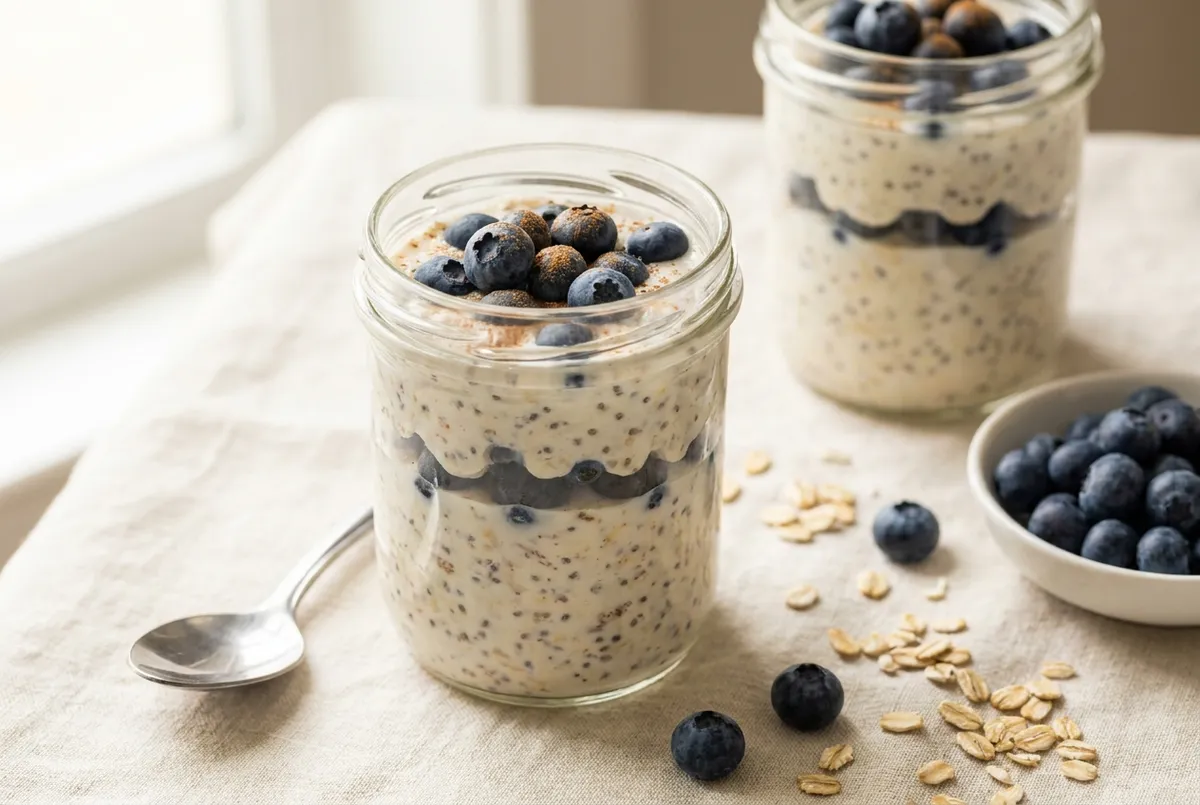
Pair breakfast with a lunch like the Greek Chicken Meal-Prep Bowls and a dinner like the Sheet-Pan Lemon Salmon, and the day is covered without a tracking app. On mornings when you want something sweet, the High-Protein Overnight Oats bring 30 grams and much more fiber.
For the full picture, read the guide on how much protein women need in menopause. It includes a chart by body weight and a sample day of meals.

Spinach Feta Cottage Cheese Egg Bites
Ingredients
Method
- Heat the oven to 350°F (175°C). Grease a 12-cup muffin tin well with olive oil spray, or use a silicone muffin pan.
- Blend the eggs, egg whites, cottage cheese, salt, and pepper for 20–30 seconds until completely smooth. This step is what gives the bites their velvety texture.
- Divide the spinach, bell pepper, green onion, and feta among the muffin cups.
- Pour the egg mixture over the vegetables, filling each cup about three-quarters full.
- Set the muffin tin inside a larger roasting pan and pour about 1 inch of hot water into the outer pan (optional, but it keeps the bites tender).
- Bake for 20–24 minutes, until the centers are just set and no longer jiggle. Cool for 5 minutes, then run a thin knife around each bite and lift out.
Notes
| Nutrition per serving | Amount |
|---|---|
| Calories | 266 |
| Protein | 28 g |
| Carbohydrates | 6.7 g |
| Fiber | 1 g |
| Sugars (total) | 4.1 g |
| Fat | 14 g |
| Saturated fat | 5.5 g |
| Sodium | 717 mg |
| Calcium | 207 mg |
| Potassium | 460 mg |
| Iron | 2.6 mg |
How the nutrition was calculated
Nutrition is calculated per serving from the gram weight of every ingredient, using USDA FoodData Central data. The numbers are estimates. Brands of cottage cheese and feta vary, and so does the size of a “large” egg. Read the editorial and nutrition policy for the full method.
The sodium is moderate at about 717 mg per serving, mostly from feta and cottage cheese. The Dietary Guidelines advise keeping sodium under 2,300 mg a day for most adults (source). To lower it, cut the added salt entirely and use a reduced-sodium cottage cheese.
Frequently asked questions
Can I make egg bites without a blender?
Yes. Mash the cottage cheese with a fork until it is mostly smooth, then whisk it hard with the eggs for a full minute. The bites will be slightly curdier than the blended version. They will still taste great and hold together well. An immersion blender in a large measuring cup also works.
Why are my egg bites watery?
Watery bites usually come from wet vegetables. Spinach, mushrooms, and tomatoes release liquid as they bake. Pat fresh spinach dry after washing, and squeeze thawed frozen spinach in a towel until no more water drips out. Cooking mushrooms first and draining them solves the same problem in other variations.
Can I use a silicone muffin pan?
A silicone pan is the easiest option, because the bites pop out cleanly with no scraping. Set it on a sheet pan before filling, so it does not flex when you move it. Bake time stays about the same, though silicone pans sometimes need an extra minute or two in the center.
Are cottage cheese egg bites gluten-free?
The recipe contains no wheat, barley, or rye, so it is naturally gluten-free. If you need to avoid gluten strictly, check the labels on the cottage cheese and any add-ins like sausage. Some brands add thickeners or are made on shared lines, so a quick label check is worth it.
How long do egg bites last in the fridge?
Egg bites keep up to 4 days in an airtight container in the fridge. A paper towel in the container absorbs extra moisture and keeps the bottoms from turning soggy. If you will not finish a batch in 4 days, freeze half on day one. Frozen bites keep about 2 months.
Sources
- Paddon-Jones D, Rasmussen BB. Dietary protein recommendations and the prevention of sarcopenia. Curr Opin Clin Nutr Metab Care. 2009.
- Bauer J, et al. Evidence-Based Recommendations for Optimal Dietary Protein Intake in Older People (PROT-AGE). J Am Med Dir Assoc. 2013.
- Rizzoli R, et al. Benefits and safety of dietary protein for bone health (ESCEO/IOF expert consensus). Osteoporos Int. 2018.
- USDA Food Safety and Inspection Service. Safe Minimum Internal Temperature Chart.
- U.S. Food and Drug Administration. Sodium in Your Diet.
- USDA Agricultural Research Service. FoodData Central (SR Legacy).
This article is for general education and is not medical advice. If you have a medical condition, such as kidney disease, or take medication, ask your clinician or a registered dietitian about your protein, sodium, and calorie needs. Read the full medical disclaimer.
Leave a Reply