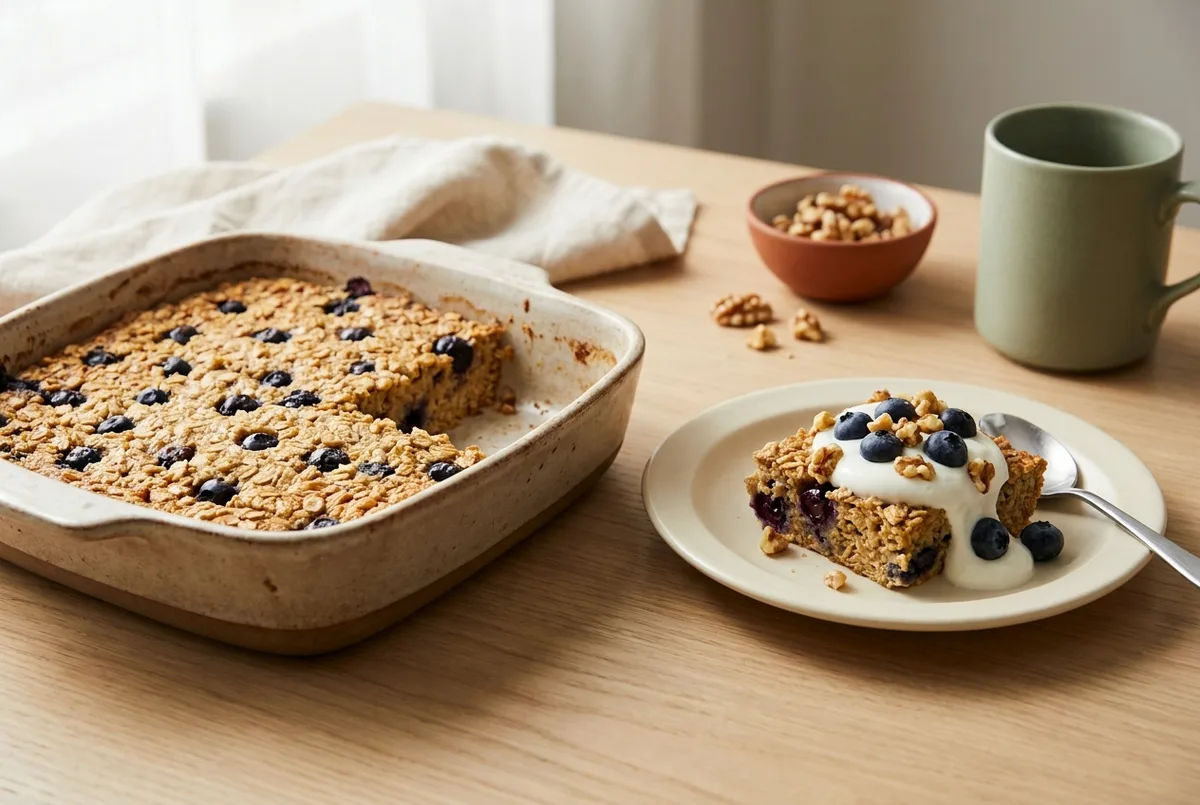
This high protein oatmeal is baked in one pan, sliced into four squares, and packs about 30 grams of protein per serving without any protein powder. Greek yogurt, cottage cheese, and eggs turn plain rolled oats into a soft, custardy breakfast bake. Make it on Sunday and breakfast is handled until Thursday.
At a glance
- Protein: 30 g per serving
- Calories: 460 per serving
- Fiber: 6 g
- Added sugar: about 9 g per serving
- Total time: 45 minutes (10 minutes hands-on)
- Makes: 4 generous squares
- Good for: Meal Prep, Vegetarian, Freezer-Friendly
Last updated October 12, 2026. Nutrition calculated from USDA FoodData Central by the Midlife Plate Editorial Team. See our editorial and nutrition policy.
Why high protein oatmeal matters after 40
A regular bowl of oatmeal made with water has about 5 grams of protein. That is fine for fiber, but it falls far short of what your muscles need in the morning.
Research on aging muscle suggests that about 25 to 30 grams of protein per meal is the sweet spot for muscle repair (source). The PROT-AGE expert group recommends 1.0 to 1.2 grams of protein per kilogram of body weight each day for healthy older adults (source).
Breakfast is where most women come up short. Dinner often has plenty of protein, while breakfast is toast, cereal, or coffee. Spreading protein more evenly across the day is an easy fix.
A 2024 review on nutrition in perimenopause and menopause points to adequate protein as one way to help protect muscle and bone as estrogen declines (source). Oats also bring soluble fiber, which supports steady energy and healthy cholesterol levels.
So the goal here was simple. Keep everything people love about oatmeal, and push the protein to a full meal’s worth.
How this recipe compares with other baked oats
Before writing this recipe, we looked at the most popular baked oatmeal recipes in the United States. Most fall into two groups.
Classic baked oatmeal made with milk and one or two eggs lands around 6 to 10 grams of protein per slice. Single-serve viral “baked oats” made in a ramekin often reach 20 to 28 grams, but only if you add a scoop of protein powder.
| Per serving | Classic baked oatmeal | Single-serve with protein powder | This recipe |
|---|---|---|---|
| Protein | 6 to 10 g | 20 to 28 g | 30 g |
| Protein powder needed | No | Yes | No |
| Makes | 6 to 9 slices | 1 serving | 4 servings |
| Meal prep friendly | Yes | No | Yes |
Our version takes the best of both. You get the high protein of the single-serve style, but it is made in one pan for the whole week. Every gram comes from real food.
What makes these baked oats different
Three protein sources. Greek yogurt, cottage cheese, and eggs each add protein and moisture. Spreading the protein across three ingredients keeps the texture tender rather than rubbery.
A blender step for the dairy. Blending the cottage cheese with the yogurt and eggs removes the curds completely. Nobody will know it is there. It also makes the bake taste rich and custardy, a bit like bread pudding.
Fewer servings, bigger squares. Many recipes cut a pan into 9 small pieces to make the calories look low. We cut it into 4 real breakfast portions. If you want a lighter snack, cut 6 squares and each has about 20 grams of protein.
Lower sodium than most. Cottage cheese and baking powder both add sodium. We use only a pinch of salt and 1 teaspoon of baking powder to keep each serving under 500 milligrams.
Ingredients and smart swaps
Old-fashioned rolled oats. They hold their shape and give a soft, chewy bite. Quick oats work but turn mushy. Steel-cut oats will not soften in this time, so skip them here.
Plain nonfat Greek yogurt. This is the biggest protein booster. Two percent Greek yogurt works too and makes the bake a little richer.
Cottage cheese. We used 2 percent. Any style works once it is blended. For less sodium, look for a low-sodium or no-salt-added brand.
Eggs and egg whites. Whole eggs bind the bake. The liquid egg whites add protein with very little fat. You can replace the egg whites with 2 more whole eggs.
Milk. Two percent dairy milk or unsweetened soy milk both work. Soy milk has more protein than almond or oat milk.
Maple syrup. Three tablespoons sweeten the whole pan, or about 9 grams of added sugar per serving. That is well under the American Heart Association suggested limit of about 25 grams a day for women (source).
Blueberries. Fresh or frozen both work. If using frozen, add them straight from the freezer so the color does not bleed.
Walnuts. A small handful on top adds crunch and plant omega-3 fats. Pecans or sliced almonds are good swaps.
How to make baked oats with Greek yogurt
- Heat the oven and prep the pan. Heat the oven to 375°F and grease an 8 by 8 inch baking dish.
- Blend the wet ingredients. Blend the Greek yogurt, cottage cheese, eggs, egg whites, milk, maple syrup, vanilla, cinnamon, baking powder, and salt until smooth.
- Stir in the oats. Pour the mixture over the oats in a bowl and stir. Let it rest 5 minutes so the oats start to soak.
- Add the berries. Fold in most of the blueberries and spread the mixture in the pan. Scatter the rest of the berries and the walnuts on top.
- Bake. Bake for 32 to 38 minutes, until the center is set and the edges are golden. A knife in the center should come out without wet batter.
- Rest before slicing. Cool for at least 10 minutes. The bake firms up as it cools and slices more cleanly.
The full recipe card below has exact amounts and a print button.
High-Protein Baked Oats
Ingredients
Method
- Heat the oven to 375°F (190°C). Grease an 8 by 8 inch (20 cm) glass or ceramic baking dish.
- Add the Greek yogurt, cottage cheese, eggs, egg whites, milk, maple syrup, vanilla, cinnamon, baking powder, and salt to a blender. Blend for 20 to 30 seconds, until completely smooth.
- Put the oats in a large bowl, pour in the blended mixture, and stir well. Let it rest for 5 minutes so the oats begin to soak.
- Fold in about 1 cup of the blueberries. Spread the mixture evenly in the baking dish, then scatter the remaining blueberries and the walnuts on top.
- Bake for 32 to 38 minutes, until the center is set and springs back lightly and the edges are golden.
- Cool for at least 10 minutes, then cut into 4 squares. Serve warm or chilled, with a spoon of Greek yogurt if you like.
Notes
| Nutrition per serving | Amount |
|---|---|
| Calories | 460 |
| Protein | 30 g |
| Carbohydrates | 55 g |
| Fiber | 6.2 g |
| Sugars (total) | 22 g |
| Fat | 14 g |
| Saturated fat | 3.3 g |
| Sodium | 488 mg |
| Calcium | 337 mg |
| Potassium | 593 mg |
| Iron | 3.1 mg |
Tips for the best texture
Do not skip the rest. Five minutes of soaking before baking gives the oats a head start. The result is softer and less dry.
Check for doneness by touch. The center should spring back lightly when pressed. If it still jiggles like liquid, bake 5 more minutes.
Under-bake slightly for meal prep. If you plan to reheat squares later, take the pan out as soon as the center is set. Reheating finishes the job without drying them out.
Use a glass or ceramic dish. Metal pans brown the edges faster. If you only have metal, check the bake 5 minutes early.
Want it sweeter? Add a mashed ripe banana to the blender. It adds natural sweetness and lets you cut the maple syrup to 2 tablespoons.
Flavor variations
All of these keep the base recipe the same and only change the add-ins. Each one swaps only the fruit, spices, or toppings, so the protein stays close to 30 grams per serving.
| Variation | Swap or add | Notes |
|---|---|---|
| Apple cinnamon | 1 diced apple instead of berries, extra 1/2 tsp cinnamon | Great in the fall |
| Peanut butter banana | 1 mashed banana, 2 tbsp peanut butter swirled on top | Adds about 2 g protein per serving |
| Chocolate raspberry | 2 tbsp cocoa powder blended in, raspberries instead of blueberries | Tastes like dessert |
| Carrot cake | 1 cup grated carrot, 1/2 tsp ginger, pecans on top | Adds fiber and vitamin A |
| Pumpkin spice | 1/2 cup pumpkin puree, 1 tsp pumpkin pie spice | Reduce milk to 1/4 cup |
How to meal prep and store baked oats
This is a true meal-prep breakfast. One pan gives you four breakfasts, and it reheats well. Here is how to store, freeze, and reheat it so every slice tastes fresh.
Refrigerator. Cool completely, then cover the dish or move squares to airtight containers. Keep them in the fridge for up to 4 days. USDA food safety guidance recommends eating refrigerated leftovers within 3 to 4 days (source).
Freezer. Wrap each cooled square in plastic wrap or parchment, then place in a freezer bag. Freeze for up to 3 months.
Reheating. Microwave a chilled square for 45 to 60 seconds. From frozen, microwave 90 seconds to 2 minutes, flipping halfway. You can also reheat squares in a 350°F oven for about 10 minutes.
Eat it cold. Many people like chilled baked oats straight from the fridge, almost like a breakfast bar. Add a spoon of Greek yogurt on top for even more protein.
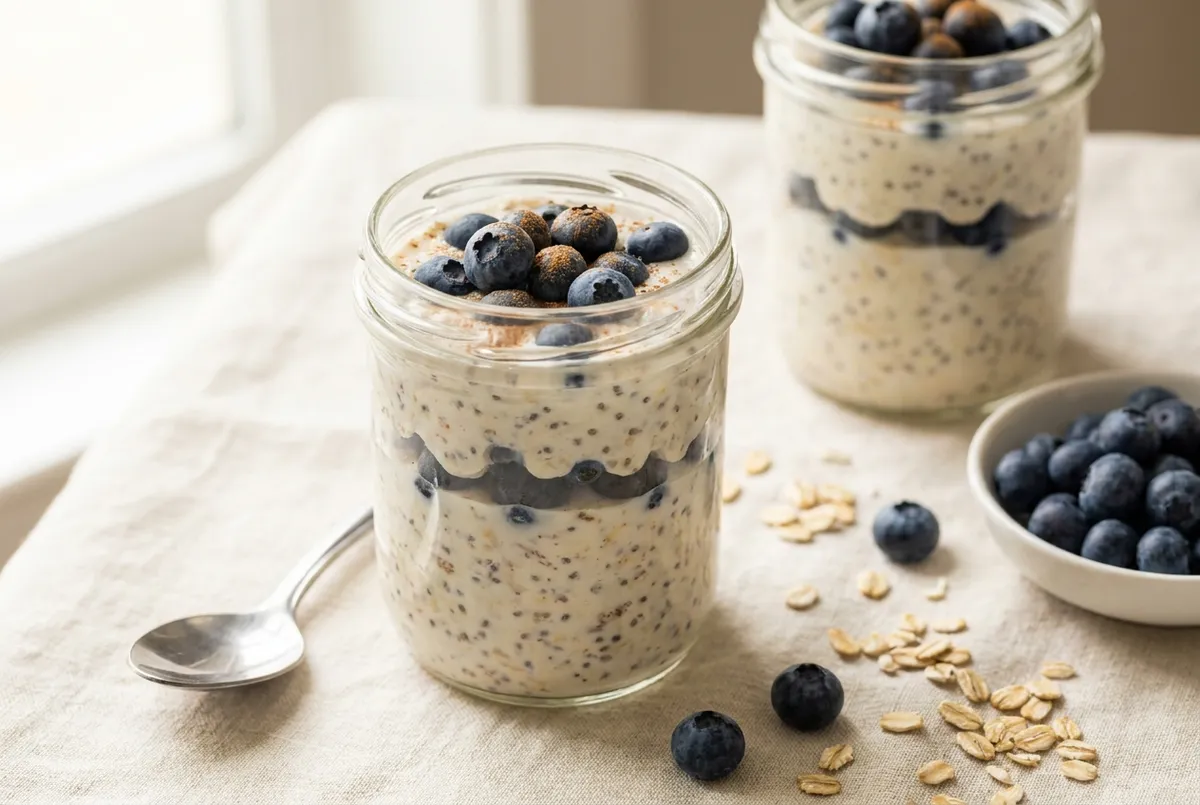
If you prefer no-cook breakfasts in warm weather, try our high-protein overnight oats with Greek yogurt. They use similar ingredients and need zero oven time.
Is oatmeal good for women in menopause?
Oatmeal is a smart base for a menopause-friendly breakfast, especially when you add protein. Oats are a whole grain, and the Dietary Guidelines for Americans recommend making at least half of your grains whole (source).
Oats are rich in beta-glucan, a soluble fiber linked to lower LDL cholesterol. That matters because heart disease risk rises after menopause. A review of nutrition in menopausal women highlights whole grains, fiber, and quality protein as core parts of a healthy pattern (source).
The catch is that plain oatmeal is mostly carbohydrate. On its own it digests fairly fast, and many women feel hungry again by mid-morning. Pairing oats with dairy protein and eggs slows things down and keeps you full longer.
How to round out the meal
One square already has 30 grams of protein, so it counts as a full breakfast. Here are easy ways to add balance.
- Add more fruit. A handful of fresh berries or a sliced peach adds fiber and vitamin C.
- Pair with a latte. A 12 ounce latte made with milk adds about 8 to 10 grams more protein and some calcium.
- Top with yogurt. A quarter cup of Greek yogurt on top adds about 6 grams of protein.
- Make it smaller. Cut the pan into 6 squares for a lighter 300 calorie breakfast with about 20 grams of protein.
Calcium matters too. Women over 50 need about 1,200 milligrams of calcium per day according to the NIH (source). Each serving of these baked oats provides about 340 milligrams, or close to a third of that.
Not sure how much protein you need? Take our quick protein quiz for a personal daily target. You can also read our full guide on how much protein women need in menopause.
More high-protein breakfasts to try
If you like this bake, you may also like these make-ahead options: each one has 20 grams of protein or more and keeps well in the fridge.
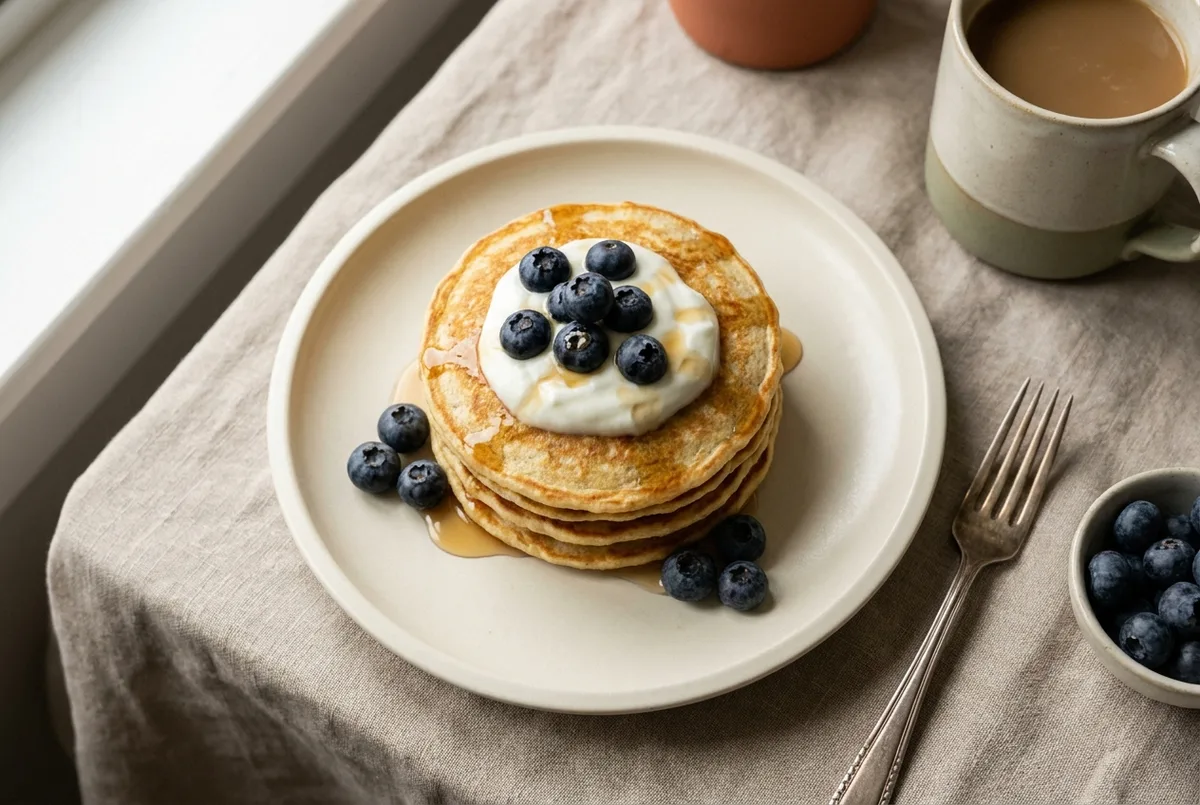
- Cottage cheese protein pancakes with 31 grams of protein per stack
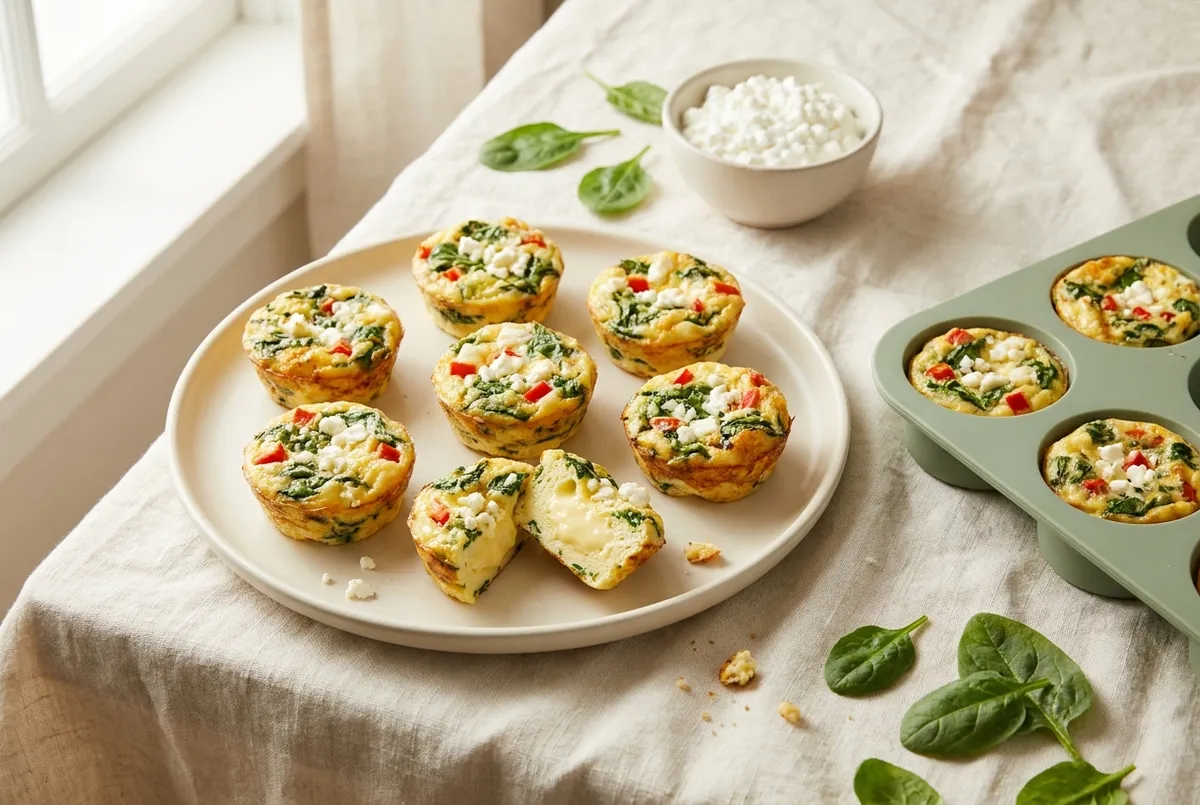
- Spinach feta cottage cheese egg bites for a savory grab-and-go option
- High-protein Greek yogurt blueberry muffins for snacks and lunch boxes
For a full week of breakfasts, lunches, and dinners, get our free 7-day high-protein meal plan.
How we test our recipes
Every Midlife Plate recipe is cooked at least twice in a home kitchen with ordinary supermarket ingredients, timed from first chop to plate, and weighed gram by gram before we publish its nutrition. Nutrition is calculated from USDA FoodData Central.
Frequently asked questions
How can I make oatmeal high in protein without protein powder?
Cook or bake your oats with Greek yogurt, cottage cheese, milk, and eggs or egg whites. This recipe combines all of them to reach about 30 grams of protein per serving with no powder at all. You can also stir hemp hearts or peanut butter into a bowl of regular oatmeal for a few extra grams.
Can I add protein powder to baked oats?
Yes. Whisk one scoop of vanilla protein powder into the blended mixture and add 2 to 3 extra tablespoons of milk. It will add about 5 to 6 grams of protein per serving. The texture gets a little denser. Powder is optional, since the recipe already reaches about 30 grams without it.
Are baked oats healthier than regular oatmeal?
They can be. The oats are the same, but adding yogurt, cottage cheese, and eggs makes this version much higher in protein. It also keeps you full longer. The key is to limit added sugar. A tablespoon of maple syrup per serving is plenty for most people.
Can I make baked oats without eggs?
You can replace the eggs and egg whites with 1 more cup of Greek yogurt and 2 tablespoons of ground flaxseed. The bake will be softer and a little less sliceable. Protein drops to about 25 grams per serving. Bake it a few minutes longer and let it cool fully before slicing.
Are baked oats gluten-free?
Oats are naturally gluten-free, but they are often processed alongside wheat. If you need to avoid gluten, buy oats labeled certified gluten-free. Every other ingredient in this recipe is naturally gluten-free. Check that your yogurt and any add-ins are also free of gluten.
Why are my baked oats soggy?
Usually they need more time in the oven, or they were cut while hot. Bake until the center springs back, then let the pan rest 10 minutes. Using quick oats can also make the texture soft. Stick with old-fashioned rolled oats for the best texture.
Can I make a single serving?
Yes. Divide every ingredient by four and bake in a greased ramekin at 375°F for about 20 to 25 minutes. Use 1 whole egg instead of a split egg. A single serving is handy when you want to test a new flavor before making a full pan.
This article is for general education and is not medical advice. If you have a medical condition, such as kidney disease, or take medication, ask your clinician or a registered dietitian about your protein, sodium, and calorie needs. Read the full medical disclaimer.
Sources
- Paddon-Jones D, Rasmussen BB. Dietary protein recommendations and the prevention of sarcopenia. Curr Opin Clin Nutr Metab Care. 2009.
- Bauer J, et al. Evidence-Based Recommendations for Optimal Dietary Protein Intake in Older People (PROT-AGE). J Am Med Dir Assoc. 2013.
- Erdélyi A, et al. The Importance of Nutrition in Menopause and Perimenopause: A Review. Nutrients. 2024;16(1):27.
- American Heart Association. Added Sugars.
- USDA Food Safety and Inspection Service. Leftovers and Food Safety.
- U.S. Departments of Agriculture and Health and Human Services. Dietary Guidelines for Americans, 2020 to 2025.
- Silva TR, et al. Nutrition in Menopausal Women: A Narrative Review. Nutrients. 2021.
- NIH Office of Dietary Supplements. Calcium: Fact Sheet for Health Professionals.
- USDA Agricultural Research Service. FoodData Central (SR Legacy).
Leave a Reply