This high protein pasta is a weeknight chickpea pasta with seared chicken, spinach, and a creamy lemon Parmesan sauce. The sauce is blended cottage cheese, so it is silky and rich without heavy cream. Each big bowl has about 61 grams of protein and 8 grams of fiber, and dinner is ready in 25 minutes.
At a glance
- Protein: 61 g per bowl
- Calories: 560 per bowl
- Fiber: 8 g
- Sodium: about 615 mg per bowl
- Total time: 25 minutes
- Makes: 4 bowls of about 2 cups
- Good for: Gluten-Free, Under 30 Minutes, High Fiber, 25g+ Protein
Last updated October 12, 2026. Nutrition calculated from USDA FoodData Central by the Midlife Plate Editorial Team. See our editorial and nutrition policy.
Why we love high protein pasta after 40
Pasta night does not have to mean a carb-heavy bowl that leaves you hungry by 9 pm. With the right pasta and sauce, it becomes one of the most protein-packed meals of the week.
Research on aging muscle suggests that about 25 to 30 grams of protein per meal is a helpful target for muscle repair (source). The PROT-AGE expert group suggests 1.0 to 1.2 grams per kilogram of body weight daily for healthy older adults, and more for active women (source).
A 2024 review of nutrition in perimenopause and menopause points to enough protein as one way to help protect muscle and bone as estrogen declines (source). This bowl covers a big share of a day’s needs in one comforting meal.
Swapping wheat pasta for chickpea pasta matters too. It roughly doubles the protein and fiber of the noodles themselves, and it keeps the dish gluten-free.
How this recipe compares with other protein pastas
We read the most popular high protein pasta recipes in the United States before writing this one. They mostly fall into three styles.
Tomato chicken pastas. These use regular pasta and land around 38 to 42 grams of protein per bowl. They are lighter but lower in fiber.
Cottage cheese “marry me” pastas. This viral style blends cottage cheese into a creamy sauce. Protein runs 45 to 58 grams, but many use large portions of pasta and lots of cheese, which pushes sodium high.
Simple chickpea pasta bowls. These are quick and gluten-free. Without chicken or a dairy sauce, protein stays near 20 to 25 grams.
| Per bowl | Tomato chicken pasta | Cottage cheese “marry me” pasta | Chickpea veggie pasta | This recipe |
|---|---|---|---|---|
| Protein | 38 to 42 g | 45 to 58 g | 20 to 25 g | 61 g |
| Fiber | 3 to 5 g | 3 to 6 g | 8 to 10 g | 8 g |
| Gluten-free | No | Sometimes | Yes | Yes |
| Heavy cream | No | No | No | No |
Our version combines the best parts. You get the creamy cottage cheese sauce people love, the fiber of chickpea pasta, and lean chicken. We kept the cheese modest and used lemon to make the sauce taste bright, not heavy.
What makes this chickpea pasta different
Three protein sources in every bite. Chicken breast, chickpea pasta, and a cottage cheese sauce each pull their weight. That is how each bowl passes 60 grams without protein powder or special products.
A blended cottage cheese sauce. Blending removes every curd and turns cottage cheese into a smooth, Alfredo-like sauce. Lemon zest and juice keep it light and fresh.
Starchy pasta water. The cooking water from chickpea pasta is extra starchy. It loosens the sauce and helps it cling to every noodle.
Gentle heat for the sauce. Dairy sauces turn grainy if they boil. We toss everything on low heat for a minute or two, just long enough to warm it through.
Spinach and sun-dried tomatoes. Five ounces of spinach melts into the pasta and adds iron, potassium, and color. Sun-dried tomatoes bring a sweet, savory punch.
Ingredients and smart swaps
Chickpea pasta. Penne, rotini, and shells all work well. Brands vary, so check the label for protein. Red lentil pasta is a good swap with similar protein.
Chicken breast. Cut it into bite-size pieces so it cooks fast and stays juicy. Boneless thighs work too and are harder to overcook.
Cottage cheese. We used 2 percent cottage cheese. Low-sodium cottage cheese cuts the sodium noticeably. Full-fat makes the sauce extra rich.
Parmesan. Use real grated Parmesan for the best flavor. A little goes a long way, so we kept it to one third of a cup.
Sun-dried tomatoes. Dry-packed tomatoes are lower in fat. If you only have oil-packed, drain and pat them dry, and skip the olive oil.
Lemon. Both zest and juice matter. The zest brings aroma and the juice brings brightness.
Spinach. Baby spinach wilts in seconds. Chopped kale works, but add it a few minutes earlier.
How to make high protein pasta in 25 minutes
This high protein pasta takes about 25 minutes. Blend a cottage cheese sauce, sear the chicken, boil the chickpea pasta, then toss everything with spinach. Here are the steps.
- Blend the sauce. Blend the cottage cheese, Parmesan, lemon zest, and juice until silky.
- Cook the chicken. Season the chicken and sear it in olive oil for 6 to 8 minutes, until it reaches 165°F, per USDA guidance (source).
- Cook the pasta. Boil the chickpea pasta 1 minute less than the package time. Save 1 cup of the water, then drain.
- Add the aromatics. Stir the garlic and sun-dried tomatoes into the chicken for 1 minute. Add the spinach until wilted.
- Toss it all together. On low heat, add the pasta, sauce, and half a cup of pasta water. Toss until glossy.
- Season and serve. Add pepper, chili flakes, and salt to taste. Top with extra Parmesan.
The recipe card below has exact amounts, gram weights, and a print button.
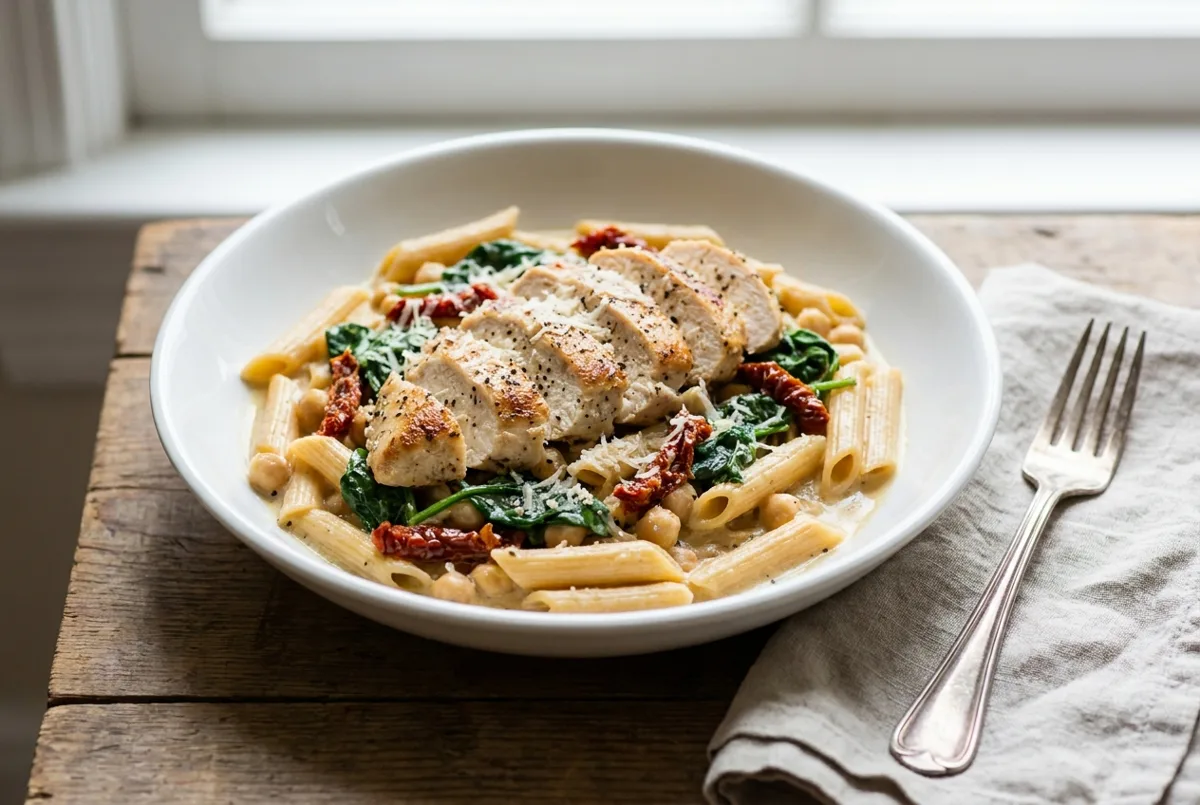
High-Protein Chickpea Pasta with Chicken and Spinach
Ingredients
Method
- Bring a large pot of water to a boil. Blend the cottage cheese, Parmesan, lemon zest, and lemon juice until completely smooth. Set aside.
- Toss the chicken with the Italian herbs, salt, and pepper. Heat the olive oil in a large skillet over medium-high heat and cook the chicken for 6 to 8 minutes, turning, until browned and 165°F inside.
- Meanwhile, cook the chickpea pasta 1 minute less than the package says. Reserve 1 cup of pasta water, then drain. Do not rinse.
- Lower the heat under the skillet to medium. Add the garlic and sun-dried tomatoes to the chicken and cook for 1 minute. Add the spinach in handfuls until wilted.
- Turn the heat to low. Add the drained pasta, the blended sauce, and 1/2 cup of the pasta water. Toss for 1 to 2 minutes until glossy and creamy, adding more water as needed. Do not boil.
- Season with black pepper, red pepper flakes, and salt to taste. Serve right away with extra Parmesan.
Notes
| Nutrition per serving | Amount |
|---|---|
| Calories | 560 |
| Protein | 61 g |
| Carbohydrates | 42 g |
| Fiber | 7.7 g |
| Sugars (total) | 10 g |
| Fat | 16 g |
| Saturated fat | 3.8 g |
| Sodium | 615 mg |
| Calcium | 217 mg |
| Potassium | 1509 mg |
| Iron | 5 mg |
Tips for perfect chickpea pasta
Undercook it slightly. Chickpea pasta goes from firm to mushy fast. Pull it a minute early, since it keeps cooking in the sauce.
Skim the foam. Chickpea pasta makes a lot of foam as it boils. Use a big pot and skim it off, or stir in a teaspoon of olive oil.
Do not rinse. Rinsing washes away the starch that helps the sauce stick. Drain and use it right away.
Serve it fresh. Chickpea pasta soaks up sauce quickly. It is best within a few minutes of tossing.
Make the sauce silky. Blend for a full 30 to 60 seconds. Any curds left behind will show up in the finished dish.
Keep the heat low. Once the sauce goes in, keep the pan below a simmer. Gentle heat keeps it smooth.
Flavor variations
Each variation keeps the chickpea pasta and cottage cheese sauce, so protein stays high. Only the protein, vegetables, or seasonings change.
| Variation | Change | Notes |
|---|---|---|
| Pesto | Blend 2 tbsp pesto into the sauce | Adds basil flavor and healthy fats |
| Tuscan | Add 1/2 cup white beans and fresh basil | Adds fiber and about 2 g protein |
| Roasted red pepper | Blend 1/2 cup roasted red peppers into the sauce | Gives a pink, smoky sauce |
| Broccoli | Add 2 cups broccoli florets to the pasta water for the last 3 minutes | More fiber and vitamin C |
| Shrimp | Swap chicken for 1 1/2 lb shrimp | Cook shrimp 3 to 4 minutes |
| Vegetarian | Swap chicken for 1 can chickpeas plus 1 cup edamame | About 32 g protein per bowl |
What to serve with it
This pasta is a complete meal on its own, with protein, fiber, and greens in one bowl. If you want to round out the table, keep sides light and fresh.
- A big green salad. Arugula with lemon and olive oil cuts through the creamy sauce.
- Roasted vegetables. Broccoli, zucchini, or cherry tomatoes roast while the pasta cooks.
- Fruit for dessert. Berries or a sliced pear finish the meal without a sugar crash.
- Something chocolate. If you want a treat, our high-protein Greek yogurt brownies add about 10 more grams of protein.
Skip the garlic bread on most nights. The pasta already brings plenty of carbohydrate, and bread adds sodium too.
Is it budget friendly?
Chickpea pasta costs more per box than wheat pasta. Still, this dish feeds four for a lot less than takeout, and every bowl is a full meal.
A few ways to save:
- Buy chicken breasts in family packs. Cut and freeze what you do not use in 1 1/2 pound bags.
- Use store-brand cottage cheese. It blends just as smoothly as name brands.
- Buy a block of Parmesan. Grating your own tastes better and often costs less per ounce.
- Mix pastas. Use half chickpea pasta and half whole-wheat pasta. Protein stays above 55 grams per bowl.
How to meal prep and reheat
High protein pasta makes a filling packed lunch. A few tricks keep it creamy. Chickpea pasta firms up in the fridge, so a splash of liquid matters when you reheat.
Store it right. Cool quickly and refrigerate in airtight containers within 2 hours. Eat within 3 to 4 days, following USDA food safety guidance (source).
Add liquid before reheating. Chickpea pasta drinks up sauce in the fridge. Add 1 to 2 tablespoons of water or milk per portion before you reheat.
Reheat gently. Microwave at 70 percent power for 1 to 2 minutes, stirring halfway. High heat can make the sauce grainy.
Freezing is not ideal. Dairy sauces and chickpea pasta both change texture in the freezer. This one is best fresh or refrigerated.
Is chickpea pasta healthy for women in menopause?
Chickpea pasta is a nutritious swap for many women. It brings more protein and fiber than wheat pasta and digests more slowly. That can mean steadier energy after dinner.
Fiber matters more in midlife. Heart disease risk rises after menopause, and fiber-rich foods support healthy cholesterol. A review of nutrition in menopausal women highlights legumes, whole grains, and quality protein as core parts of a healthy diet (source).
The Dietary Guidelines for Americans suggest that most adults eat more beans, peas, and lentils (source). Chickpea pasta is an easy way to do that without changing your favorite meals.
Calcium is a bonus here. Each bowl has over 200 milligrams from cottage cheese and Parmesan. Women over 50 need about 1,200 milligrams daily, according to the NIH (source).
Not sure how much protein you need? Take our quick protein quiz for a personal daily target. You can also read our full guide on how much protein women need in menopause.
More high-protein dinners to try
If you like this pasta, these dinners are just as filling. Each one has 35 grams of protein or more per serving and no protein powder.
- High-protein turkey white bean chili with 46 grams of protein per bowl
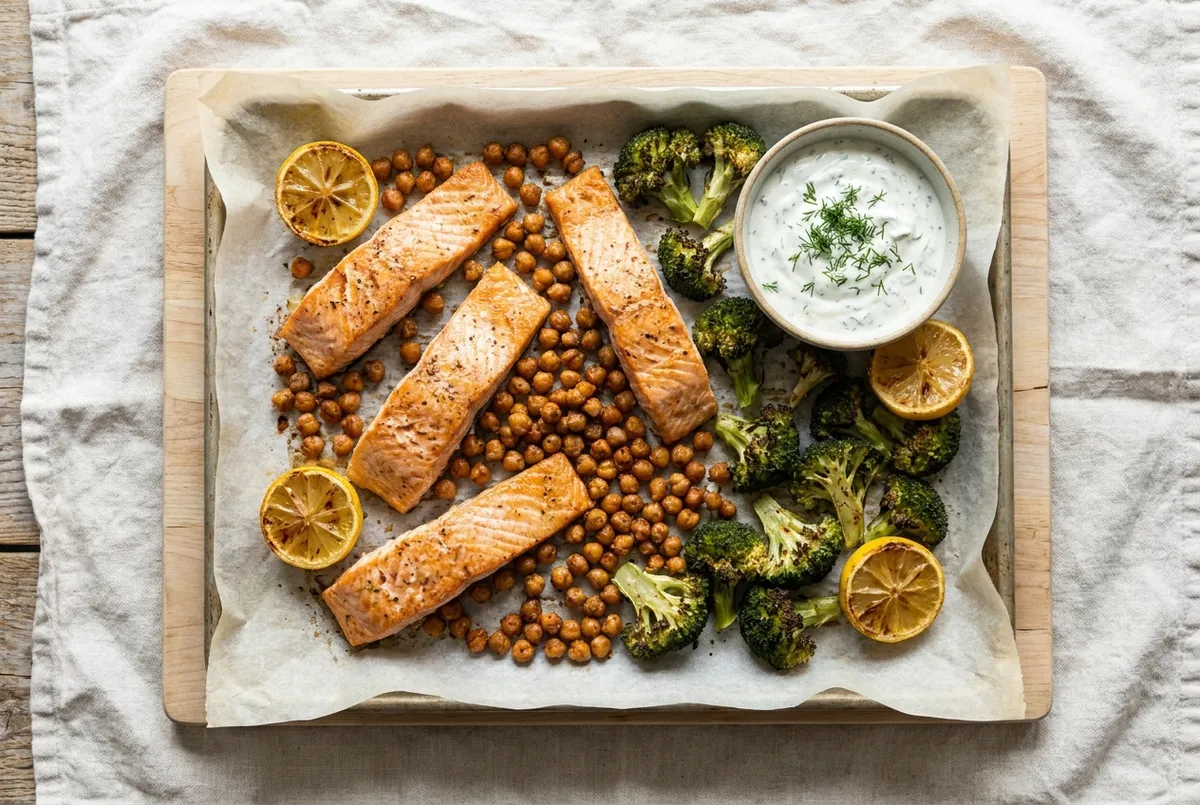
- Sheet-pan lemon salmon with crispy chickpeas and broccoli for an omega-3 rich dinner
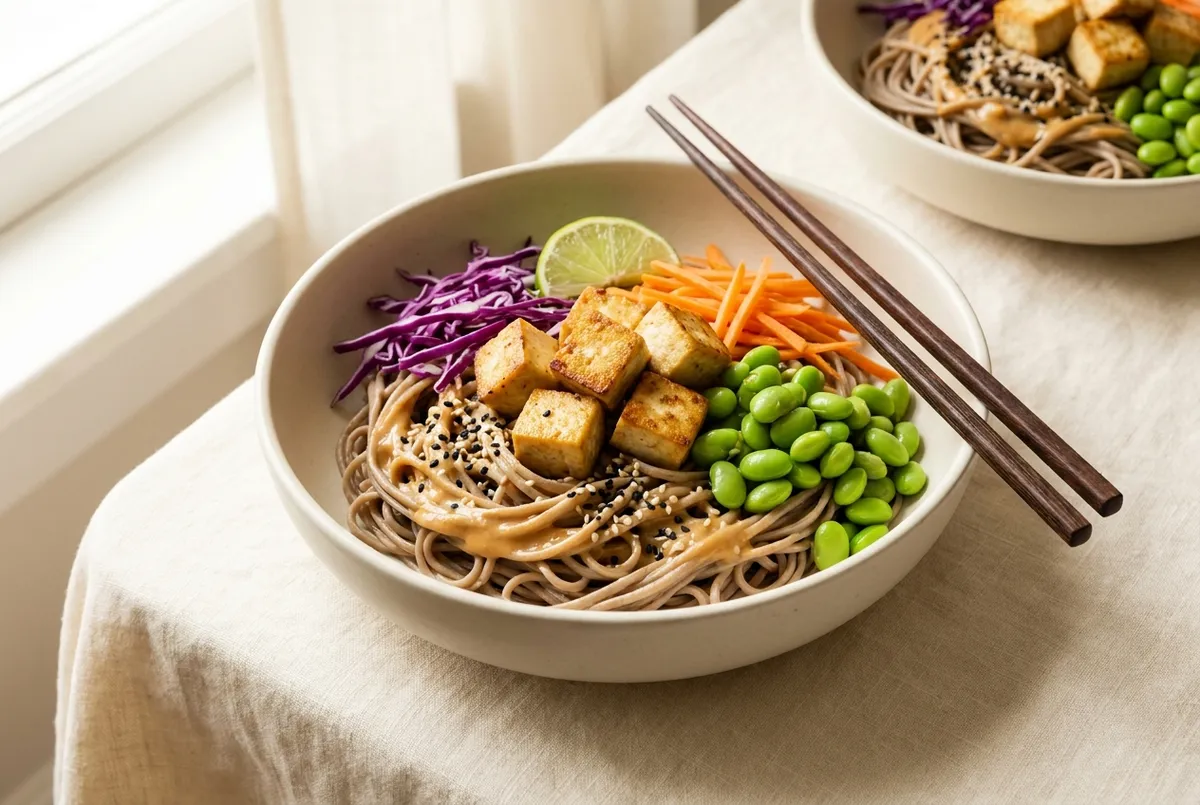
- Peanut tofu and edamame soba bowls for a plant-based option
For a full week of breakfasts, lunches, and dinners, get our free 7-day high-protein meal plan.
How we test our recipes
Every Midlife Plate recipe is cooked at least twice in a home kitchen with ordinary supermarket ingredients, timed from first chop to plate, and weighed gram by gram before we publish its nutrition. Nutrition is calculated from USDA FoodData Central.
Frequently asked questions
What is the highest protein pasta?
Edamame and black bean pastas have the most, often 20 to 25 grams per 2 ounce serving. Chickpea and lentil pastas follow with about 11 to 14 grams. Regular wheat pasta has about 7 grams. Check the label, since brands vary.
Does chickpea pasta taste like chickpeas?
A little. It has a mild, nutty flavor that blends in under a good sauce. Once it is tossed with chicken, lemon, and Parmesan, the bean flavor fades into the background. Rinse it after draining if you want an even milder taste. Cook it just to al dente, since it turns soft quickly.
Can I use regular pasta?
Yes. Whole-wheat penne works well. Protein drops to about 56 grams per bowl, and the dish will no longer be gluten-free. Regular pasta also has less fiber than chickpea pasta. Cook it to al dente so it holds up when you toss it with the warm sauce.
Will kids eat a cottage cheese sauce?
Many kids like it once it is blended. Blending turns cottage cheese into a smooth, cheesy sauce that tastes a lot like a light Alfredo, with no curds left. Toss it with pasta they already like, and add extra Parmesan on top. It is a simple way to add protein to a family dinner.
Why is my sauce grainy?
The sauce got too hot, or the cottage cheese was not fully blended. Blend until silky and keep the pan on low once the sauce goes in. Add a splash of pasta water if it gets too thick. Full-fat or 2% cottage cheese gives a smoother sauce than nonfat.
Can I make it dairy-free?
Swap the cottage cheese sauce for blended silken tofu with nutritional yeast, lemon, and garlic. Protein stays high, at about 56 grams per bowl. Skip the Parmesan or use a dairy-free cheese alternative. Taste and add more lemon or salt, since tofu sauce is milder.
Can I make this ahead for guests?
Blend the sauce and cut the chicken up to a day ahead. Keep both covered in the fridge. When guests arrive, cook the chicken and pasta and toss everything together in about 15 minutes. The pasta itself is best served fresh.
How many calories are in a bowl?
Each of the four 2 cup bowls has about 560 calories. For a lighter portion, divide the pot into 5 bowls for about 450 calories and 49 grams of protein. Add a side salad or roasted vegetables to keep the smaller portion filling.
This article is for general education and is not medical advice. If you have a medical condition, such as kidney disease, or take medication, ask your clinician or a registered dietitian about your protein, sodium, and calorie needs. Read the full medical disclaimer.
Sources
- Paddon-Jones D, Rasmussen BB. Dietary protein recommendations and the prevention of sarcopenia. Curr Opin Clin Nutr Metab Care. 2009.
- Bauer J, et al. Evidence-Based Recommendations for Optimal Dietary Protein Intake in Older People (PROT-AGE). J Am Med Dir Assoc. 2013.
- Erdélyi A, et al. The Importance of Nutrition in Menopause and Perimenopause: A Review. Nutrients. 2024;16(1):27.
- USDA Food Safety and Inspection Service. Safe Minimum Internal Temperature Chart.
- USDA Food Safety and Inspection Service. Leftovers and Food Safety.
- Silva TR, et al. Nutrition in Menopausal Women: A Narrative Review. Nutrients. 2021.
- U.S. Departments of Agriculture and Health and Human Services. Dietary Guidelines for Americans, 2020 to 2025.
- NIH Office of Dietary Supplements. Calcium: Fact Sheet for Health Professionals.
- USDA Agricultural Research Service. FoodData Central (SR Legacy).
Leave a Reply